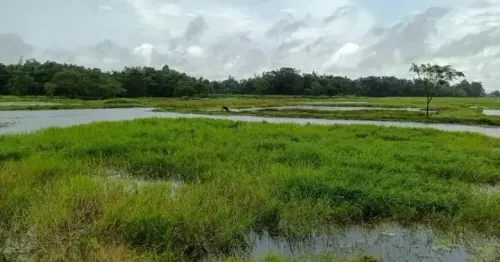
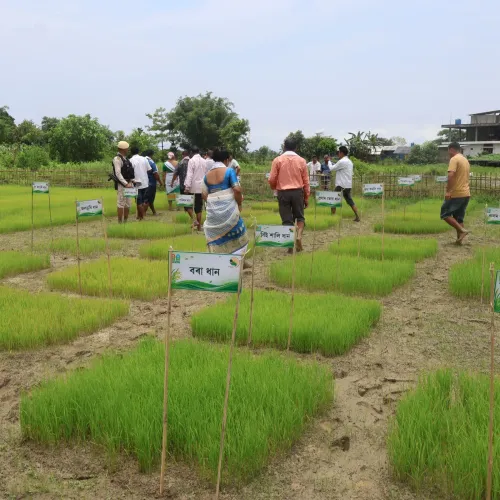
Assam Wild Rice Habitat Gets National Biodiversity Heritage Tag

Synopsis
A wild rice habitat in Assam has been notified as a National Biodiversity Heritage Site under the Biological Diversity Act, 2002. The designation offers legal protection to a globally significant genetic reservoir while permitting traditional community livelihoods, advancing India's crop-diversity conservation goals.
Key Takeaways
The Chief Minister's Office of Assam announced the wild rice habitat's designation as a National Biodiversity Heritage Site on 4 July 2026 .
The notification is issued under the Biological Diversity Act, 2002 by the National Biodiversity Authority .
Wild rice is a critical genetic ancestor of cultivated rice, valued for traits like drought tolerance and pest resistance.
India's biodiversity heritage site network dates to 2007 , starting with the Nallur Tamarind Grove in Karnataka .
The designation allows traditional livelihoods to continue while enabling community-based conservation and research access.
A site-specific management plan and potential research grants are expected as follow-up steps.
The Chief Minister's Office of Assam announced on Saturday, 4 July 2026 that a wild rice habitat in the state has been designated a National Biodiversity Heritage Site, marking a significant conservation milestone for one of India's most ecologically rich northeastern states.
Context
The designation places the Assam wild rice habitat within a nationally protected category under the Biological Diversity Act, 2002, administered by the National Biodiversity Authority (NBA), a statutory body under the Ministry of Environment, Forest and Climate Change. The notification confers legal protection on the site while allowing traditional livelihoods of local communities to continue undisturbed.
Wild rice — the genetic ancestor of cultivated rice — holds immense scientific value as a reservoir of traits such as drought tolerance, pest resistance, and yield potential that breeders draw upon to develop improved crop varieties. Assam's wetlands and riverine ecosystems are among the most biodiverse in South Asia and have long been recognised as a centre of origin for rice.
Policy Backdrop
India's network of biodiversity heritage sites dates to 2007, when the Nallur Tamarind Grove in Karnataka became the first site notified under the Biological Diversity Act. Since then, the National Biodiversity Authority has progressively expanded the list, with northeastern states receiving growing attention given their role as cradles of crop diversity.
The move aligns with India's obligations under the Convention on Biological Diversity and its broader strategy to safeguard crop wild relatives — a category of plants considered critical to long-term global food security. Heritage site status does not impose a blanket ban on human activity; instead, it encourages community-based stewardship and opens pathways for government-backed conservation funding.
Stakeholders and Impact
Local farming and fishing communities living around the habitat stand to benefit from formal recognition, which can attract research partnerships, eco-tourism interest, and conservation grants without displacing traditional practices. Crop researchers and plant geneticists will gain a legally protected field laboratory for studying wild rice germplasm in its natural setting.
The designation also strengthens Assam's profile as a conservation leader in the northeast, adding to existing protected areas and wetland reserves that together form a corridor of ecological significance spanning the Brahmaputra floodplain.
What's Next
Attention will now turn to the release of a site-specific management plan by the Assam government and the National Biodiversity Authority, which would detail conservation protocols, permissible activities, and monitoring mechanisms. Linked research grants or ex-situ conservation programmes — where genetic material is preserved outside the natural habitat as a backup — are also expected to follow.
The heritage site notification positions Assam to play a central role in India's wider push to document and protect crop wild relatives before habitat loss and climate change erode this irreplaceable genetic wealth.
Point of View
And formal designations like this one give the region legal standing and institutional backing it previously lacked. For the Assam government, the announcement also serves a political purpose: positioning the state as an active participant in national environmental commitments rather than a passive recipient of central mandates. The real test will be whether a credible management plan and research funding follow, or whether the heritage tag remains largely symbolic.
NationPress
4 Jul 2026
Frequently Asked Questions
What is a National Biodiversity Heritage Site in India?
A National Biodiversity Heritage Site is an area notified by the National Biodiversity Authority under the Biological Diversity Act, 2002 for its unique and significant biodiversity. The designation provides legal protection to the site while generally permitting traditional community activities.
Why is wild rice in Assam considered important?
Wild rice in Assam is a genetic ancestor of cultivated rice and carries traits such as drought tolerance, pest resistance, and yield potential. Crop researchers use this genetic material to develop improved rice varieties, making its conservation critical for long-term food security.
Which body notifies National Biodiversity Heritage Sites in India?
The National Biodiversity Authority (NBA), a statutory body under the Ministry of Environment, Forest and Climate Change, is responsible for notifying National Biodiversity Heritage Sites under the Biological Diversity Act, 2002.
When was the first National Biodiversity Heritage Site notified in India?
India's first National Biodiversity Heritage Site, the Nallur Tamarind Grove in Karnataka, was notified in 2007 under the Biological Diversity Act, 2002.
Will local communities be displaced after the Assam wild rice habitat gets heritage status?
No. Heritage site designations under the Biological Diversity Act do not restrict traditional livelihoods. The framework encourages community-based conservation, meaning local farming and fishing communities can continue their activities while benefiting from increased institutional support.