Assam's AB-PMJAY hospital model earns parliamentary panel praise, may go national
Synopsis
A state-level healthcare financing experiment from Assam — letting public hospitals keep and reinvest their AB-PMJAY reimbursements — has caught the attention of a parliamentary standing committee, which has called it 'highly pragmatic and replicable' and pushed for national SOPs. If adopted centrally, it could fundamentally change how public hospitals are funded across India.
Key Takeaways
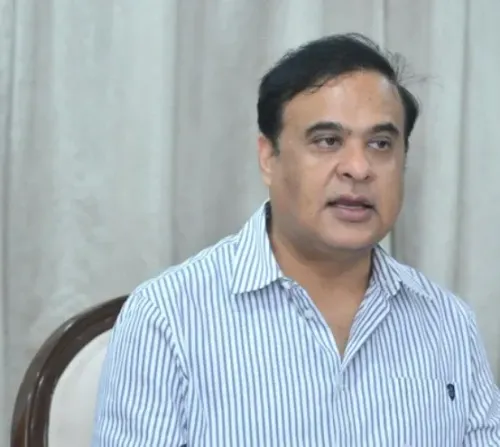
The Parliamentary Standing Committee on Health and Family Welfare has called Assam's AB-PMJAY reimbursement-retention model 'highly pragmatic and replicable.' Assam Chief Minister Himanta Biswa Sarma announced the recognition on 13 August via a post on social media platform X .
The model allows public hospitals to retain and reinvest AB-PMJAY reimbursements in infrastructure, medical equipment, and patient welfare.
The committee, chaired by Ram Gopal Yadav , has recommended the Union Ministry of Health and Family Welfare issue national SOPs for adoption.
If implemented nationally, the model could grant public hospitals across India greater financial autonomy under the Centre's flagship health assurance scheme.
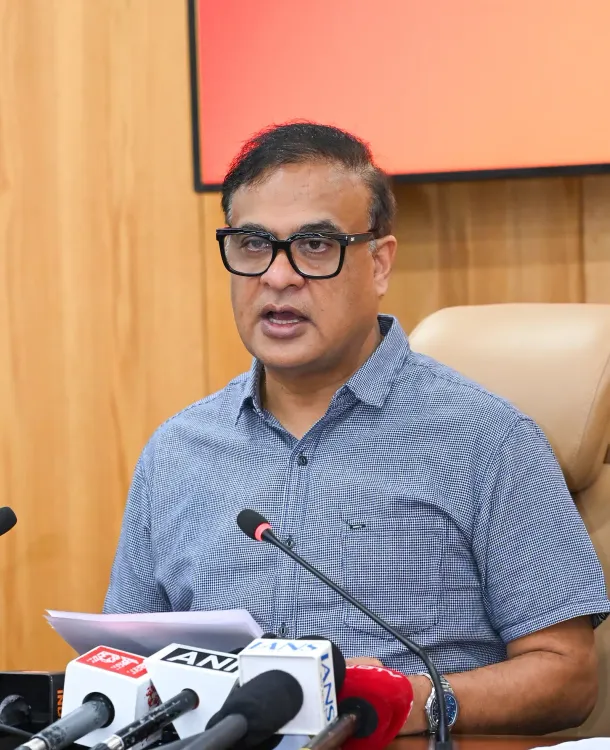
Assam Chief Minister Himanta Biswa Sarma on Thursday, 13 August announced that the state's model of allowing public hospitals to retain and reinvest reimbursements received under Ayushman Bharat-Pradhan Mantri Jan Arogya Yojana (AB-PMJAY) has been recognised by the Parliamentary Standing Committee on Health and Family Welfare as a 'highly pragmatic and replicable model.' The committee has further recommended that the Union Ministry of Health and Family Welfare issue standard operating procedures (SOPs) to enable public hospitals across India to adopt the approach.
What the Assam Model Involves
Under Assam's framework, public healthcare institutions are permitted to retain reimbursements received from the Centre's flagship health assurance scheme and channel those funds back into hospital infrastructure, medical equipment procurement, and patient welfare improvements. Rather than routing funds back to the state exchequer, the model gives hospitals direct financial agency over reinvestment — a structural departure from conventional practice.
This approach, according to Chief Minister Sarma, has meaningfully strengthened public healthcare delivery within the state and is now being held up as a template for wider national adoption.
What the Parliamentary Panel Said
The Parliamentary Standing Committee on Health and Family Welfare, chaired by Ram Gopal Yadav, formally described Assam's reimbursement-retention model as 'highly pragmatic and replicable' in its findings. The committee recommended that the Ministry of Health and Family Welfare formulate SOPs to facilitate adoption of the model by public hospitals nationwide.
Chief Minister Sarma, posting on social media platform X, expressed appreciation for the recognition. 'I am pleased to learn that the Parliamentary Standing Committee on Health and Family Welfare has described Assam's model of allowing public hospitals to retain and reinvest AB-PMJAY reimbursements in infrastructure, medical equipment and patient welfare as a 'highly pragmatic and replicable model',' Sarma wrote.
He added: 'My sincere gratitude to Hon'ble Chairman Shri Ram Gopal Yadav Ji and the esteemed members of the Committee for recognising Assam's efforts.'
Why This Matters for Public Healthcare
AB-PMJAY is the Centre's flagship health assurance scheme designed to provide financial protection to eligible beneficiaries and reduce the out-of-pocket burden of hospitalisation. Public hospitals empanelled under the scheme receive reimbursements for treatments provided to covered patients — but in most states, those funds flow back into consolidated government accounts rather than directly benefiting the treating institution.
Assam's model breaks that cycle. By allowing hospitals to reinvest reimbursements locally, it creates a self-reinforcing loop: better facilities attract more patients, generate more claims, and produce more funds for further improvement. Notably, this is the kind of demand-side financing reform that health economists have long argued could transform the quality of district-level public hospitals.
What Happens Next
The parliamentary panel's recommendation is advisory, but it carries significant weight. If the Ministry of Health and Family Welfare acts on the suggestion and issues national SOPs, public hospitals across all states could gain similar financial flexibility under AB-PMJAY. Chief Minister Sarma described the recognition as a 'significant achievement' that reaffirms the state government's commitment to strengthening public healthcare infrastructure. The move could set a precedent for state-level healthcare innovations being formalised into central policy frameworks.
Point of View
But the harder question is what happens after the SOPs are issued — if they are issued at all. India's public health system is notoriously uneven in implementation capacity; a model that works in Assam's administrative context may struggle in states with weaker hospital management structures. More critically, the recommendation does not address accountability: if hospitals retain reimbursements, what auditing mechanisms ensure those funds are actually reinvested in patient care rather than absorbed into administrative overhead? The idea is sound in principle, but the devil will be entirely in the SOP design.
NationPress
28 Sept 2026
Frequently Asked Questions
What is Assam's AB-PMJAY hospital reimbursement model?
Assam's model allows public hospitals empanelled under the Ayushman Bharat-Pradhan Mantri Jan Arogya Yojana (AB-PMJAY) to retain and reinvest reimbursements they receive for treating covered patients, rather than returning the funds to the state exchequer. The money is used to upgrade infrastructure, purchase medical equipment, and improve patient services.
Why has the parliamentary panel praised Assam's model?
The Parliamentary Standing Committee on Health and Family Welfare described the model as 'highly pragmatic and replicable' because it creates a self-sustaining financing loop for public hospitals. The panel has recommended that the Union Ministry of Health and Family Welfare issue national SOPs to enable other states to adopt the approach.
Who chairs the Parliamentary Standing Committee on Health and Family Welfare?
The committee is chaired by Ram Gopal Yadav. Chief Minister Himanta Biswa Sarma extended his gratitude to Yadav and committee members for recognising Assam's healthcare initiative.
Could this model be adopted across India?
The parliamentary panel has recommended that the Union Ministry of Health and Family Welfare formulate standard operating procedures (SOPs) to facilitate national adoption. The recommendation is advisory, but if the ministry acts on it, public hospitals across all states could gain similar financial flexibility under AB-PMJAY.