Kerala CPI(M) meet: Kannur delegates blame Vijayan, Govindan for poll rout
Synopsis
Inside the CPI(M)'s own Kannur fortress, the rectification narrative is unravelling. Delegates are refusing to accept blame for an electoral collapse they say was engineered at the top — and the names Vijayan and Govindan are hanging in the air, even if not yet spoken directly. Tuesday's concluding session will reveal whether accountability stops at the grassroots or finally reaches the leadership.
Key Takeaways
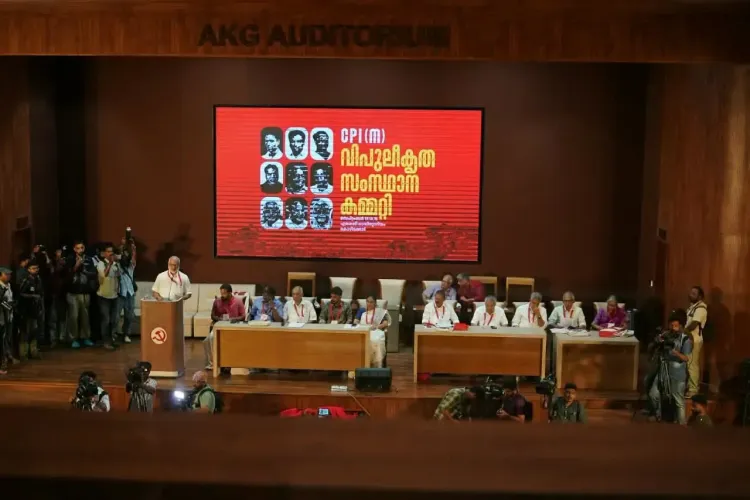
CPI(M) 's extended state committee meeting began on 14 September in Kozhikode , with the draft rectification report by State Secretary M.V.
Govindan facing sharp pushback.
Delegates from Kannur — the party's traditional stronghold — led criticism, arguing real decision-making power rested with the state leadership, not ordinary workers.
Similar dissent subsequently emerged from Kollam , indicating the resentment is widespread across the party's organisational base.
The report's omission of the Taliparamba candidature controversy and the handling of K.K.
Shailaja 's constituency shift drew explicit criticism.
Delegates cited a culture of dual standards — protection for those close to the leadership, criticism reserved for ordinary workers — as a key factor in eroding party credibility.
The CPI(M)-led Left has not won a major election since the 2021 Assembly polls ; delegates say repeated warnings from successive losses were ignored by the leadership.
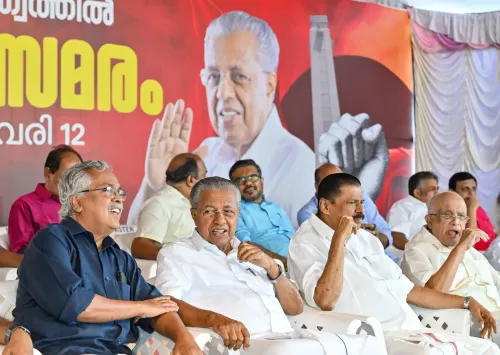
The Communist Party of India (Marxist) state leadership — including former Chief Minister Pinarayi Vijayan and State Secretary M.V. Govindan — came under sharp indirect criticism on 14 September at the party's extended state committee meeting in Kozhikode, as delegates from the party's own stronghold of Kannur pushed back against a draft rectification report that placed the blame for the party's crushing electoral defeat on ordinary workers and lower-level committees.
Kannur Breaks Ranks
In a significant development, the sharpest dissent on the first day of discussions came not from traditional critics but from Kannur — historically the CPI(M)'s most loyal district. Delegates there argued that rank-and-file workers could not be held responsible for failures when real decision-making authority was concentrated at the state leadership level. The criticism was notably restrained in framing — not a direct personal attack — but its implications were unmistakable.
Delegates from Kollam subsequently echoed similar concerns, signalling that the resentment extended beyond a single district and cut across the party's organisational geography.
What the Draft Report Got Wrong, According to Delegates
The draft rectification report presented by Govindan drew criticism on multiple counts. Delegates questioned the report's attempt to highlight investigations by central agencies and the Enforcement Directorate — reportedly targeting Vijayan and his family — as a principal challenge facing the party, arguing that this framing failed to resonate and that the CPI(M)'s immediate crisis was primarily internal.
The omission of the Taliparamba candidature controversy from the report also drew fire. While the document addressed lapses in candidate selection and discussed the Payyannur defeat, delegates questioned why the Taliparamba setback received no equivalent attention. The decision to shift K.K. Shailaja to another constituency and the handling of A.N. Shamseer's candidature were also raised on the floor.
Dual Standards and Leadership Accountability
A recurring theme across the discussions was what delegates described as a two-tier system within the party — one standard applied to those close to the leadership, another to ordinary workers. Critics argued this culture of selective accountability had corroded the party's credibility with its own cadre and, by extension, with voters.
Delegates also pointed to what they characterised as parliamentary ambitions among senior leaders and the entrenchment of personality-centred politics during the party's prolonged spell in power — both cited as structural contributors to the electoral collapse.
A Pattern of Ignored Warnings
Delegates noted that the CPI(M)-led Left has not won a single significant election since the 2021 Assembly polls, culminating in a severe setback in the latest Assembly elections. According to delegates, repeated warnings from successive defeats had gone unheeded, and the current organisational crisis was the direct result of the leadership's failure to course-correct in time.
Broader organisational concerns also featured prominently — including the erosion of the party's traditional vote base, declining active membership, weakening ties with mass organisations, and the inability of party leaders to directly engage with and communicate to ordinary people.
What Happens Next
The three-day meeting's second day on Monday was expected to see whether criticism would intensify and whether more delegates would directly confront the state leadership. Tuesday's concluding session — when discussions will be formally summed up — is considered crucial. The central question is whether Vijayan and Govindan will face meaningful accountability, or whether the grassroots criticism will once again be absorbed into the party's established rectification process without resulting in significant changes at the top.
Point of View
But because it doesn't need to. When the party's most disciplined and loyal district breaks from the rectification script, it tells you the leadership's control over the narrative is weakening. The draft report's attempt to frame central-agency investigations as an external threat, rather than engage honestly with internal failures, has clearly not landed. The deeper problem is structural: a party that spent a decade in power allowed decision-making to centralise around a few individuals, and now cannot credibly ask its base to absorb the consequences. Tuesday's summing-up session is the real test — if Vijayan and Govindan emerge without meaningful accountability, the grassroots disillusionment visible in Kannur will only deepen ahead of the next electoral cycle.
NationPress
14 Sept 2026
Frequently Asked Questions
Why are CPI(M) delegates criticising Pinarayi Vijayan and M.V. Govindan?
Delegates at the party's extended state committee meeting in Kozhikode on 14 September argued that the draft rectification report unfairly placed responsibility for the party's electoral defeat on ordinary workers and lower-level committees, when real decision-making authority lay with the state leadership headed by Vijayan and Govindan. The criticism, while not framed as direct personal attacks, indirectly held both leaders accountable for the party's collapse.
What is the CPI(M) extended state committee meeting about?
The three-day meeting, held in Kozhikode, is a post-election review aimed at identifying reasons for the CPI(M)-led Left's severe defeat in the Kerala Assembly elections. The centrepiece is a draft rectification report presented by State Secretary M.V. Govindan, which is now facing significant pushback from delegates across the party's key districts.
What specific issues did delegates raise against the party leadership?
Delegates criticised the omission of the Taliparamba candidature controversy from the report, questioned the handling of K.K. Shailaja's constituency shift and A.N. Shamseer's candidature, and alleged a system of dual standards that protected those close to the leadership while holding ordinary workers to stricter account. They also flagged the rise of personality-centred politics and parliamentary ambitions among senior leaders.
Why is Kannur's criticism particularly significant?
Kannur is historically the CPI(M)'s most loyal and organisationally strongest district in Kerala. Dissent emerging from Kannur delegates — rather than from traditionally critical regions — signals that the leadership's loss of confidence has penetrated its own support base, making the criticism harder to dismiss as factional opposition.
What happens after the Kozhikode meeting concludes?
Tuesday's concluding session, when discussions are formally summed up, is considered the critical moment. It will determine whether former Chief Minister Pinarayi Vijayan and State Secretary M.V. Govindan face meaningful accountability, or whether the grassroots criticism is absorbed into the party's standard rectification process without major leadership changes.