J&K Assembly autumn session called for Sept 21, 2026
Synopsis
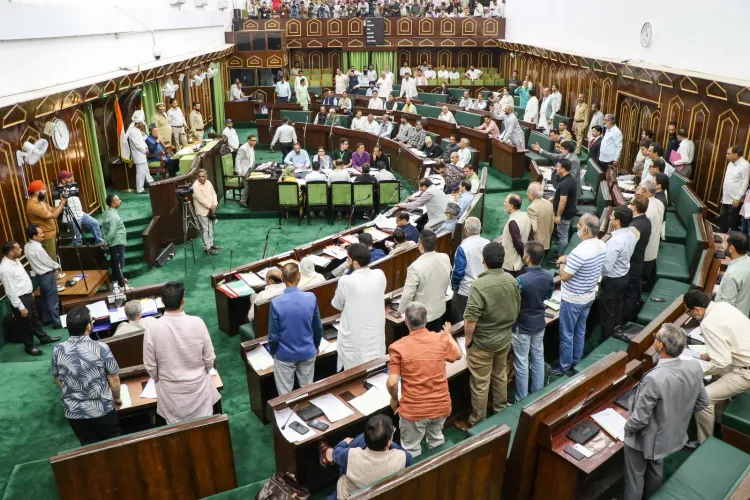
Jammu and Kashmir's Lt Governor Manoj Sinha has formally summoned the Legislative Assembly for 21 September 2026 — the autumn session of the 13th Assembly, elected just months ago after J&K's restoration of elected governance. With a National Conference-led coalition in place and the BJP as a sizeable opposition, the session will be a key test of legislative functioning in a union territory still navigating its post-Article 370 political identity.
Key Takeaways
Lt Governor Manoj Sinha summoned the J&K Legislative Assembly to meet on 21 September 2026 .
The summons followed a recommendation by the Council of Ministers under Chief Minister Omar Abdullah .
The assembly has 95 members elected from 95 constituencies; the current 13th assembly was elected in September–October 2024 .
The ruling National Conference holds 41 seats ; BJP is the principal opposition with 29 seats .
Abdul Rahim Rather is the Speaker; Sunil Sharma (BJP) is the Leader of the Opposition.
The session is among the first regular legislative sittings since elected governance was restored in J&K post-2019 reorganisation.
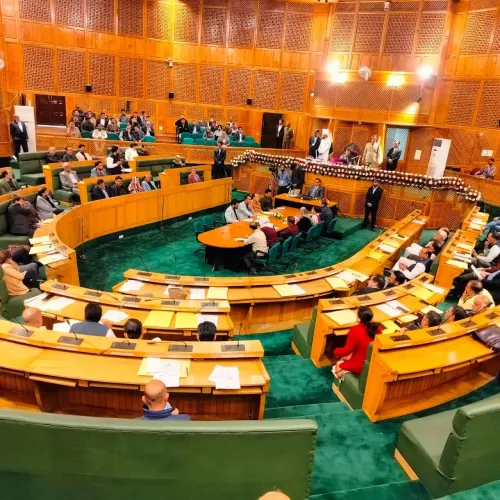
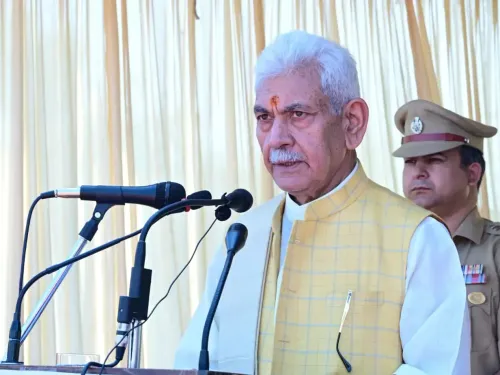
Jammu and Kashmir Lieutenant Governor Manoj Sinha has summoned the state's Legislative Assembly to convene on 21 September 2026, marking the beginning of the autumn session of the 13th J&K Assembly. The summons was issued on 12 August 2026 from Srinagar, following a recommendation by the Council of Ministers headed by Chief Minister Omar Abdullah.
Legal Basis for the Summons
The L-G invoked his powers under the Jammu and Kashmir Reorganisation Act, 2019, which governs the functioning of the union territory's unicameral legislature. The Act, passed by Parliament on 5 August 2019, replaced the erstwhile bicameral structure — comprising the Legislative Council and the Legislative Assembly — with a single-house legislature, simultaneously reorganising the former state into two union territories: Jammu and Kashmir and Ladakh.
Composition of the Current Assembly
The J&K Legislative Assembly currently has 95 members, directly elected from 95 constituencies, with a five-year tenure unless dissolved earlier. The current 13th assembly was elected in September and October 2024.
In terms of party strength, the ruling National Conference holds 41 seats, followed by the Bharatiya Janata Party (BJP) with 29, Congress with 6, Peoples Democratic Party (PDP) with 4, CPI(M) with 1, Awami Ittehad Party with 1, Aam Aadmi Party (AAP) with 1, Peoples Conference with 1, and 6 independents.
Key Constitutional Offices
Senior National Conference leader and former minister Abdul Rahim Rather serves as the Speaker of the Assembly. Chief Minister Omar Abdullah is the Leader of the House, while Sunil Sharma of the BJP holds the position of Leader of the Opposition.
The National Conference government draws its majority from the support of Congress, CPI(M), and four independents who have aligned with the ruling party.
Context and Significance
This comes amid the broader political reconfiguration of Jammu and Kashmir since the abrogation of Article 370 and Article 35A in 2019, which stripped the region of its special status and statehood. The autumn session will be among the first regular legislative exercises under the restored elected government, making it a closely watched marker of democratic normalcy in the union territory.
The session's agenda is yet to be formally announced, but it is expected to take up legislative business and budgetary matters relevant to the union territory's governance.
Point of View
And each legislative session is a data point in the Centre's argument that the 2019 reorganisation has normalised democratic functioning. The real question the autumn session must answer is whether the assembly can exercise meaningful legislative autonomy — or whether the L-G's concurrent executive authority continues to limit the elected government's room to manoeuvre. The party arithmetic also bears watching: a National Conference government with 41 seats in a 95-member house governs on borrowed numbers, making floor management a persistent pressure point.
NationPress
12 Aug 2026
Frequently Asked Questions
When will the J&K Assembly autumn session 2026 begin?
The Jammu and Kashmir Legislative Assembly autumn session is scheduled to begin on 21 September 2026. Lt Governor Manoj Sinha issued the summons on 12 August 2026 on the recommendation of Chief Minister Omar Abdullah's Council of Ministers.
Who summoned the J&K Assembly and under what authority?
Lt Governor Manoj Sinha summoned the assembly under the provisions of the Jammu and Kashmir Reorganisation Act, 2019. The summons was issued on the recommendation of the Council of Ministers headed by Chief Minister Omar Abdullah.
What is the current composition of the J&K Legislative Assembly?
The 13th J&K Assembly has 95 members. The National Conference holds 41 seats, BJP 29, Congress 6, PDP 4, and smaller parties and independents account for the rest. The government is supported by Congress, CPI(M), and four independents.
Why is J&K's legislature unicameral now?
The Jammu and Kashmir Reorganisation Act, passed by Parliament on 5 August 2019, abolished the bicameral structure — which included both a Legislative Council and a Legislative Assembly — and replaced it with a single-house legislature as part of the reorganisation of the former state into two union territories.
Who are the key constitutional office-holders in the J&K Assembly?
Abdul Rahim Rather, a senior National Conference leader and former minister, is the Speaker. Chief Minister Omar Abdullah leads the House, while Sunil Sharma of the BJP serves as the Leader of the Opposition.