Bageshwar's Sunday Market Boosts Rural Economy in Uttarakhand

Synopsis
The Chief Minister's Office of Uttarakhand has highlighted Bageshwar's weekly 'Sunday Market' as a growing pillar of rural economic activity, giving local farmers and producers a reliable direct-sale platform in one of the state's most remote hill districts.
Key Takeaways
The Chief Minister's Office of Uttarakhand spotlighted Bageshwar's 'Sunday Market' on November 16, 2026 as a rural economic catalyst.
The market gives farmers and local producers in Bageshwar district direct access to buyers, reducing dependence on distant mandis.
Bageshwar is a hilly district in the Kumaon Himalayas , where terrain and limited infrastructure have long constrained agricultural marketing.
Weekly haats have historically served as the primary rural trade mechanism across Indian hill states.
The state's public amplification of the market signals institutional backing for district-level agricultural marketing initiatives.
Expansion of the model to other Uttarakhand districts remains a key development to watch.
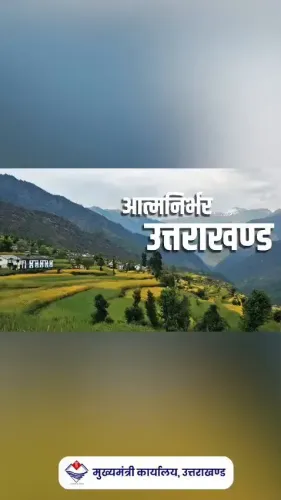
In the high-altitude folds of Bageshwar district, a simple weekly market is quietly rewriting the economics of hill farming. The Chief Minister's Office of Uttarakhand on Monday, November 16, 2026, spotlighted Bageshwar's 'Sunday Market' as a strengthening pillar of the rural economy — a platform giving local farmers and producers direct access to buyers for their produce.
The CMO's post described the market as a 'new foundation for strengthening the rural economy' — 'ग्रामीण अर्थव्यवस्था की मजबूती का नया आधार' — where farmers and local producers are getting 'a better market for their yield.' The framing is deliberate: in Uttarakhand's hilly terrain, connecting smallholder farmers to any reliable buyer has historically been the hardest part of agricultural life.
Why a Weekly Haat Matters in a Hill District
Bageshwar sits deep in the Kumaon Himalayas, where fragmented landholdings, steep terrain, and limited cold-chain infrastructure have long squeezed farmer margins. Weekly haats — traditional local markets — have been the backbone of rural trade in Indian hill states for generations, cutting out middlemen and letting producers set more competitive prices. The Sunday Market fits squarely into that tradition, but with active state visibility behind it.
Uttarakhand administrations have consistently backed district-level agricultural marketing initiatives as a low-cost, high-reach strategy for rural income support. By amplifying a grassroots market through the Chief Minister's Office handle, the state signals that such platforms are not peripheral — they are policy.
Farmers and Producers at the Centre
The direct beneficiaries are rural farmers and local producers in and around Bageshwar — growers of vegetables, grains, and hill-specific produce who now have a reliable weekly window to sell without travelling long distances to larger mandis. For many, the difference between a local market and no market is the difference between a viable crop and a wasted harvest.
India's hill-state rural economy debate has long circled one stubborn question: how do you bring markets to the mountains? Weekly haats, when well-organised and state-supported, have proven to be one durable answer — no warehousing, no logistics subsidy required, just a fixed day, a fixed place, and institutional backing.
If Bageshwar's Sunday Market becomes a model the state chooses to replicate across other remote Uttarakhand districts, it could quietly become one of the more effective grassroots rural income tools in the state's agricultural playbook.
Point of View
Amplifying low-cost market access mechanisms is both politically smart and economically sensible. The move also fits a national pattern of hill-state governments leaning on traditional haat models as scalable, low-maintenance rural income tools. The real test will be whether institutional attention translates into logistical support — better approach roads, vendor facilities, or digital payment integration — that makes the Sunday Market a durable fixture rather than a news cycle.
NationPress
16 Nov 2026
Frequently Asked Questions
What is Bageshwar's Sunday Market?
Bageshwar's Sunday Market is a weekly local market in Bageshwar district, Uttarakhand, where farmers and local producers sell their agricultural produce directly to buyers, reducing reliance on distant wholesale markets.
Where is Bageshwar district located?
Bageshwar is a district in the Kumaon region of Uttarakhand, nestled in the Himalayas. It is primarily an agrarian district with hilly terrain that makes traditional supply chains difficult.
How does the Sunday Market help farmers in Uttarakhand?
The market provides farmers and local producers a reliable weekly platform to sell their produce at better prices without having to travel to distant mandis, effectively cutting out middlemen and improving farm incomes.
What is a haat market in India?
A haat is a traditional weekly or bi-weekly open market common across rural India, especially in hill and tribal regions, where producers sell directly to local consumers. They are considered a low-cost and effective rural trade mechanism.
Will Uttarakhand expand the Sunday Market model to other districts?
As of November 2026, no official announcement about expanding the model has been confirmed. The state government's public promotion of the Bageshwar initiative is seen as an indication of interest in scaling such platforms, but specific expansion plans are yet to be declared.