Barapullah Phase-III traffic chaos: Delhi PWD Minister Parvesh Verma pins blame on AAP's 2014-15 design
Synopsis
The ₹1,635 crore Barapullah Phase-III flyover opened last month to immediate gridlock — and now Delhi's PWD Minister is pointing the finger directly at AAP's decade-old design approvals, while the Delhi Traffic Police has formally flagged lane geometry failures. With fixes promised in 10-15 days, the real question is whether political blame-trading will outlast the congestion itself.
Key Takeaways
Delhi PWD Minister Parvesh Verma on 7 October 2026 blamed the AAP government for traffic chaos on the newly opened Barapullah Phase-III corridor.
The flyover's design was finalised in 2014-15 and work began on 28 April 2015 , according to Verma; the project was originally due by 27 October 2017 but was delayed by nine years .
The corridor, built at a cost of ₹1,635 crore , connects Mayur Vihar Phase-1 to Sarai Kale Khan and forms part of a 10-kilometre signal-free stretch.
When the BJP took office in February 2025 , 288 of 298 pillars — about 80% of structural work — were already complete, Verma stated.
The Delhi Traffic Police has formally written to the PWD flagging a lane-capacity mismatch near Sundial Park and recommending a U-turn near Gurudwara Bala Sahib .
Verma promised visible improvements for commuters within 10 to 15 days , including a new U-turn, lane additions, and real-time traffic coordination with Google .
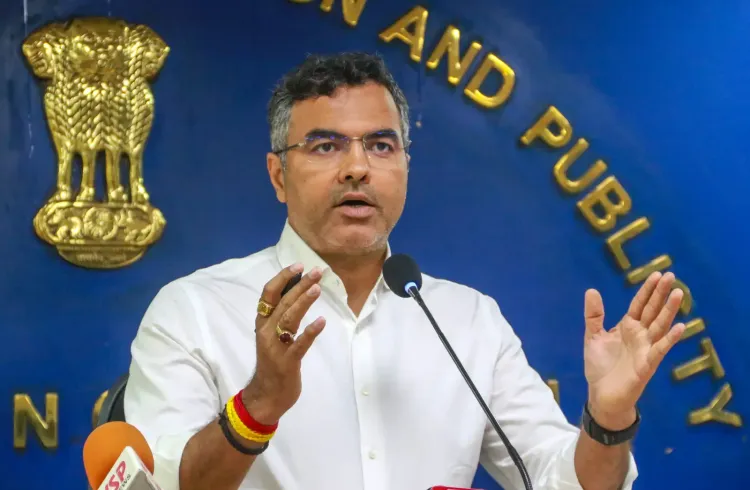
Delhi Public Works Department (PWD) Minister Parvesh Verma on Wednesday, 7 October 2026, squarely blamed the previous Aam Aadmi Party (AAP) government for the traffic congestion crippling the newly opened Barapullah Phase-III corridor, asserting that the flyover's design was approved during AAP's tenure and that the current Bharatiya Janata Party (BJP) administration inherited a fundamentally flawed project. Verma simultaneously outlined a set of short- and long-term corrective measures, promising commuters visible improvements within 10 to 15 days.
The Design Accountability Dispute
At a press conference, Verma stated that the Barapullah Phase-III project formally commenced on 28 April 2015, meaning its design had been finalised in 2014-15 — when, he said, the AAP government had assumed power in Delhi. He argued that decisions on the number of lanes and other structural parameters were locked in at that point, leaving the present government with limited scope to alter the fundamental geometry of the corridor.
'The Aam Aadmi Party is an expert at proving lies as truth. There is no match for them when it comes to presenting any lie as the truth. The Barapullah Phase-III flyover project began in 2015. That means its design had already been approved in 2014-2015, when the Aam Aadmi Party government had come to power in Delhi. The entire design was approved during their tenure. How many lanes the flyover would have — all of this was decided by them,' Verma said.
He further alleged that the AAP government was responsible for the technical qualification of the contractor, the tendering process, and additional payments exceeding ₹600 crore during its years in office.
A Nine-Year Delay and Mounting Costs
Verma outlined the financial trajectory of the project, noting that its initial estimate was prepared in 2014-15 at ₹1,057 crore, while the contractor's tender came in at ₹964 crore. The work was originally due to be completed by 27 October 2017 — within 30 months of its April 2015 start — but ultimately concluded roughly nine years later, just before the corridor was inaugurated. The final cost of the flyover stands at ₹1,635 crore.
The minister also flagged a series of escalation payments made to the contractor before the BJP government took office in February 2025. 'The first escalation to the contractor was ₹36.66 crore before our government came to power. The second escalation's payment was ₹39.85 crore, again before our government. Then that contractor went to arbitration because this contract had an arbitration clause. During this, on 29 September 2021, the contractor was awarded ₹44 crore,' Verma said.
He added that when the BJP assumed office, 288 of the 298 pillars required for the flyover — roughly 80 per cent of the structural work — had already been erected.
The Capacity Question: Two Lanes on a High-Traffic Axis
Verma reserved particular criticism for the flyover's lane configuration, questioning why a corridor built over the Yamuna — flanked on one side by the DND Flyway and on the other by the Delhi-Meerut Expressway, both of which are roughly twice as wide — was designed with only two lanes on each side.
'Was (AAP chief Arvind) Kejriwal's vision so limited that on one side there is the DND Flyway, which is twice as wide, and on the other side is the Delhi-Meerut Expressway, whose width is also twice as much? You designed a flyover in 2015 where there is no space constraint, over the Yamuna, and still made it only two lanes on each side,' the minister said. He argued that any infrastructure project should be planned with 50 to 100 years of projected traffic and population growth in mind.
What the Delhi Traffic Police Flagged
The Delhi Traffic Police has written formally to the PWD identifying several design-related shortcomings on the corridor, chief among them a mismatch between lane capacity and the geometry of a key merger near Sundial Park. The police have also recommended the creation of a dedicated U-turn near Gurudwara Bala Sahib to ease bottlenecks. Verma confirmed that the department had held discussions with the Traffic Police on both immediate and structural remedies.
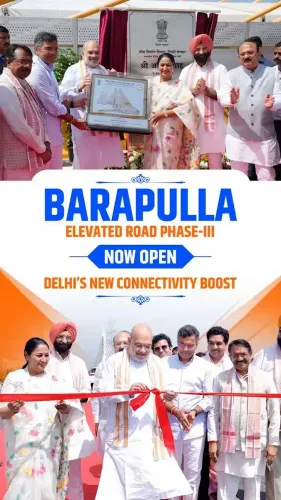
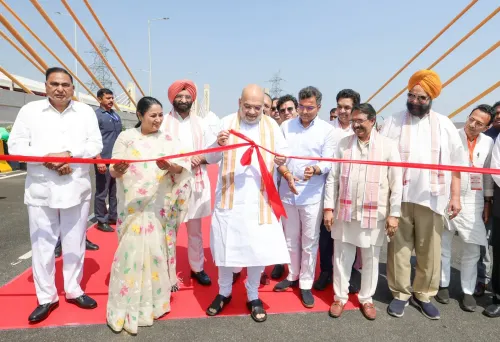
The Barapullah Phase-III flyover connects Mayur Vihar Phase-1 on Noida Link Road with Sarai Kale Khan on Ring Road, and forms part of a continuous 10-kilometre signal-free stretch extending up to the AIIMS roundabout.
Corrective Measures Underway
Verma said the PWD is actively working on a new U-turn, the possibility of adding a traffic lane, modifications at key merging points, and real-time traffic coordination with Google. He assured commuters that improvements would be discernible within 10 to 15 days. The opposition, for its part, has continued to press the ruling dispensation on why a newly inaugurated corridor was opened despite known design deficiencies — a line of attack Verma dismissed as politically motivated deflection.
Point of View
The delay spanned multiple administrations, and the congestion is real and present. Verma's numbers on escalation payments and arbitration awards deserve independent scrutiny; so does the claim that lane configuration was immutable after 2015, given that construction stretched another nine years. More fundamentally, a ₹1,635 crore corridor being inaugurated despite a documented lane-capacity mismatch flagged by the Traffic Police raises questions about commissioning standards that neither party has adequately answered. The commuter — stuck in the jam — has little use for the political timeline.
NationPress
7 Oct 2026
Frequently Asked Questions
Why is there heavy traffic congestion on the Barapullah Phase-III corridor?
The Delhi Traffic Police has formally flagged design-related shortcomings on the corridor, including a mismatch between lane capacity and the geometry of a key merger near Sundial Park. The flyover was built with only two lanes on each side, which critics argue is inadequate given the volume of traffic feeding in from the DND Flyway and the Delhi-Meerut Expressway.
Who approved the design of Barapullah Phase-III?
Delhi PWD Minister Parvesh Verma asserts that the design was finalised in 2014-15 and formally approved during the AAP government's tenure, before construction began on 28 April 2015. The AAP has disputed the BJP's framing of responsibility, prompting the minister's press conference on 7 October 2026.
How much did the Barapullah Phase-III flyover cost, and why was it delayed?
The flyover was ultimately built at ₹1,635 crore, against an initial 2014-15 estimate of ₹1,057 crore and a contractor tender of ₹964 crore. Originally due for completion by October 2017, the project was delayed by approximately nine years, with multiple escalation payments and arbitration awards adding to the final cost.
What corrective measures are being planned for the Barapullah Phase-III corridor?
Minister Verma has outlined plans for a new U-turn, the possible addition of a traffic lane, modifications at key merging points — particularly near Sundial Park and Gurudwara Bala Sahib — and real-time traffic coordination with Google. He has promised that commuters will see improvements within 10 to 15 days.
Where does the Barapullah Phase-III flyover run?
The ₹1,635 crore corridor connects Mayur Vihar Phase-1 on Noida Link Road with Sarai Kale Khan on Ring Road. It merges with the existing Barapullah network to form a continuous 10-kilometre signal-free stretch extending up to the AIIMS roundabout in New Delhi.