Surrendered Maoist women in Bastar: Who decides what freedom looks like?
Synopsis
A fashion ramp in Raipur became an unlikely flashpoint in India's longest internal conflict. Nine surrendered Maoist women from Bastar modelled Kosa silk sarees on National Handloom Day — and a single moment of a woman tearing up over nail paint for the first time cut through years of ideological debate about who speaks for tribal women, and what freedom is allowed to look like.
Key Takeaways
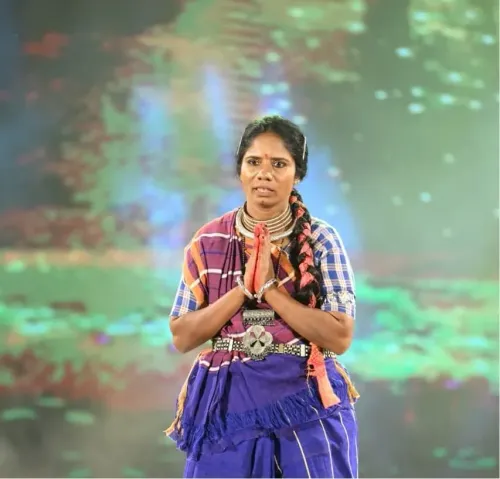
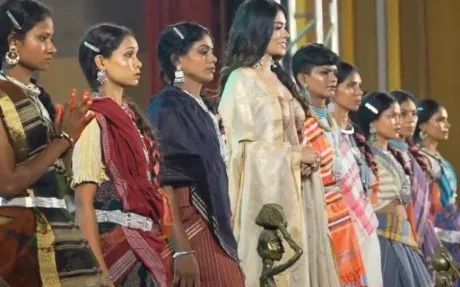
Nine surrendered Maoist women from Bastar–Sukma walked the ramp at Raipur's Pandit Deendayal Upadhyay Auditorium on 7 August 2025 , modelling Kosa silk and handloom sarees.
Union Home Minister Amit Shah had cited a near-identical moment — a surrendered woman crying while applying nail polish for the first time — during his Lok Sabha address on Naxalism on 30 March 2025 .
A report by The Wire claimed the women were 'tricked' into the event; the government stated each participant received ₹10,000 and clothing as gifts.
Chhattisgarh has more than 20,000 handlooms ; the Kosa silk economy supports weavers, dyers, and cocoon rearers across conflict-affected districts.
The episode has revived debate about the 'dimaagi Naxal' — voices accused of scrutinising State rehabilitation while minimising Maoist coercion.
The CPI (Maoist)'s physical reach is contracting rapidly; the harder question now is whether surrendered cadres can rebuild lives on their own terms.
Nine surrendered women Maoists from the Bastar–Sukma region of Chhattisgarh walked the ramp at Raipur's Pandit Deendayal Upadhyay Auditorium on 7 August 2025, modelling traditional Kosa silk and handloom sarees during the National Handloom Day celebrations — an event that has since ignited a sharply polarised debate about rehabilitation, agency, and who gets to speak for tribal women emerging from decades of Maoist conflict.
The women, currently undergoing government rehabilitation, walked alongside professional models in what officials described as an effort to spotlight Chhattisgarh's handloom economy while symbolising the transition from armed insurgency to mainstream life. Video footage from the event showed the women smiling, laughing, and engaging with the experience — including one visibly emotional moment when nail paint was applied to a participant's fingers for what was, by her own account, the first time.
A Small Moment, A Large Conflict
That moment — a woman becoming emotional over nail paint — has been cited by more than one observer as a window into the depth of restriction that life inside an underground armed organisation imposes. Union Home Minister Amit Shah referenced a strikingly similar incident during his Lok Sabha address on Naxalism on 30 March 2025, recalling a surrendered Maoist woman breaking down while applying nail polish for the first time. According to Shah, she had been taken away at the age of seven and had spent years wearing only the clothes prescribed by the movement. He also spoke of women discovering mehendi and lipstick after emerging from the forests.
Many of the women who joined — or were recruited into — the Communist Party of India (Maoist) did so very young, according to rehabilitation officials. Some followed relatives or trusted figures; others grew up in areas where Maoist presence was simply the dominant reality. Once inside, personal choices — clothing, movement, relationships — were governed by the organisation's discipline.
The Controversy: 'Tricked' or Willing Participants?
The ramp walk drew pointed criticism from certain quarters. A report by digital news outlet The Wire claimed the women had been 'tricked' into the modelling event, with some participants allegedly told they were travelling to Raipur for tailoring training. The framing — centred on the word 'tricked' — effectively repositioned the women as victims rather than participants, critics of the report have argued.
The government's account differed. An official quoted in the same report stated that ₹10,000 had been transferred to each woman's bank account and that they had also received clothes as gifts. Separately, video interviews conducted by a YouTuber who interacted with the women showed them speaking positively about the experience. The divergence in accounts has not been independently resolved.
The episode has reignited a broader debate about what is sometimes termed the 'dimaagi Naxal' — a phrase used to describe intellectual or media voices that, critics allege, reflexively frame every State initiative involving tribal communities as exploitative, while applying far less scrutiny to the coercive structures within the Maoist movement itself.
Kosa Silk and the Economics of Rehabilitation
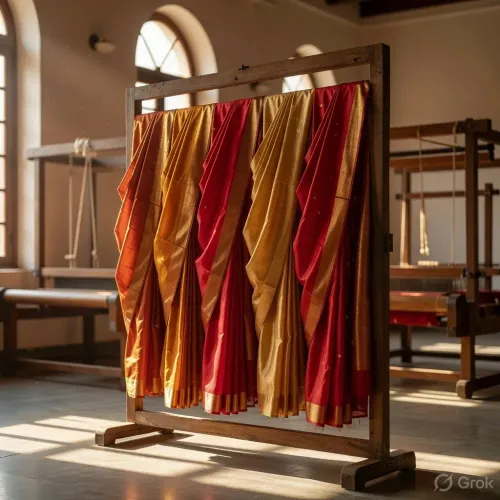
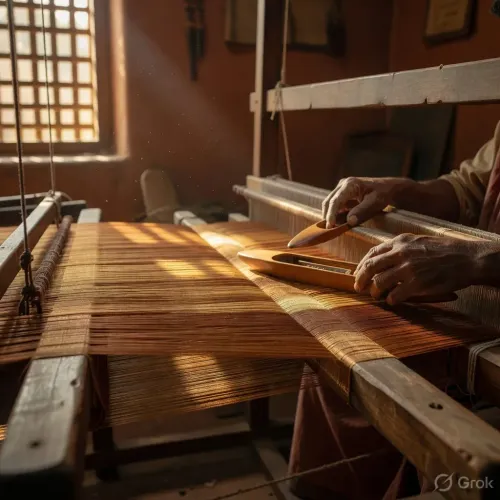
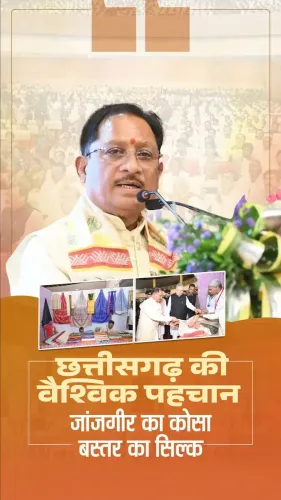
Beyond the political argument lies a dimension that has received less attention: the commercial and economic logic of the event itself. Chhattisgarh hosts more than 20,000 handlooms, and the Kosa silk economy — known for its distinctive natural golden sheen — supports a chain of cocoon rearers, spinners, dyers, and weavers across the state. For many families in conflict-affected districts, this is livelihood, not luxury.
Placing Kosa silk on a fashion ramp, the argument goes, generates visibility that can translate into demand — and demand, in turn, travels back to the weaver. Notably, the women modelling the sarees were themselves from the same region where many of those textiles are produced. If their participation helps expand the market for Bastar handloom, the economic case for such events is not trivial.
This is the dimension that observers say was largely absent from critical coverage of the event: the possibility that rehabilitation, commerce, and cultural visibility can intersect in ways that are simultaneously imperfect and genuinely valuable.
Rehabilitation Beyond the File
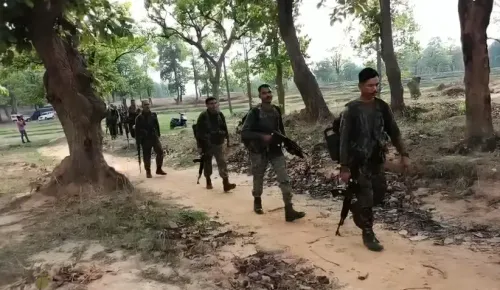
The broader rehabilitation question extends well past a single fashion show. Thousands of Maoist cadres have surrendered or come overground as security forces have entered areas once considered inaccessible. Senior CPI (Maoist) leaders have been eliminated or have surrendered. The physical geography of the insurgency is, by most accounts, contracting rapidly.
What follows — for the men and women who spent years inside that structure — is less straightforward. Rehabilitation cannot, experts argue, mean only a financial transfer at the point of surrender. These individuals must rebuild relationships, acquire skills, find employment, and navigate a society that may have changed substantially during their years underground. Many must also, for the first time in years or decades, make choices for themselves.
Sometimes, those choices will look like tailoring classes. Sometimes they will look like a ramp walk in a Kosa silk saree. Sometimes they will look like a woman staring at her freshly painted nails.
What Comes Next for Bastar's Surrendered Cadres
The insurgency's ideological geography, observers note, will take longer to dissolve than its military one. The central question in Bastar is shifting: from whether the Indian State can defeat an armed movement, to whether those who have emerged from it will be allowed to build lives on their own terms — supported by policy, employment, and, crucially, the freedom to define what recovery means for themselves.
That process will unfold in rehabilitation centres, in handloom cooperatives, in vocational training programmes, and in moments too small to appear in official reports. Whether the broader public conversation makes space for the full complexity of that process — rather than flattening it into either triumphalist state narrative or reflexive victimhood — may determine how honestly India reckons with what four decades of conflict in its heartland actually cost.
Point of View
And rightly so — but the CPI (Maoist)'s own coercive architecture, including forced recruitment, Jan Adalat killings, and the impossibility of voluntary exit, rarely attracts the same moral urgency. When a surrendered woman smiling in a saree generates more discomfort than the image of the same woman carrying a rifle at age seven, the framing has drifted from journalism into advocacy. The 'tricked' headline is a case study: it forecloses the possibility of genuine agency before a single question has been asked of the women themselves. India's rehabilitation challenge is real and underfunded — but it will not be served by narratives that keep tribal women permanently cast as victims of whichever power is currently being critiqued.
NationPress
11 Oct 2026
Frequently Asked Questions
What happened at the National Handloom Day event in Raipur on 7 August 2025?
Nine surrendered Maoist women from the Bastar–Sukma region of Chhattisgarh walked the ramp at Raipur's Pandit Deendayal Upadhyay Auditorium, modelling traditional Kosa silk and handloom sarees alongside professional models. The event was part of National Handloom Day celebrations and was framed by officials as a symbol of rehabilitation and a platform to promote Chhattisgarh's handloom economy.
Why did the ramp walk become controversial?
A report by The Wire claimed the women had been 'tricked' into participating, with some allegedly told they were going to Raipur for tailoring training rather than a fashion show. The government disputed this, stating each woman received ₹10,000 and clothing. Video interviews showed the women speaking positively about the experience, creating a contested factual record that has not been independently resolved.
What did Home Minister Amit Shah say about surrendered Maoist women?
During his Lok Sabha address on Naxalism on 30 March 2025, Amit Shah recalled a surrendered Maoist woman breaking down while applying nail polish for the first time. He said she had been taken away at the age of seven and had spent years wearing only movement-prescribed clothing, and also spoke of women discovering mehendi and lipstick after leaving the forests.
What is Kosa silk and why does it matter to Bastar's economy?
Kosa silk is Chhattisgarh's distinctive variety of tussar silk, prized for its natural golden sheen and earthy texture. The state has more than 20,000 handlooms, and the Kosa economy supports cocoon rearers, spinners, dyers, and weavers — many of them in conflict-affected districts where alternative livelihoods are scarce. Greater market visibility for Kosa silk can directly expand incomes for producers in the region.
What is the broader rehabilitation challenge for surrendered Maoists in Chhattisgarh?
Thousands of Maoist cadres have surrendered as security forces have expanded into previously inaccessible areas. Rehabilitation involves more than a financial transfer at surrender — it requires skill-building, employment, social reintegration, and, for many, the experience of making personal choices for the first time in years or decades. Officials and observers agree that the process is complex, underdocumented, and will define the post-insurgency phase in Bastar.