Bengal mango export to Dubai: 10% spoiled in Gulf crisis sea delay
Synopsis
India's first commercial sea shipment of Dashehari and Langra mangoes to Dubai survived a Gulf conflict-driven delay with 90% of the 12.5-tonne consignment intact — and farmers still pocketed ₹15–20 per kg more than through conventional air-freight channels. The milestone could reshape how India exports fresh mangoes to the Gulf.
Key Takeaways
A 12.5-tonne consignment of Dashehari and Langra mangoes from Amroha, Uttar Pradesh was exported to Dubai by sea, arriving on 17 July after a 25-day transit.
Nearly 10 per cent of the consignment was spoiled due to delays caused by the Gulf conflict ; 90 per cent arrived in marketable condition.
The shipment used METWASH technology developed by ICAR-CISH and an export protocol co-developed with APEDA .
Farmers earned an additional ₹15–20 per kg over conventional air-freight export channels, owing to lower sea freight costs.
This is the first successful commercial sea shipment of these mango varieties from Uttar Pradesh to Dubai under a 25-day transit window.
A 12.5-tonne consignment of Dashehari and Langra mangoes exported from Uttar Pradesh to the United Arab Emirates (UAE) by sea suffered nearly 10 per cent spoilage due to transit delays caused by the ongoing Gulf conflict, the Ministry of Agriculture and Farmers Welfare confirmed. Despite the loss, officials say the shipment marks a landmark in India's mango export history.
What Happened to the Consignment
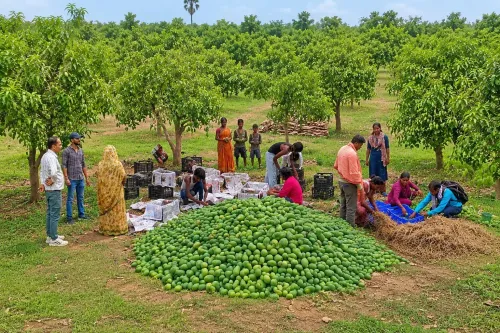
The mangoes were harvested at Amroha, Uttar Pradesh, on 22 June and reached Dubai on 17 July — completing a 25-day harvest-to-market transit. According to the Ministry's statement, nearly 90 per cent of the fruits arrived in good marketable condition despite the extended journey. The remaining 10 per cent were spoiled, a loss attributed directly to delays triggered by the Middle East crisis.
The Technology Behind the Shipment
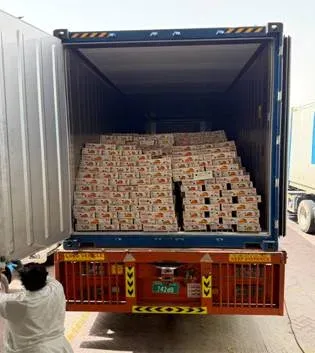
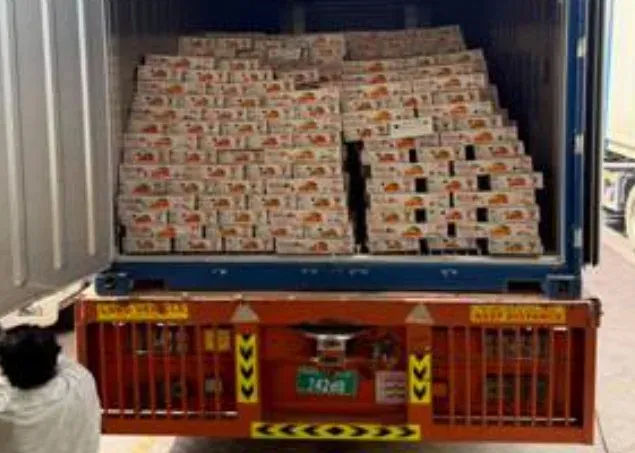
The consignment was handled under a post-harvest protocol jointly developed by ICAR–Central Institute for Subtropical Horticulture (ICAR-CISH), Lucknow, and the Agricultural and Processed Food Products Export Development Authority (APEDA). Fruits were treated with METWASH — a shelf-life extension solution developed by ICAR-CISH — scientifically graded, packed at the Amroha Pack House, and loaded into a 40-foot reefer container under a continuous cold chain throughout the voyage.
Why Farmers Still Came Out Ahead
Despite the spoilage, officials say growers earned more than they would have through conventional air-freight export channels. According to the Ministry's statement, sea freight's lower cost allowed exporters to offer higher procurement prices to farmers, resulting in an additional income of approximately ₹15–20 per kg over traditional export routes. This, officials argue, 'significantly enhanced farm profitability while maintaining the competitiveness of Indian mangoes in international markets.'
A Historic First for Sea-Route Mango Exports
This is described as the first successful commercial sea shipment of Dashehari and Langra mangoes from Uttar Pradesh to Dubai under a 25-day transit window — a milestone that demonstrates premium Indian varieties can reach Gulf markets economically without compromising quality. Notably, had the Middle East crisis not caused delays, officials say spoilage would have been considerably lower.
What Comes Next
Officials expect the success of this shipment to accelerate sea-route exports of mangoes from Uttar Pradesh and other mango-producing states, opening new market opportunities across the Gulf and beyond. Exporters are expected to increasingly adopt sea freight, which could expand India's fresh mango export volumes and reduce dependence on costlier air logistics. The broader commercialisation of this technology, authorities say, stands to improve livelihoods for mango growers across multiple states.
Point of View
But the more consequential story is the 90 per cent that survived — and the ₹15–20 per kg premium that farmers pocketed despite it. India's mango export sector has long been hostage to expensive air freight that compresses grower margins; this shipment, even impaired by a geopolitical disruption, makes the economic case for sea-route scaling. The real test will come when Gulf shipping lanes normalise: if spoilage drops to 2–3 per cent under undisturbed conditions, the ICAR-CISH and APEDA protocol could fundamentally shift India's horticultural export calculus. Policymakers should resist treating this as a one-off milestone and instead fast-track cold-chain infrastructure at mango-belt pack houses before the next season.
NationPress
22 Jul 2026
Frequently Asked Questions
Why did the mango consignment to Dubai suffer spoilage?
The spoilage was caused by transit delays resulting from the ongoing Gulf conflict, which extended the sea journey beyond its planned schedule. Of the 12.5-tonne consignment, nearly 10 per cent was spoiled, while 90 per cent arrived in good marketable condition.
What is the significance of this mango shipment to Dubai?
It is the first successful commercial sea shipment of Dashehari and Langra mangoes from Uttar Pradesh to Dubai under a 25-day harvest-to-market transit period. The milestone shows that premium Indian mangoes can be exported economically by sea without significant quality loss.
How did farmers benefit despite the spoilage?
Because sea freight is substantially cheaper than air freight, exporters were able to pay higher procurement prices to growers. Farmers reportedly earned an additional ₹15–20 per kg over conventional export channels, improving overall farm profitability.
What technology was used to preserve the mangoes during the sea voyage?
The fruits were treated with METWASH, a shelf-life extension solution developed by ICAR-CISH, Lucknow. They were then scientifically graded, packed at the Amroha Pack House, and transported in a 40-foot reefer container under a continuous cold chain.
Will India expand sea-route mango exports going forward?
Officials from the Ministry of Agriculture and Farmers Welfare say the technology is expected to accelerate sea-route exports from Uttar Pradesh and other mango-producing states. Exporters are anticipated to increasingly adopt sea freight, expanding India's fresh mango presence in Gulf and other international markets.