Bengal STF identifies 5 Nepal-based associates of arrested Pakistani ISI spy
Synopsis
West Bengal's STF has cracked open a multi-country espionage network: five Nepal-based operators and a Bangladesh contact named Pavel have been identified from a netbook seized from arrested Pakistani national Wahab Alam. The network was reportedly designed to give Alam an indirect, hard-to-trace line to his ISI handlers — and he had been planning to flee to Bangladesh before investigators closed in.
Key Takeaways
West Bengal STF has identified five Nepal-based associates of arrested Pakistani national Wahab Alam , who has alleged ISI links.
Names were recovered by cracking data on a netbook seized from Alam, and confirmed during his interrogation.
The five Nepal contacts reportedly served as relay points between Alam and his ISI handlers in Pakistan , concealed under the cover of a franchise business.
A sixth contact, Pavel , has been identified in Jessore, Bangladesh ; Alam was allegedly planning to flee there before his arrest.
Alam first entered and settled in West Bengal in 2012 , reportedly using the Nepal route.
The STF is pursuing details of all six individuals through the Union Ministry of External Affairs via diplomatic channels.
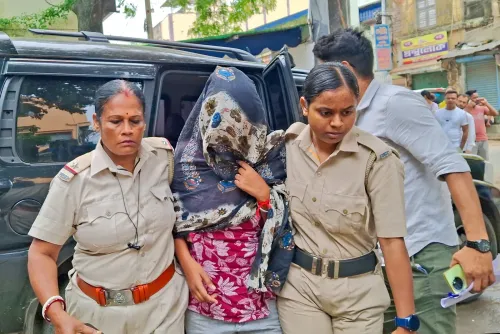
West Bengal's Special Task Force (STF) has identified five Nepal-based operators linked to Wahab Alam, the Pakistani national with alleged ISI connections who was arrested earlier this week from Habra in North 24 Parganas district. The breakthrough came after investigators cracked data recovered from a netbook seized from Alam's possession.
How the Names Were Uncovered
STF sleuths retrieved the identities of the five Nepal-based contacts by analysing encrypted data on the netbook found on Alam at the time of his arrest. During subsequent marathon interrogation sessions, Alam reportedly broke down and disclosed how he had used these individuals to maintain indirect communication with his ISI handlers in Pakistan, according to a source aware of the development.
On the surface, the five Nepal-based individuals were reportedly overseeing a franchise business owned by Alam in Nepal. However, sources indicate they also functioned as the principal relay points between Alam and his Pakistani handlers — a deliberate arrangement, according to investigators, designed to evade detection by Indian police and intelligence agencies.
The Nepal Route: A Calculated Cover
'Precisely, to hoodwink police and intelligence agencies, Alam had established an indirect line of communication with his ISI handlers via Nepal. That is precisely why he used to go to Nepal frequently, after he first entered and settled in West Bengal in 2012, which was again via Nepal,' said an insider from the state police.
Alam's use of Nepal as a transit and communication corridor is consistent with a broader pattern of cross-border espionage networks exploiting India's open-border arrangement with Nepal. This is not the first instance where investigators have flagged the Nepal route as a conduit for ISI-linked operatives seeking to embed themselves in eastern India.
Bangladesh Link: The Operator 'Pavel'
Beyond the Nepal network, STF investigators have also identified a sixth contact — a man referred to only as Pavel — who is reportedly operating from Jessore in Bangladesh. Pavel's name surfaced from the same netbook data and was subsequently corroborated during Alam's confession.
According to investigators, Alam had been planning to flee to Bangladesh before his arrest, intending to meet Pavel there. Pavel was allegedly tasked with arranging a safehouse for Alam, briefing him on new assignments in West Bengal, and eventually facilitating his return to the state after a cooling-off period — a classic operational reset used by espionage networks to evade sustained surveillance.
Diplomatic Channels Activated
The STF is now seeking details on all six individuals — the five Nepal-based operators and Pavel in Bangladesh — through the diplomatic channel of the Union Ministry of External Affairs. Requests have been routed to the respective governments in both countries. The outcome of those diplomatic communications is expected to determine the next phase of the investigation.
With a cross-border network spanning at least three countries now mapped, investigators are working to establish the full operational scope of Alam's activities since he first entered India over a decade ago.
Point of View
A shared cultural geography, and a thriving informal economy make Nepal an almost frictionless transit route for operatives who need plausible cover. What is striking here is the operational sophistication — a franchise business as a front, indirect ISI communication routed through a third country, and a Bangladesh exit plan with a dedicated handler. This is not improvised tradecraft. The STF's move to activate diplomatic channels is necessary, but the pace of inter-government intelligence sharing with both Nepal and Bangladesh has historically been slow. The real test is whether this investigation produces actionable leads on the handlers in Pakistan, or whether it stalls at the border — as so many before it have.
NationPress
14 Aug 2026
Frequently Asked Questions
Who is Wahab Alam and why was he arrested?
Wahab Alam is a Pakistani national with alleged links to Pakistan's Inter-Services Intelligence (ISI) who was arrested earlier this week from Habra in West Bengal's North 24 Parganas district. He is accused of operating a covert espionage network spanning India, Nepal, and Bangladesh.
How did the STF identify the Nepal-based associates?
The STF cracked data stored on a netbook recovered from Alam at the time of his arrest, which yielded the names of five Nepal-based operators. Alam subsequently confirmed their roles during interrogation, according to sources.
What was the role of the five Nepal-based operators?
The five individuals reportedly ran a franchise business owned by Alam in Nepal as a cover, but investigators say they were the primary communication link between Alam and his ISI handlers in Pakistan — an indirect channel designed to evade Indian surveillance.
Who is Pavel and what was his role?
Pavel is a contact reportedly based in Jessore, Bangladesh, identified from the same netbook data. He was allegedly tasked with providing Alam a safehouse in Bangladesh, updating him on new assignments in West Bengal, and arranging his return to India after a cooling period.
What steps are authorities taking next?
The STF is working through the Union Ministry of External Affairs to obtain details on all six foreign contacts — five in Nepal and one in Bangladesh — via diplomatic channels. The outcome of those communications is expected to shape the next phase of the investigation.