Indian Railways approves ₹440 crore third line on Nimpura–Midnapur route
Synopsis
A corridor running at over 115% capacity, carrying nearly 24 million tonnes of freight annually — from iron ore to rice — is finally getting a third line. Indian Railways' ₹440 crore sanction for the Nimpura–Midnapur stretch is a direct intervention on one of South Eastern Railway's most congested routes, with the potential to add 3.52 MTPA of freight headroom once built.
Key Takeaways
Indian Railways has approved a ₹440 crore third railway line between Nimpura West Outer Cabin and Midnapur station in West Bengal .
The new line spans 14.52 km and forms part of the High Utilisation Network (HUN-2) route.
The section currently operates at 115.71% line capacity utilisation, causing severe congestion.
Overall freight loading on the corridor is nearly 23.80 MTPA , covering commodities from iron ore and coal to wheat and petroleum products.
Once complete, the third line is expected to facilitate an additional 3.52 MTPA of freight traffic.
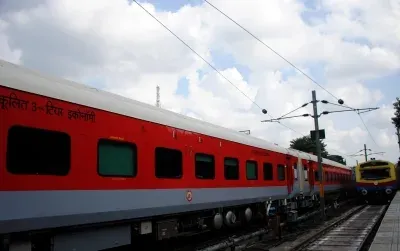
Indian Railways has approved the construction of a 14.52 km third railway line between Nimpura West Outer Cabin and Midnapur station in West Bengal at a cost of ₹440 crore, in a move aimed at relieving severe congestion on one of South Eastern Railway's (SER) most overburdened corridors. The project, sanctioned on 23 July, is expected to unlock an additional freight capacity of 3.52 Million Tonnes Per Annum (MTPA) once operational.
Why This Corridor Needs Relief
The Nimpura West Outer Cabin–Midnapur section currently operates at a line capacity utilisation of 115.71% — well beyond the threshold that railways consider sustainable — resulting in chronic delays for both passenger and freight services. The section forms part of the High Utilisation Network (HUN-2) route, where the Nimpura West Outer Cabin–Gokulpur stretch remains a single line even as doubling works are underway on adjacent sections.
The mismatch between single-line capacity and actual traffic volumes has long been a bottleneck for industries dependent on this corridor. The third line is designed to address that gap directly by improving operational flexibility and reducing train conflicts.
What Moves Through This Section
The corridor carries a diverse and strategically significant freight mix, with an overall loading of nearly 23.80 MTPA. Key commodities include manganese, iron ore, coal, containers, pellet iron, iron and steel, cement, petroleum products, fertilisers, limestone, wheat, rice, and salt, among others. The breadth of this commodity basket underscores how critical the section is not just for heavy industry but also for food and essential goods supply chains in the region.
Impact on Industry and Connectivity
According to an Indian Railways statement, the enhanced infrastructure will improve movement of essential commodities, reduce operational bottlenecks, increase network reliability, and strengthen connectivity for industries already operating in the area as well as those proposed. The additional capacity is particularly relevant for the manufacturing and mining sectors clustered around the Midnapur region in West Bengal.
Notably, this project is part of Indian Railways' broader push to augment capacity on high-density routes nationwide — a programme that has seen accelerated sanctioning of third and fourth lines on corridors where utilisation has breached 100%.
What Happens Next
With the sanction now in place, civil and engineering works are expected to be tendered in the coming months. The completion timeline has not been officially specified, but projects of comparable scale on SER have typically taken three to four years from sanction to commissioning. Once complete, the third line will allow faster turnaround of rakes, reducing dwell times and enabling SER to schedule additional freight and passenger services on the corridor.
Point of View
But the more telling detail is that doubling works on the adjacent Nimpura West Outer Cabin–Gokulpur section are still in progress, meaning the broader HUN-2 bottleneck will outlast this project by years. Indian Railways has a strong record of sanctioning capacity works; its weaker record is in commissioning them on schedule. With 23.80 MTPA already moving through a single-line section, every month of construction delay is a month of freight risk for the industries and supply chains that depend on this corridor.
NationPress
24 Jul 2026
Frequently Asked Questions
What is the Nimpura–Midnapur third railway line project?
It is a ₹440 crore Indian Railways project to construct a 14.52 km third line between Nimpura West Outer Cabin and Midnapur station in West Bengal. The project aims to relieve severe congestion on a South Eastern Railway corridor that currently operates at 115.71% line capacity utilisation.
Why is this railway section so congested?
The Nimpura West Outer Cabin–Gokulpur stretch within this corridor is currently a single line, even as traffic has grown to nearly 23.80 MTPA. With utilisation at 115.71%, the section has far exceeded the capacity threshold, causing operational bottlenecks for both freight and passenger trains.
What freight commodities are moved through this corridor?
The section carries a wide range of commodities including manganese, iron ore, coal, containers, cement, petroleum products, fertilisers, wheat, rice, and salt, among others. The combined freight loading is nearly 23.80 Million Tonnes Per Annum.
How much additional freight capacity will the third line add?
Once completed, the third line is expected to facilitate additional freight traffic of 3.52 MTPA, improving throughput for industries and supply chains dependent on the Nimpura–Midnapur corridor.
Which railway zone operates this section?
The section falls under South Eastern Railway (SER), one of Indian Railways' busiest freight-handling zones, which manages substantial passenger and freight volumes across West Bengal and neighbouring states.