Karnataka CM Congratulates Deepak Dhar on 2026 Dirac Medal

Synopsis
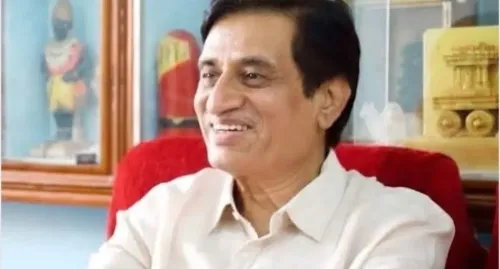
Professor Deepak Dhar of ICTS-TIFR Bengaluru has won the 2026 ICTP Dirac Medal, becoming only the second Indian ever to receive the honour after Ashoke Sen in 2014. Karnataka CM D.K. Shivakumar congratulated Dhar and linked the achievement to the state's proposed Quantum City at Hesaraghatta.
Key Takeaways
Professor Deepak Dhar of ICTS-TIFR, Bengaluru has been awarded the 2026 ICTP Dirac Medal .
He shares the medal with Bernard Derrida , Marc Mézard , and Haim Sompolinsky for contributions spanning statistical mechanics, neuroscience, and AI.
Dhar is only the second Indian to win the Dirac Medal; the first was Professor Ashoke Sen in 2014 , also based at ICTS.
Bengaluru is now home to both of India's Dirac Medallists, both at the same ICTS campus.
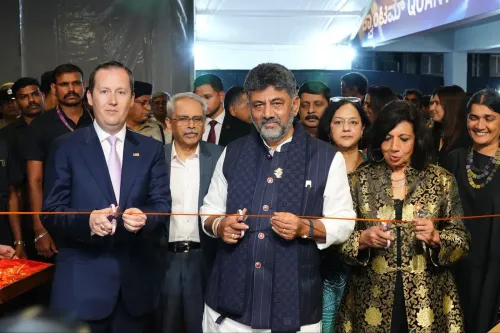
Shivakumar reaffirmed the state's plan for India's first Quantum City adjacent to ICTS at Hesaraghatta .
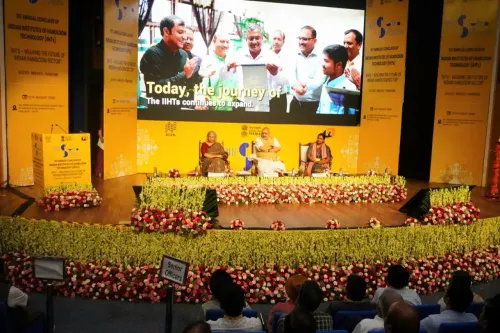
ICTS is a centre of the Tata Institute of Fundamental Research and a globally recognised hub for theoretical sciences.
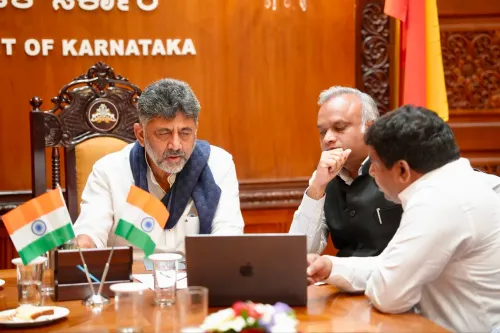
A Bengaluru scientist has just joined the rarest company in theoretical physics. Professor Deepak Dhar, INSA Distinguished Professor at the International Centre for Theoretical Sciences (ICTS-TIFR) in Bengaluru, has been awarded the 2026 ICTP Dirac Medal — one of the world's most prestigious honours in theoretical physics — making him only the second Indian ever to receive it. The Chief Minister's Office of Karnataka, on behalf of Chief Minister Shri D.K. Shivakumar, offered warm congratulations on Tuesday, 11 August 2026.
The medal, the man, and what he cracked open
The ICTP Dirac Medal, awarded annually by the International Centre for Theoretical Physics, recognises transformative work in theoretical physics. This year, Professor Dhar shares the honour with Bernard Derrida, Marc Mézard, and Haim Sompolinsky. The citation credits the four scientists for 'their pioneering contributions to equilibrium statistical mechanics and for extending its concepts and methods into non-equilibrium statistical mechanics, optimization problems, theoretical neuroscience, and, finally, artificial intelligence.'
That last word — artificial intelligence — signals just how far-reaching this body of work has become. Statistical mechanics, once the language of gases and magnets, has quietly become foundational scaffolding for modern AI. Dhar's career sits at precisely that hinge point.
Bengaluru: home of both India's Dirac Medallists
The first Indian to win the Dirac Medal was Professor Ashoke Sen, who received it in 2014. Sen is currently the ICTS-Infosys Madhava Chair Professor at ICTS. Both Dhar and Sen are based at the same Bengaluru campus — a fact Chief Minister Shivakumar highlighted with evident pride: 'This makes Bengaluru the home of both of India's Dirac Medallists!'
ICTS-TIFR, a centre of the Tata Institute of Fundamental Research, has grown into a globally recognised hub for theoretical sciences, drawing researchers across mathematics, physics, and interdisciplinary programs. Its concentration of talent is not accidental — it reflects sustained institutional investment over more than a decade.
Quantum City: Karnataka's next scientific bet
The congratulatory message did more than celebrate a medal. CM Shivakumar used the moment to reaffirm Karnataka's ambition to build India's first Quantum City, proposed adjacent to ICTS at Hesaraghatta. The plan envisions a cluster bringing together research facilities, advanced laboratories, start-ups, industry, and academic institutions — a full innovation ecosystem anchored by the same theoretical-sciences excellence that produced two Dirac Medallists.
The Government of Karnataka has already supported the establishment and expansion of ICTS, and the Quantum City proposal represents the next phase of that commitment. Whether the blueprint translates into ground-level infrastructure will be the real test — but the scientific credibility behind it, embodied by Dhar and Sen, is now beyond question.
Two Dirac Medals. One city. The case for Bengaluru as India's capital of fundamental science just got considerably harder to argue against.
Frequently Asked Questions
Who is Professor Deepak Dhar and what is the Dirac Medal?
Professor Deepak Dhar is an INSA Distinguished Professor at ICTS-TIFR in Bengaluru, specialising in statistical mechanics. The ICTP Dirac Medal is one of the most prestigious annual awards in theoretical physics, given by the International Centre for Theoretical Physics.
Who are the other 2026 Dirac Medal winners alongside Deepak Dhar?
Professor Dhar shares the 2026 Dirac Medal with Bernard Derrida, Marc Mézard, and Haim Sompolinsky, recognised for pioneering contributions to statistical mechanics and its extensions into AI and neuroscience.
Is Deepak Dhar the first Indian to win the Dirac Medal?
No. Professor Ashoke Sen was the first Indian to receive the Dirac Medal, in 2014. Professor Dhar is the second. Both are based at ICTS in Bengaluru.
What is Karnataka's Quantum City project near Hesaraghatta?
Quantum City is a proposed Karnataka government initiative to build India's first quantum research and industry cluster adjacent to ICTS at Hesaraghatta, integrating research labs, start-ups, industry, and academic institutions.
What is ICTS-TIFR and where is it located?
The International Centre for Theoretical Sciences (ICTS) is a centre of the Tata Institute of Fundamental Research, located in Bengaluru. It is a globally recognised hub for theoretical physics, mathematics, and interdisciplinary research.