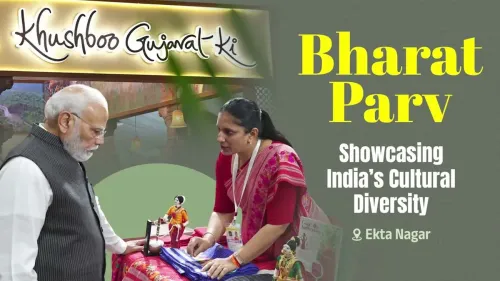
Shekhawat promotes Bharat Parv 2026 in Kevadia, Gujarat
Synopsis
Union Culture and Tourism Minister Gajendra Singh Shekhawat has promoted Bharat Parv 2026, a 17-day cultural festival at Kevadia, Gujarat, from 30 October to 15 November, celebrating India's arts, traditions and handicrafts under the 'Ek Bharat, Shreshtha Bharat' banner.
Key Takeaways
Bharat Parv 2026 runs from 30 October to 15 November 2026 — a 17-day cultural festival.
The venue is Kevadia, Gujarat , the town built around the 182-metre Statue of Unity .
Union Minister Gajendra Singh Shekhawat framed the event as aligned with PM Narendra Modi 's vision of Ek Bharat, Shreshtha Bharat .
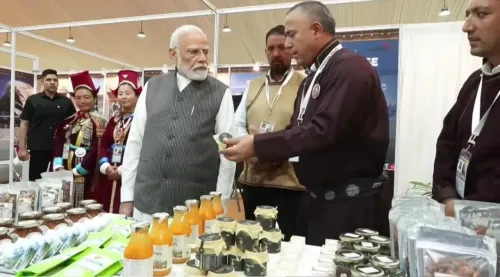
The festival showcases India's art, culture, traditions and handicrafts from across the country.
Bharat Parv has been held annually since 2015 by the Ministry of Tourism to promote national integration through cultural exchange.
The Ek Bharat Shreshtha Bharat programme, launched in 2015 , provides the policy framework underpinning such cultural outreach events.
From 30 October to 15 November 2026, the town of Kevadia, Gujarat — home to the iconic Statue of Unity — becomes India's cultural crossroads, hosting Bharat Parv 2026. Union Culture and Tourism Minister Gajendra Singh Shekhawat on Saturday, 31 October called the festival a 'beautiful effort to bring India's rich cultural heritage, diverse traditions and craftsmanship onto one platform.'
What Bharat Parv 2026 promises visitors at Kevadia
In his post, Minister Shekhawat described the festival as aligned with Prime Minister Narendra Modi's vision and the spirit of 'Ek Bharat, Shreshtha Bharat' — 'One India, Best India'. He invited citizens to attend and experience what he called 'Bharat ki vividh saanskritik chhata' — India's diverse cultural splendour. The 17-day event, according to the minister, will offer a close look at the country's art, culture, traditions and handicrafts.
The choice of Kevadia as venue is deliberate and symbolic. The town, developed as a major tourism hub around the Statue of Unity — the world's tallest statue, standing at 182 metres — has become a favoured destination for flagship national events under the current administration. It is located in the Narmada district of Gujarat and draws millions of domestic visitors annually.
Bharat Parv's decade-long run as a unity festival
Bharat Parv has been organised by the Ministry of Tourism annually since 2015, running alongside the Ek Bharat Shreshtha Bharat programme, itself launched the same year to promote inter-state cultural exchange and national integration. Over the years, the festival has served as a showcase for regional folk arts, cuisine, handloom and handicraft clusters from every corner of the country — a travelling exhibition of the republic's plurality staged under one roof.
The decision to anchor the 2026 edition at Kevadia continues a broader pattern: hosting major cultural and national events at recently developed tourism infrastructure, combining cultural diplomacy with a push to deepen domestic tourism circuits. For artists and craftspeople from smaller states and union territories, such platforms can translate directly into wider audiences and commercial visibility.
Crafts, traditions and the domestic tourism push
For domestic tourists, the October 30 – November 15 window falls across a post-Diwali lull that the Ministry of Tourism has historically tried to activate. A nearly three-week festival at a site already equipped with world-class visitor infrastructure gives the ministry a ready vehicle to sustain footfall beyond the festive peak. Shekhawat's public call to 'be part of this event' signals an active outreach campaign rather than a passive programme listing.
How many state pavilions participate, which performing arts troupes feature, and whether any linked tourism scheme announcements accompany the festival are details the Ministry is expected to release in the coming days — details that will determine whether Bharat Parv 2026 matches or surpasses the scale of previous editions.
A festival 17 days long, a venue already on every tourist's bucket list, and a government betting big on unity-in-diversity as a brand — Kevadia's turn as India's cultural capital starts now.
Point of View
BJP-governed sites like Kevadia amplifies both the unity-in-diversity narrative and the domestic tourism economy in a single move. By invoking PM Modi's vision explicitly, Minister Shekhawat also reinforces the political ownership of the 'Ek Bharat' brand ahead of any state-level electoral cycles. The festival's decade-long continuity since 2015 suggests institutional staying power beyond any single administration's tenure. Whether the 2026 edition meaningfully expands artisan and performer participation — or remains primarily a branding exercise — will be the real test of its cultural depth.
NationPress
31 Oct 2026
Frequently Asked Questions
What is Bharat Parv 2026 and where is it being held?
Bharat Parv 2026 is an annual cultural festival organised by India's Ministry of Tourism to showcase the country's arts, traditions and handicrafts. The 2026 edition is being held in Kevadia, Gujarat — the town that houses the Statue of Unity — from 30 October to 15 November 2026.
What is the 'Ek Bharat, Shreshtha Bharat' programme?
'Ek Bharat, Shreshtha Bharat' is a government initiative launched in 2015 to promote inter-state cultural exchange and national integration. Bharat Parv is one of the key events aligned with this programme.
Who announced Bharat Parv 2026?
Union Culture and Tourism Minister Gajendra Singh Shekhawat promoted Bharat Parv 2026 in a post on X on 31 October 2026, inviting citizens to attend and experience India's cultural diversity at Kevadia.
How long has Bharat Parv been running?
Bharat Parv has been held annually since 2015, making the 2026 edition part of a decade-long tradition of celebrating India's cultural heritage through a national festival.
Why is Kevadia chosen for national cultural events?
Kevadia in Gujarat's Narmada district was developed as a major tourism hub around the 182-metre Statue of Unity, the world's tallest statue. Its world-class visitor infrastructure and high footfall make it a favoured venue for flagship national events under the current administration.