Bhupender Yadav Hails Youth Drug-Free Pledge Drive
Synopsis
Union Environment Minister Bhupender Yadav highlighted the Nasha Mukt Yuva Abhiyan on 27 September 2026, noting that lakhs of Indian youth have pledged to avoid drugs and spread the anti-drug message — a drive linked to PM Modi's Mann Ki Baat platform.
Key Takeaways
Union Environment Minister Bhupender Yadav amplified the Nasha Mukt Yuva Abhiyan on 27 September 2026 .
The campaign asks youth to take a two-part pledge: stay drug-free and spread the anti-drug message to others.
The post was linked to #MannKiBaat , PM Modi's monthly radio address, a key government amplification platform.
The campaign is rooted in the Nasha Mukt Bharat Abhiyan launched in August 2020 by the Ministry of Social Justice and Empowerment.
Cross-ministry promotion by Yadav — whose portfolio covers Environment — signals a deliberate whole-of-government messaging push on drug awareness.
Millions of young Indians have raised their hands — and their voices — against drugs, binding themselves to a public pledge that they will neither use nor tolerate substance abuse, and will carry that message to others. Union Environment Minister Bhupender Yadav spotlighted the momentum on Sunday, 27 September 2026, crediting the Nasha Mukt Yuva Abhiyan (Drug-Free Youth Campaign) for catalysing what he described as a sweeping, youth-led commitment across the country.
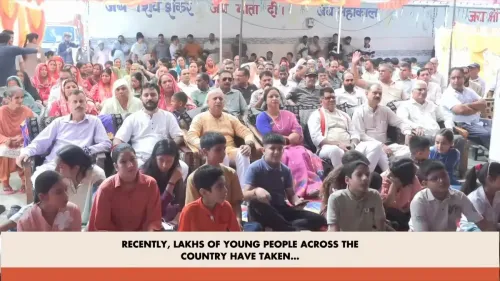
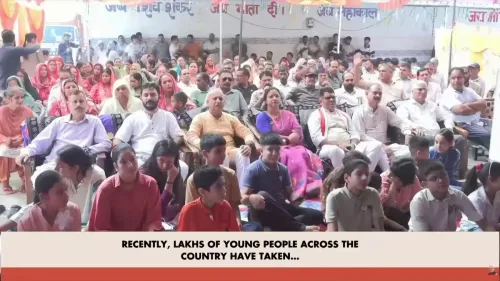
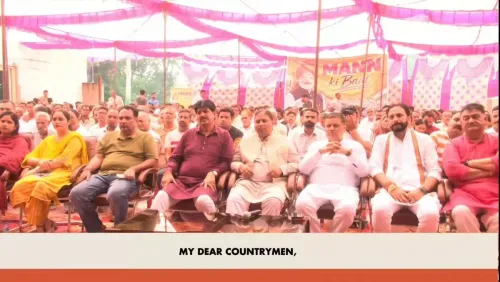
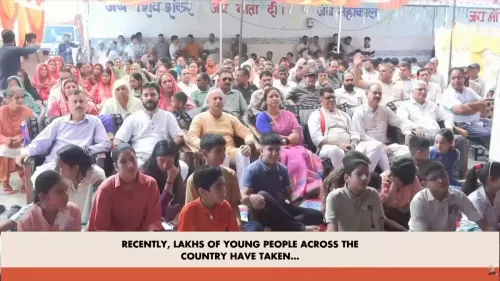
Writing in Hindi, Yadav said: 'Recently, lakhs of the country's youth have taken a very important pledge against intoxication, against drugs. The youth have themselves pledged to stay away from drugs, and have also taken the responsibility of spreading this message to others — all of this is happening under the Nasha Mukt Yuva Abhiyan.' The post was tagged #MannKiBaat, tying the campaign's visibility to Prime Minister Narendra Modi's monthly radio address — the platform that has repeatedly amplified citizen-led social initiatives since 2014.
From Nasha Mukt Bharat to a Youth-Centred Pledge Drive
The campaign has clear policy roots. The Ministry of Social Justice and Empowerment launched the Nasha Mukt Bharat Abhiyan in August 2020, aiming to combat substance abuse through community awareness and action — with a particular focus on districts identified as high-vulnerability zones. The Nasha Mukt Yuva Abhiyan builds on that foundation, centering the mobilisation strategy on youth themselves: not just as beneficiaries of awareness drives, but as active pledgers and peer messengers.
That two-part pledge — stay clean, then spread the word — is the campaign's structural spine. It transforms individual commitment into a chain of outreach, in theory multiplying the reach of every single participant into the networks around them.
Mann Ki Baat as an Amplifier
The #MannKiBaat tag on Yadav's post is not incidental. Modi's radio programme has become a recurring launchpad for welfare campaigns, giving central government schemes grassroots visibility through a format that reaches vernacular audiences across rural and semi-urban India. When a minister outside the nodal ministry — Yadav's portfolio is Environment, Forest and Climate Change — publicly champions a Social Justice scheme, it signals deliberate cross-ministry messaging aimed at broadening reach beyond a single departmental audience.
India's drug-abuse challenge is real and growing: urban youth, border districts, and industrial corridors have all seen documented rises in substance use. Whether pledge-based campaigns translate into sustained behavioural change is a long-debated question in public health — but their value as mobilisation tools, and as signals of political prioritisation, is well established in Indian policy practice.
The next test will be whether participation numbers and state-level rollout data surface in upcoming Mann Ki Baat episodes — the moment the campaign moves from aspiration to accountability.
Point of View
Or remain primarily an exercise in political reach. The campaign's next credibility milestone will be verifiable state-level impact data, ideally surfaced on the Mann Ki Baat platform itself.
NationPress
27 Sept 2026
Frequently Asked Questions
What is the Nasha Mukt Yuva Abhiyan?
The Nasha Mukt Yuva Abhiyan is a government campaign that mobilises Indian youth to pledge against drug use and to spread anti-drug awareness messages within their communities. It is rooted in the Nasha Mukt Bharat Abhiyan launched in August 2020 by the Ministry of Social Justice and Empowerment.
What did Bhupender Yadav say about the drug-free campaign?
Yadav said that lakhs of young Indians have recently taken a pledge to stay away from drugs and to spread the anti-drug message to others, attributing this to the Nasha Mukt Yuva Abhiyan. He posted this on 27 September 2026 with the hashtag #MannKiBaat.
What is Mann Ki Baat and why is it linked to this campaign?
Mann Ki Baat is Prime Minister Narendra Modi's monthly radio address that has been broadcast since 2014, often used to spotlight citizen-led and government welfare initiatives. Linking the Nasha Mukt Yuva Abhiyan to Mann Ki Baat signals that the campaign may be featured or promoted through this high-reach platform.
When was the Nasha Mukt Bharat Abhiyan launched?
The Nasha Mukt Bharat Abhiyan was launched in August 2020 by the Ministry of Social Justice and Empowerment to address substance abuse through awareness campaigns and community action across India.
Why is Bhupender Yadav promoting an anti-drug campaign when his ministry handles environment?
Yadav is a senior BJP leader, and cross-ministry promotion of social welfare schemes is a common feature of Indian political communication — it broadens a campaign's reach beyond the nodal ministry's audience and signals unified government messaging on high-priority issues.