Bhupender Yadav raises 1.5°C alarm at COP31 GST-2 event
Synopsis
At COP31 in Antalya, Union Environment Minister Bhupender Yadav challenged GST-2 to explain why the 1.5°C Paris target is slipping, demanded solution-oriented NDC guidance, and pressed for concrete action on climate finance and technology transfer gaps.
Key Takeaways
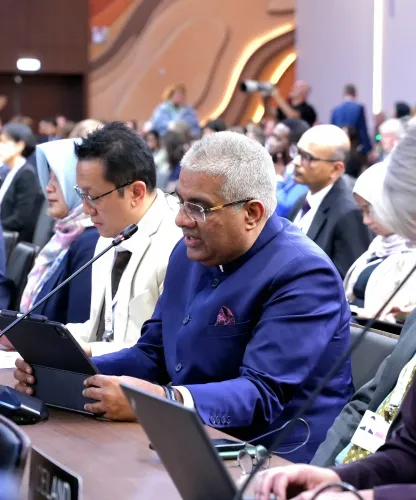
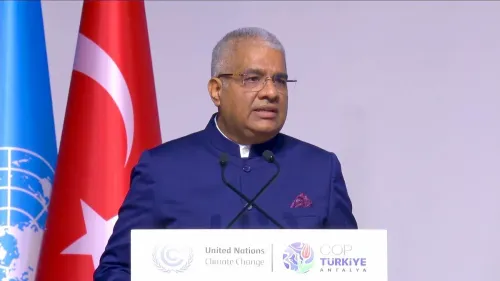
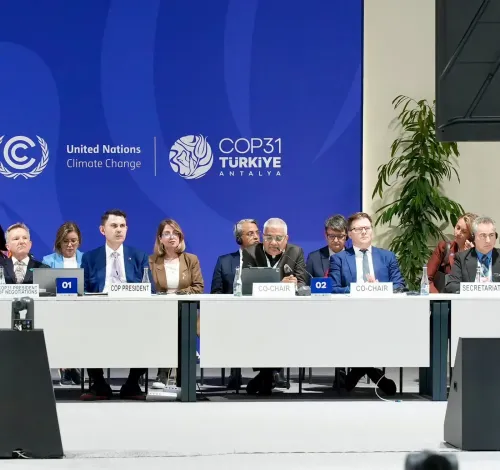
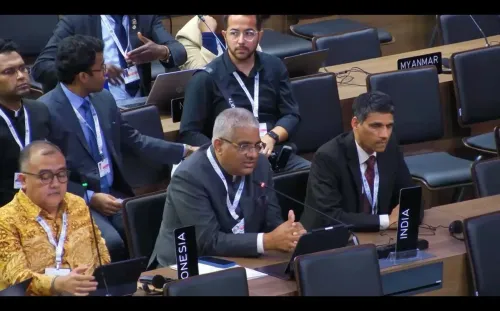
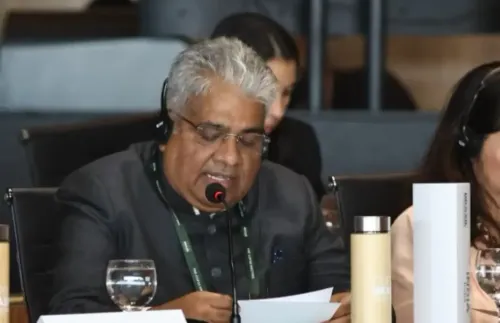
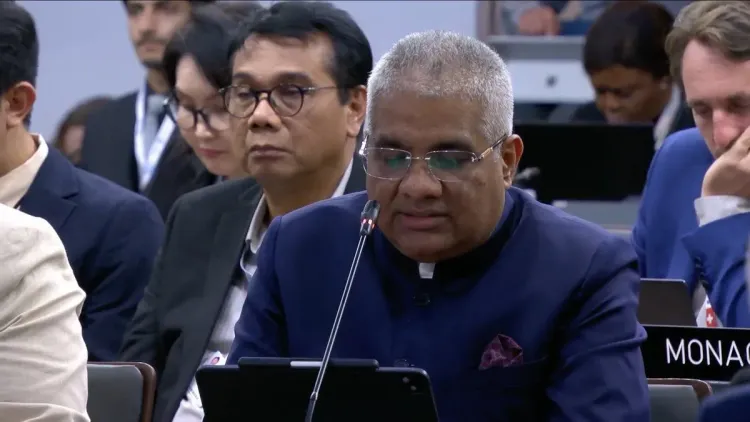
Union Environment Minister Bhupender Yadav addressed the high-level Global Stocktake-2 event at COP31 in Antalya, Türkiye on 18 November 2026 .
He warned that global warming is 'potentially going to cross the 1.5°C above pre-industrial levels in a few years' despite collective progress.
He called for GST-2 to be 'solution oriented', helping Parties understand how to update their NDCs more ambitiously.
Yadav stressed the stocktake must address the gap in climate finance and technology transfer as means of implementation for developing nations.
India updated its NDC in August 2022 , committing to net-zero by 2070 and 50% non-fossil electricity by 2030 .
The first Global Stocktake concluded at COP28 in Dubai (2023) , calling for a fossil fuel transition and tripling of renewable energy.
With the planet edging toward a warming threshold once considered a hard red line, Union Environment Minister Bhupender Yadav took the floor at a high-level event on the Global Stocktake-2 (GST-2) on the sidelines of COP31 in Antalya, Türkiye on Wednesday, 18 November 2026, delivering a pointed challenge to the international community: why, despite years of pledges and progress, is a breach of 1.5°C above pre-industrial levels now a matter of 'when', not 'if'?
The question the world can no longer avoid
Minister Yadav's central argument cut through the usual diplomatic formalities. He stated that the second Global Stocktake must confront a hard truth — collective achievements notwithstanding, global temperatures are on course to cross the 1.5°C warming ceiling within a few years. That ceiling, enshrined in the 2015 Paris Agreement, was the benchmark around which the entire architecture of Nationally Determined Contributions (NDCs) and five-yearly stocktakes was built. If the architecture is sound but the target is slipping away, something structural has gone wrong. That is precisely the reckoning Yadav demanded.
The Global Stocktake is the Paris Agreement's built-in course-correction mechanism — a five-yearly audit under Article 14 of collective progress on mitigation, adaptation, and the means of implementation. The first GST concluded at COP28 in Dubai in 2023, urging parties to transition away from fossil fuels and triple renewable energy capacity. GST-2 is the next iteration, and the stakes are measurably higher.
Solution-oriented outcomes, not just stocktaking
Yadav was equally insistent that the second stocktake must not stop at diagnosis. He called on GST-2 to be 'solution oriented', specifically guiding Parties on how to update their NDCs in ways that close the gap between current pledges and what the science demands. The emphasis on guidance for NDC revision is significant: the next round of NDC submissions is a critical pressure point in the broader Paris cycle, and a stocktake that leaves nations without a clear upgrade roadmap would repeat the first cycle's shortcomings.
India updated its own NDC in August 2022, committing to net-zero emissions by 2070 and generating 50% of its electricity from non-fossil fuel sources by 2030 — a substantial commitment from a nation still navigating development imperatives at scale.
Finance and technology: the gap that keeps widening
The sharpest edge of Yadav's remarks was reserved for the perennial fault line in climate diplomacy: the means of implementation. He stressed that GST-2 must show concretely how the gap in climate finance and technology transfer can be addressed. This is not a new Indian demand — it is the consistent thread running through every UNFCCC forum where developing countries have watched finance pledges from wealthier nations fall short of delivery.
The principle of common but differentiated responsibilities — the foundational equity concept of the UNFCCC — underpins this call. For climate-vulnerable and developing nations, ambitious mitigation targets are inseparable from reliable finance and accessible clean technology. Without both, updated NDCs risk being aspirations rather than plans. Yadav's intervention makes clear that India intends to hold the multilateral process to that standard at every step of GST-2.
What GST-2 must deliver
The minister's intervention at COP31 in Antalya sets out a three-part test for the second stocktake: an honest accounting of why 1.5°C is slipping; actionable guidance for NDC upgrades; and a credible plan to close the finance and technology gap. Fail any one of these, and the stocktake risks becoming a ritual rather than a reckoning. The world's most climate-exposed nations will be watching the outcomes closely — and so will India.
Point of View
Then immediately pivot to accountability — especially on finance and technology — to prevent developed nations from framing ambition as a universal obligation divorced from means. By centering the '1.5°C breach' narrative, India positions itself not as an obstructionist but as the voice of realism in a room prone to optimism. The push for 'solution-oriented' stocktake outcomes is tactically shrewd: it shifts the burden from developing nations to prove ambition, toward the multilateral system to prove deliverability. Watch whether this framing gains enough traction in Antalya to shape the GST-2 decision text.
NationPress
18 Nov 2026
Frequently Asked Questions
What is the Global Stocktake and why does GST-2 matter?
The Global Stocktake is a five-yearly review under Article 14 of the Paris Agreement that assesses collective progress on climate targets. GST-2, being reviewed at COP31, is critical because it comes after the first stocktake (COP28, 2023) found the world off-track, and its outcomes will guide the next round of NDC updates.
What did Bhupender Yadav say at COP31?
Union Environment Minister Bhupender Yadav said GST-2 must examine why the world is 'potentially going to cross 1.5°C above pre-industrial levels in a few years' and must be solution-oriented — guiding Parties on NDC updates and showing how gaps in climate finance and technology transfer will be addressed.
What is India's NDC commitment under the Paris Agreement?
India updated its Nationally Determined Contribution in August 2022, committing to achieving net-zero emissions by 2070 and ensuring at least 50% of its electricity comes from non-fossil fuel sources by 2030.
What is climate finance and why does India keep raising it at COP?
Climate finance refers to funds that developed nations committed to mobilise to help developing countries mitigate emissions and adapt to climate impacts. India consistently raises it because delivery has fallen short of pledges, and without adequate finance and technology transfer, developing nations face an unequal burden in meeting ambitious climate targets.
Where is COP31 being held?
COP31, the 31st Conference of Parties to the UNFCCC, is being held in Antalya, Türkiye.