Bihar Cabinet clears 30 proposals, ₹62 crore for water cannons and riot vehicles
Synopsis
Bihar's Cabinet cleared 30 decisions in a single sitting — from ₹62 crore for riot-control vehicles to a ₹2,761 crore solar push covering 2,554 agricultural feeders and a new Green Hydrogen Policy. The breadth of the package signals a state government trying to simultaneously modernise its police, decarbonise its grid, and shore up welfare spending ahead of the next budget cycle.
Key Takeaways
Bihar Cabinet approved 30 proposals on 30 September under Chief Minister Samrat Choudhary in Patna . ₹62 crore sanctioned for 30 water cannons and 86 Vajra riot-control vehicles for state police.
Draft Bihar Green Hydrogen Policy 2026 approved to attract private investment and create jobs. ₹2,761.55 crore granted to install 2,585 MW of solar capacity across 2,554 agricultural feeders .
VAT on Aviation Turbine Fuel (ATF) cut from 1% to zero to support the aviation sector.
Electrification project for 21,644 households in Kaimur and Rohtas districts revised upward from ₹117.80 crore to ₹351.85 crore .
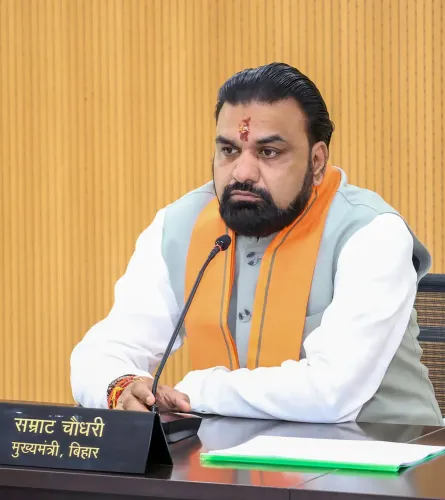
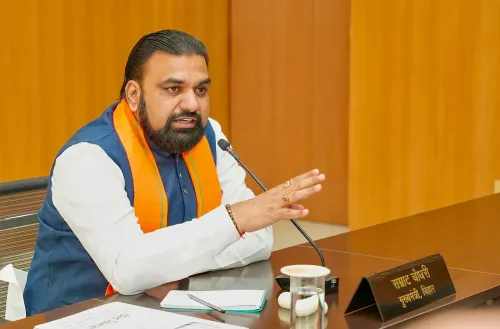
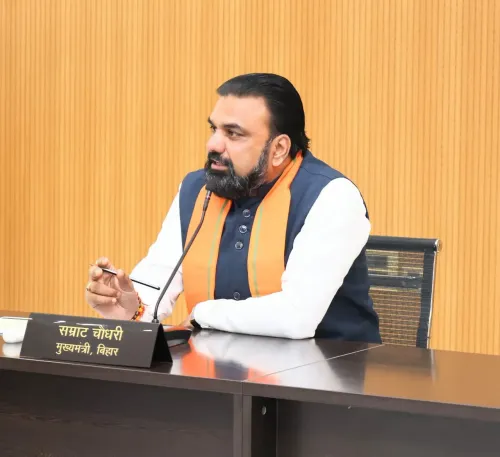
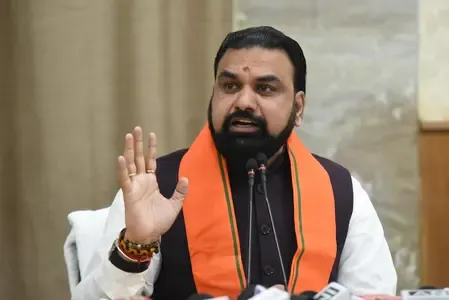
The Bihar Cabinet on Wednesday, 30 September approved 30 proposals spanning disaster preparedness, green energy, infrastructure, taxation, education, and social welfare at a meeting chaired by Chief Minister Samrat Choudhary at the Main Secretariat in Patna. The decisions collectively represent one of the broader single-session policy packages approved by the state government this year.
Police Modernisation and Security Procurement
Among the headline decisions, the Cabinet granted administrative approval for ₹62 crore to procure 30 water cannons and 86 Vajra riot-control vehicles for the state police. The move is aimed at strengthening crowd and riot management capabilities across Bihar. Notably, this procurement comes as several Indian states have been upgrading law-enforcement equipment in the post-pandemic period.
Green Energy and Solar Infrastructure Push
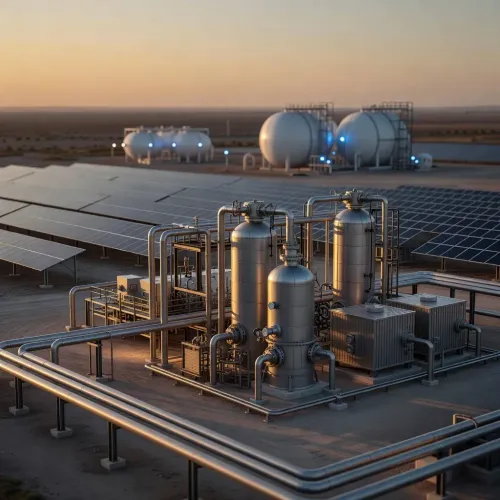
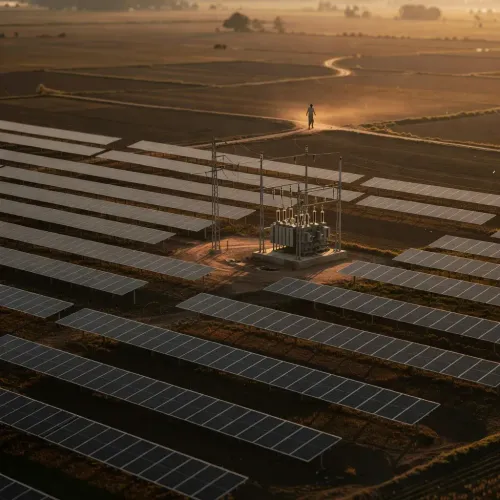
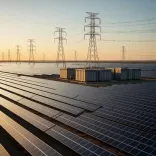
In a significant clean-energy move, the Cabinet approved the draft Bihar Green Hydrogen Policy 2026, designed to attract private investment and generate employment in the green hydrogen sector. Separately, the Cabinet sanctioned a ₹2,761.55 crore grant to install solar power plants with a combined capacity of 2,585 MW, intended to solarise 2,554 agricultural feeders across the state — a move expected to benefit the farming sector substantially.
Aviation, Taxation and Economic Measures
The Cabinet approved reducing the Value Added Tax (VAT) rate on Aviation Turbine Fuel (ATF) from 1 per cent to zero, a step expected to ease costs for the aviation sector operating in Bihar. The government also cleared the engagement of consultancy services to formulate an Aviation Vision and Policy to accelerate development of the state's aviation sector. Additionally, the Cabinet approved the Bihar Legal Metrology (Amendment) Rules, 2026, and cleared the use of the 'Forward Auction' module on the Government e-Marketplace (GeM) portal for auctioning disposable government assets.
Social Welfare and Administrative Decisions
The Cabinet approved an advance of ₹477 crore from the Bihar Contingency Fund to pay honoraria to personnel associated with Anganwadi and Integrated Child Development Services (ICDS). Approval was also granted for the selection of suppliers for the Take Home Ration component under the Anganwadi and Poshan 2.0 schemes, to be implemented under a Build-Own-Operate-Transfer (BOOT) model for 15 years. The government sanctioned ₹17.28 crore to reimburse expenditure incurred during the organisation of National Panchayati Raj Day 2025 in Madhubani.
Infrastructure, Education and Other Key Approvals
The Cabinet approved the revised cost of an electrification scheme for 21,644 households in 177 settlements in Kaimur and Rohtas districts, with the project cost revised upward from ₹117.80 crore to ₹351.85 crore. It also approved leasing four acres of land at Sabalpur Diyara and Dujra Diyara in Patna to the Inland Waterways Authority of India (IWAI) for 25 years to develop a cruise terminal. Contractual appointments to 35 posts were sanctioned to support the Buddha Samyak Darshan Museum and Memorial Stupa at Vaishali, and 34 officer and staff posts were created for the Shaheed Jubba Sahani University of Architecture and Civil Engineering. The Cabinet also approved continuation of 871 operators under the 'Digital Mitra' initiative of the Kushal Yuva Programme, part of the broader Saat Nischay-3 programme. The 7th State Finance Commission's interim report recommendations were approved for implementation in financial years 2026-27 and 2027-28. With these decisions, the Bihar government signals an intent to balance immediate welfare spending with longer-term infrastructure and energy investments ahead of the next budget cycle.
Point of View
761 crore is the most consequential decision here, but its impact will depend entirely on execution timelines that Bihar has historically struggled to meet. The ATF VAT cut to zero is a sensible demand-side nudge, yet Bihar's airport infrastructure remains thin, limiting who actually benefits. The near-tripling of the Kaimur-Rohtas electrification cost — from ₹117.80 crore to ₹351.85 crore — deserves scrutiny that a multi-item Cabinet readout rarely invites.
NationPress
30 Sept 2026
Frequently Asked Questions
What did the Bihar Cabinet approve on 30 September?
The Bihar Cabinet approved 30 proposals covering disaster preparedness, green energy, infrastructure, taxation, education, and social welfare at a meeting chaired by Chief Minister Samrat Choudhary in Patna. Key decisions included ₹62 crore for police riot-control equipment, a ₹2,761.55 crore solar power project, and the Bihar Green Hydrogen Policy 2026.
Why did Bihar approve water cannons and Vajra vehicles?
The Cabinet sanctioned ₹62 crore to procure 30 water cannons and 86 Vajra riot-control vehicles to strengthen the state police's crowd and riot management capabilities. The procurement is part of Bihar's broader effort to modernise its law enforcement infrastructure.
What is the Bihar Green Hydrogen Policy 2026?
The Bihar Green Hydrogen Policy 2026 is a draft framework approved by the Cabinet to attract private investment and generate employment in the green hydrogen sector. It is part of the state's push toward clean energy diversification alongside the large solar feeder project.
How will the solar power project benefit Bihar farmers?
The Cabinet sanctioned ₹2,761.55 crore to install 2,585 MW of solar capacity to solarise 2,554 agricultural feeders across Bihar. This is expected to provide more reliable and potentially cheaper power to farming communities dependent on these feeders for irrigation.
Why has the electrification project cost in Kaimur and Rohtas nearly tripled?
The estimated cost of providing electricity to 21,644 households across 177 settlements in Kaimur and Rohtas districts has been revised from ₹117.80 crore to ₹351.85 crore, according to the Cabinet decision. The Cabinet approved the revised estimate, though no detailed explanation for the increase was provided in the official readout.