Bihar Cabinet clears RRTS, AIIMS Patna expansion in 22-proposal session
Synopsis
Bihar's Cabinet cleared 22 proposals in a single session on 8 July — from a high-speed RRTS network linking Patna to four cities, to a ₹348.90 crore land acquisition for AIIMS Patna, 500 MW of rooftop solar, and new Kendriya Vidyalayas. The breadth of decisions signals a deliberate pre-election infrastructure push across health, transport, education, and clean energy.
Key Takeaways
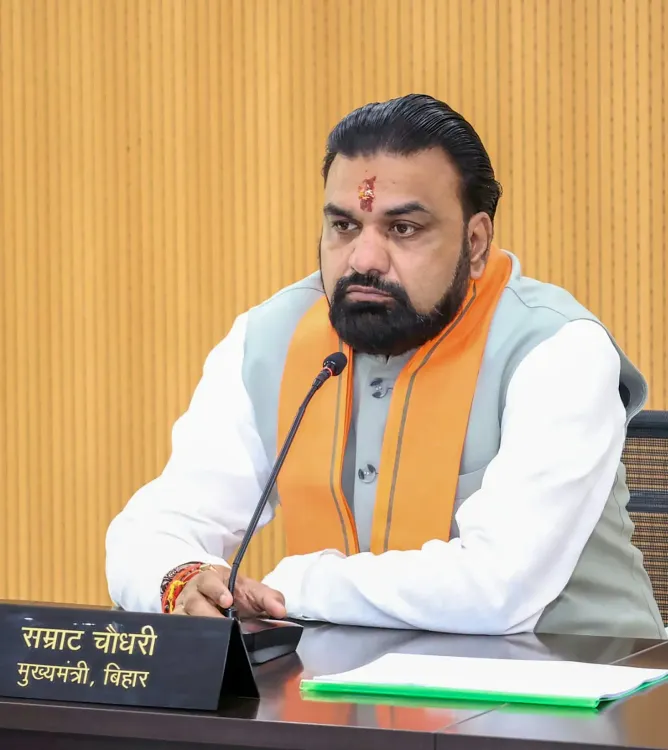
Bihar Cabinet chaired by CM Samrat Choudhary approved 22 proposals on 8 July 2025 .
RRTS corridors connecting Patna–Muzaffarpur , Patna–Begusarai , Patna–Ara , and Patna–Gaya cleared for AAR and DPR preparation by NCRTC . ₹348.90 crore approved for acquisition of 26.76 acres at Danapur for AIIMS Patna expansion.
500 MW rooftop solar on government buildings sanctioned under Jal Jeevan Hariyali Abhiyan for FY 2025-26 to 2029-30 .
76 teaching posts created across 10 engineering colleges and Bihar Engineering University . ₹300 crore allocated for CM's Self-Help Allowance Scheme for FY 2026-27 , extended to 2030-31 .
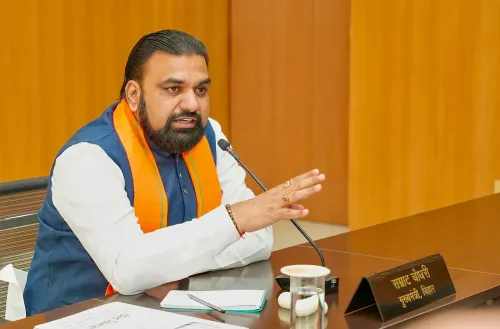
The Bihar Cabinet, chaired by Chief Minister Samrat Choudhary, on Wednesday, 8 July 2025, approved 22 major proposals spanning infrastructure, healthcare, education, renewable energy, agriculture, employment, and urban development. The meeting was held at the Cabinet Hall of the Chief Secretariat in Patna, marking one of the most wide-ranging single-session approvals in recent Bihar governance history.
RRTS Corridors to Link Patna With Four Cities
In a landmark transport decision, the Cabinet cleared the preparation of the Alternative Analysis Report (AAR) and Detailed Project Report (DPR) for Bihar's proposed Regional Rapid Transit System (RRTS). The National Capital Region Transport Corporation (NCRTC) has been designated to prepare both reports.
The proposed corridors will connect Patna–Muzaffarpur, Patna–Begusarai, Patna–Ara, and Patna–Gaya. The high-speed regional transit network is expected to improve inter-city connectivity, catalyse economic growth along the corridors, and support urban expansion in Bihar's secondary cities.
AIIMS Patna Expansion: ₹348.90 Crore Land Acquisition Approved
Administrative approval was granted for the acquisition of 26.76 acres of land at Mauja-Bhusaula, Danapur, for the expansion of AIIMS Patna. The land acquisition is estimated to cost approximately ₹348.90 crore, and is intended to enable the expansion of super-speciality healthcare services and consolidate medical infrastructure on a unified campus.
This comes amid longstanding demand for upgraded tertiary care capacity in Bihar, where public health infrastructure has historically lagged behind population growth.
Renewable Energy, Education, and Engineering Colleges
Under the Jal Jeevan Hariyali Abhiyan, the Cabinet approved the installation of 500 MW of grid-connected rooftop solar power plants on government buildings between FY 2025-26 and FY 2029-30. The initiative is aimed at reducing electricity costs and advancing Bihar's clean energy targets.
The Cabinet also approved the creation of 76 teaching positions across various faculties in 10 state engineering colleges and the Bihar Engineering University, a move intended to address faculty shortages in government technical institutions.
Additionally, the Cabinet approved allotment of five acres of land each in Madhubani, Munger, and Muzaffarpur, to be leased to the Kendriya Vidyalaya Sangathan (KVS) at a token lease of ₹1 for 30 years, with a renewal option, for establishing new Kendriya Vidyalayas.
Urban Development and Satellite Townships
The Centre for Environmental Planning and Technology (CEPT), Ahmedabad, was selected to provide planning and technical support for Bihar's proposed greenfield satellite townships. Land acquisition under the Township Planning Scheme was also approved to expand the core areas of the proposed Pataliputra and Tirhut townships, with infrastructure and communication development also sanctioned for Hariharnath and Magadh townships.
Other Key Decisions
The Cabinet approved ₹300 crore for the Chief Minister's Self-Help Allowance Scheme for FY 2026-27, extending the scheme until 2030-31. A separate ₹79.84 crore outlay was approved under the Pulses Self-Reliance Mission for FY 2026-27, targeting pulse crop cultivation across Kharif, Rabi, and summer seasons to reduce import dependence.
The Cabinet also established the Bihar Aquaculture Infrastructure and Development Corporation Limited under the Companies Act, 2013, to oversee fisheries and aquaculture infrastructure development across the state.
Repair and restoration of the Vikramshila Setu over the Ganga River in Bhagalpur — including construction of a Bailey bridge and installation of a new suspended slab — was also cleared. Following a court order, the Cabinet approved payment of ₹63.39 crore, including interest, to secure the release of 266 acres of land linked to M/s Indian Potash Limited at the Motipur Sugar Mill in Muzaffarpur.
With these decisions, the Bihar government signals an intent to accelerate capital expenditure across multiple sectors ahead of the next state budget cycle — and the political calendar.
Point of View
Healthcare, solar energy, satellite townships, and fisheries — reads less like routine governance and more like a pre-election capex sprint. Bihar's RRTS ambition is notable: bringing NCRTC into the picture signals Delhi-NCR-level transit aspirations for a state where rail connectivity has long been a political grievance. But DPR preparation is the very first step of a multi-year journey, and Bihar's track record on large infrastructure timelines warrants scrutiny. The AIIMS Patna expansion, similarly, hinges on land acquisition — a process that has stalled comparable projects elsewhere. The political optics are clear; the execution test is what follows.
NationPress
7 Oct 2026
Frequently Asked Questions
What is the Bihar RRTS project approved by the Cabinet?
The Bihar Cabinet approved the preparation of the Alternative Analysis Report (AAR) and Detailed Project Report (DPR) for a Regional Rapid Transit System (RRTS) that will connect Patna with Muzaffarpur, Begusarai, Ara, and Gaya. The NCRTC has been tasked with preparing the reports, marking the first formal planning step for a high-speed regional transit network in Bihar.
How much land has been approved for AIIMS Patna expansion?
The Cabinet approved acquisition of 26.76 acres of land at Mauja-Bhusaula, Danapur, for the expansion of AIIMS Patna, at an estimated cost of ₹348.90 crore. The expansion is intended to enhance super-speciality healthcare services and unify the campus.
What is the 500 MW solar initiative approved by the Bihar Cabinet?
Under the Jal Jeevan Hariyali Abhiyan, the Cabinet approved installation of 500 MW of grid-connected rooftop solar power plants on government buildings between FY 2025-26 and FY 2029-30. The initiative aims to cut government electricity costs and advance Bihar's clean energy targets.
What education decisions were taken in the Bihar Cabinet meeting?
The Cabinet approved 76 new teaching positions across 10 state engineering colleges and Bihar Engineering University. It also approved five acres of land each in Madhubani, Munger, and Muzaffarpur to be leased to the Kendriya Vidyalaya Sangathan at ₹1 for 30 years for setting up new Kendriya Vidyalayas.
What is the Chief Minister's Self-Help Allowance Scheme extended by the Bihar Cabinet?
The Cabinet approved ₹300 crore for the Chief Minister's Self-Help Allowance Scheme for FY 2026-27 and extended the scheme until 2030-31. The scheme is aimed at supporting employment and self-reliance among beneficiaries in Bihar.