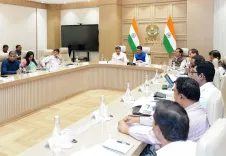
Bihar CM Announces 11,000 MW Power Deal, Free Units for 1.92 Cr Families
Synopsis
Chief Minister Nitish Kumar announced a deal to procure 11,000 MW of additional power for Bihar while confirming a ₹23,000 crore subsidy already providing 125 free electricity units monthly to 1.92 crore families — the state's most ambitious dual-track energy push yet.
Key Takeaways
11,000 MW power agreement signed by the Bihar government on 20 November 2026 to expand the state's electricity supply capacity.
A ₹23,000 crore electricity subsidy is funding 125 free units of power per month for households across the state.
1.92 crore families in Bihar are currently benefiting from the free electricity scheme.
CM Nitish Kumar framed both measures as part of a continuing series of 'historic steps' in the energy sector.
Details on the 11,000 MW deal — including power source, timelines, and funding — are yet to be disclosed.
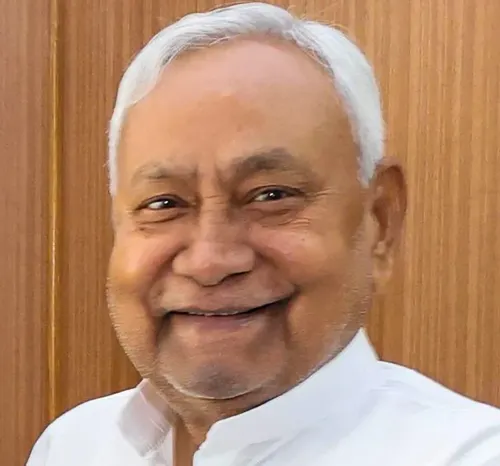
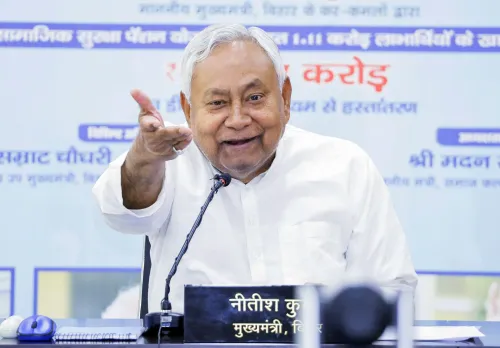
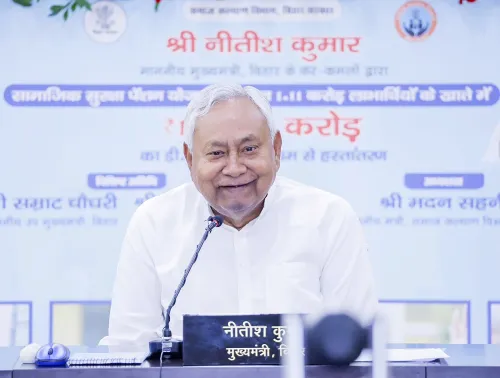
Bihar's electricity story just got a major new chapter. Chief Minister Nitish Kumar, speaking on Friday, 20 November 2026, announced that the state government has signed an agreement to procure 11,000 megawatts of additional power capacity — a move that signals a sharp shift from relief spending to long-term supply expansion in a state that has long struggled with electricity shortages.
₹23,000 Crore on the table — and 1.92 crore families already benefiting
Even before the new capacity deal, the Bihar government was already running one of the state's most ambitious household energy programmes. Through a ₹23,000 crore electricity subsidy, 1.92 crore families across the state are receiving 125 units of free electricity every month. The Chief Minister described this as one in a series of 'historic steps' his government has taken in the energy sector — 'ऊर्जा क्षेत्र में भी राज्य सरकार निरंतर ऐतिहासिक कदम उठा रही है' ('the state government is continuously taking historic steps in the energy sector as well').
The scale of the subsidy alone is striking: at ₹23,000 crore, it represents one of the largest single welfare expenditures in the state's current energy budget, targeting nearly two crore households with direct, measurable relief.
The 11,000 MW agreement — Bihar's bet on the future
The more consequential announcement may be the capacity deal signed on the same day. An agreement for 11,000 MW of power supply goes well beyond subsidising existing consumption — it is an attempt to fundamentally reshape Bihar's power supply infrastructure. The state has historically been a deficit state, dependent on allocations from the national grid with limited owned generation. A procurement deal of this scale, if executed, could dramatically change that arithmetic.
Details on the sources — whether thermal, solar, hydro, or a mix — the project timelines, and the financing structure remain to be announced. What is clear is that the government is framing both moves, the subsidy and the capacity pact, as parts of a single, coherent energy strategy rather than isolated interventions.
A pattern decades in the making — and why now matters
Bihar's electricity challenges are not new. For much of the past three decades, the state's per-capita power consumption ranked among the lowest in India, a drag on industrial investment and household quality of life alike. Successive administrations have prioritised household electrification — most visibly through the national Saubhagya scheme — but the gap between connections provided and reliable supply delivered has remained a persistent complaint.
The current approach pairs demand-side relief (the free-units subsidy) with supply-side ambition (the 11,000 MW deal), suggesting a more integrated push than earlier piecemeal efforts. For Bihar's households, the immediate promise is an uninterrupted 125 free units a month. The larger promise — that enough power will actually be there to deliver — now rests on what the 11,000 MW agreement delivers on the ground.
Point of View
000 MW deal to the same statement as the subsidy, Nitish Kumar signals that his government is moving from reactive relief to structural reform in the power sector. For a state where electricity access has historically been an electoral flashpoint, controlling both the demand-side narrative and the supply-side pipeline is a significant political as well as administrative ambition. The real test — project execution and actual power delivery — lies ahead.
NationPress
20 Nov 2026
Frequently Asked Questions
How many free electricity units are Bihar families getting?
125 units of free electricity per month are being provided to eligible households in Bihar under a scheme backed by a ₹23,000 crore state subsidy.
How many families benefit from Bihar's free electricity scheme?
1.92 crore families across Bihar are currently covered under the state government's free electricity programme.
What is the Bihar 11,000 MW power agreement?
On 20 November 2026 , the Bihar government signed an agreement to procure 11,000 megawatts of additional power capacity. Details on sources, timelines and financing have not yet been disclosed.
What is Bihar spending on electricity subsidy?
The Bihar government is spending ₹23,000 crore on electricity subsidies to fund the free-units programme for nearly two crore households.
What has Nitish Kumar announced for Bihar's power sector?
Nitish Kumar announced a twin energy push: a ₹23,000 crore subsidy giving 1.92 crore families 125 free units monthly, and a new deal for 11,000 MW of additional power capacity for the state.