Bihar CM invokes Savarkar's ideals for state's self-reliance
Synopsis
Bihar's Chief Minister, at a Veer Savarkar tribute event on 28 May 2026, called on citizens to draw inspiration from Savarkar's ideals and sacrifice to build a prosperous and self-reliant Bihar, linking cultural-nationalist legacy with the state's development agenda.
Key Takeaways
The Chief Minister's Office of Bihar posted the CM's remarks on 28 May 2026 via the official @officecmbihar X handle.
The CM called for making Bihar 'prosperous and self-reliant' by drawing inspiration from Veer Savarkar's ideals, sacrifice, and spirit of national dedication.
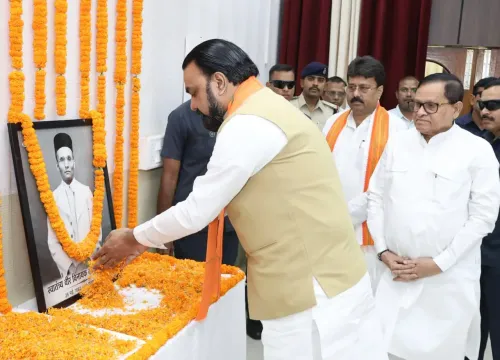
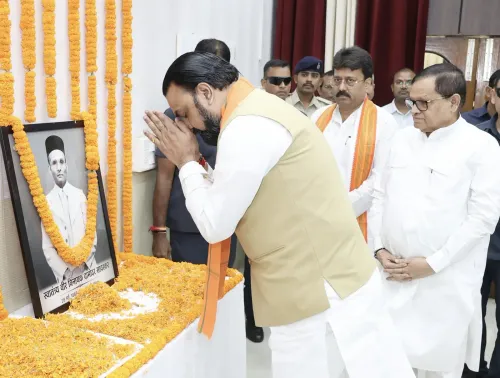
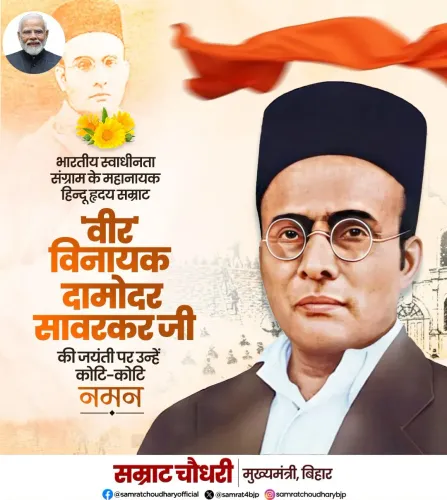
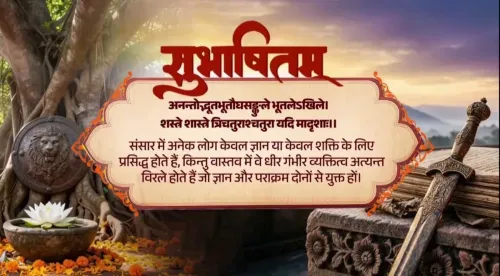
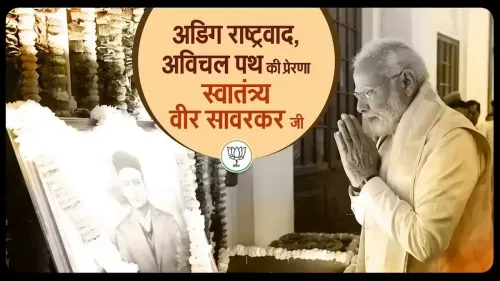
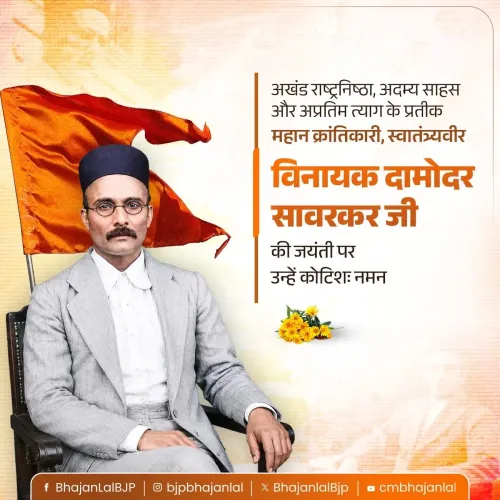
The post was accompanied by two images from the occasion, indicating an in-person event or ceremony.
Bihar's Saat Nishchay programme (launched 2015 ) had earlier established self-reliance and youth employment as core state commitments.
The invocation mirrors a national trend: Savarkar's portrait was installed in Parliament and commemorative stamps issued in 2019–2020 .
Bihar's large youth population remains the key stakeholder in any policy action tied to the state's self-reliance agenda.
The Chief Minister's Office of Bihar shared remarks by the Chief Minister on Thursday, 28 May 2026, invoking the legacy of Veer Savarkar and calling for the state to be built into a prosperous and self-reliant entity drawing inspiration from his ideals, sacrifice, and spirit of national dedication.
Context
The Chief Minister was quoted as saying, 'Veer Savarkar ji ke aadarsho, tyaag aur rashtrasarpan ki bhavna se prerna lekar Bihar ko samridh evam aatmnirbhar banana hai' — translated: 'Taking inspiration from the ideals, sacrifice, and spirit of national dedication of Veer Savarkar ji, we must make Bihar prosperous and self-reliant.' The statement was shared as part of a thread reply from the official @officecmbihar handle, accompanied by two images from the occasion.
The post is framed as a tribute to Veer Savarkar, the Indian independence activist and ideologue born in 1883, who remains a significant and contested figure in Indian political and cultural discourse. His articulation of Hindutva ideology and his role in the freedom struggle continue to be invoked across political contexts.
Policy Backdrop
Bihar has a documented history of linking cultural-nationalist references with economic governance messaging. The state's Saat Nishchay (Seven Commitments) programme, launched in 2015, outlined concrete goals including youth employment, infrastructure development, and pathways toward state self-reliance — themes that resonate directly with the Chief Minister's latest remarks.
At the national level, renewed institutional focus on Savarkar's legacy was visible in the 2019–2020 period, when decisions were taken to install his portrait in Parliament and issue commemorative postal stamps in his honour. Bihar's invocation of his legacy fits within a broader pattern of state governments aligning cultural figures with contemporary development narratives.
Stakeholders and Impact
Bihar's citizens, particularly its large youth population, are the primary stakeholders in any policy direction tied to the self-reliance agenda. The state has historically grappled with outmigration driven by limited local employment, making the aspiration of an 'aatmnirbhar Bihar' — a self-reliant Bihar — directly relevant to millions of families.
The invocation of Savarkar's ideals also carries political resonance for Bihar's governing coalition and its ideological allies, reinforcing a cultural-nationalist frame around what are otherwise standard development objectives. Observers note that such rhetorical framing is common across Indian state governments seeking to connect governance priorities with a sense of collective purpose.
What's Next
The Bihar CMO's statement is likely to be followed by further commemorative activity or policy announcements tied to the occasion. Analysts will watch for any concrete scheme launches or programme expansions that operationalise the self-reliance messaging articulated by the Chief Minister.
The broader pattern suggests that Bihar may continue to align cultural-nationalist milestones with governance announcements, a strategy that has precedent in the state's recent political history and that mirrors approaches taken by several other state governments across India.
Point of View
The Chief Minister connects the state's governance agenda to a cultural-nationalist framework that has growing salience in mainstream Indian politics. This mirrors a well-established pattern in which state governments use prominent historical figures to give moral and emotional weight to otherwise technocratic policy goals. The statement is unlikely to produce immediate policy shifts, but it reinforces the ideological positioning of Bihar's ruling dispensation ahead of any future electoral or legislative cycle.
NationPress
11 Oct 2026
Frequently Asked Questions
What did Bihar CM say about Veer Savarkar?
Bihar's Chief Minister said that taking inspiration from Veer Savarkar's ideals, sacrifice, and spirit of national dedication, the state must be made prosperous and self-reliant. The remarks were shared by the official Chief Minister's Office on 28 May 2026.
What is the occasion for Bihar CM's Savarkar tribute in May 2026?
The specific occasion was not detailed in the post, but the Chief Minister's Office shared the remarks alongside two images, indicating an in-person commemorative event. The research background does not confirm the precise occasion as of May 2026.
What is Bihar's aatmnirbhar or self-reliance policy?
Bihar's self-reliance agenda has roots in the Saat Nishchay programme launched in 2015, which set seven commitments including youth employment and infrastructure development. The Chief Minister's latest remarks reinforce this long-standing policy direction.
Who is Veer Savarkar and why is he significant in Indian politics?
Veer Savarkar was an Indian independence activist and writer born in 1883, known for his articulation of Hindutva ideology and his role in the freedom struggle. He remains a significant and debated figure, with renewed institutional recognition including a portrait in Parliament and commemorative stamps issued in 2019–2020.
What is the Saat Nishchay programme in Bihar?
Saat Nishchay, or Seven Commitments, is a Bihar government programme launched in 2015 that outlined goals including youth employment, infrastructure development, and pathways toward state self-reliance. It remains a key reference point for Bihar's development narrative.