Bihar CM Nitish Kumar Directs Groundwater Law for 2026
Synopsis
Chief Minister Nitish Kumar has directed Bihar officials to prepare the Bihar Groundwater (Management and Regulation) Act, 2026, citing water resource protection and availability for future generations as the government's top priority. The move addresses arsenic contamination and aquifer depletion in the Gangetic plains.
Key Takeaways
CM Nitish Kumar directed officials on 23 June 2026 to work towards enacting the Bihar Groundwater (Management and Regulation) Act, 2026 .
The CM stated that 'protection of water resources and ensuring water availability for future generations' is the government's highest priority.
Bihar faces dual water stress: arsenic-contaminated aquifers in multiple districts and erratic monsoon-driven recharge deficits.
India's National Water Policy, 2012 had called on states to enact groundwater legislation — Bihar's proposed Act would fulfil this long-pending directive.
Key stakeholders include farmers, rural households , urban local bodies, and small industries dependent on groundwater extraction.
The draft Act must still be prepared, reviewed, and tabled in the Bihar Legislative Assembly before it can become law.
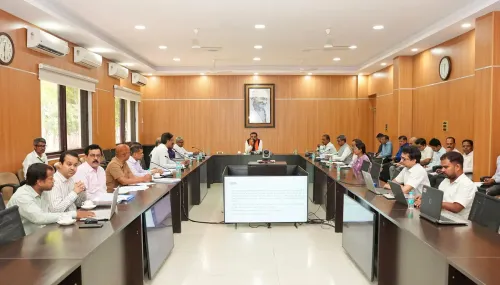
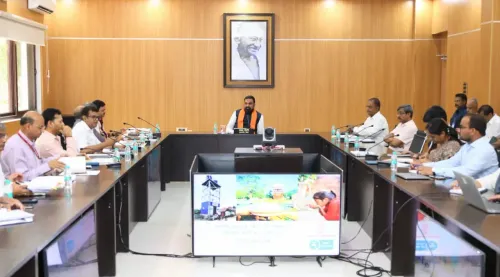
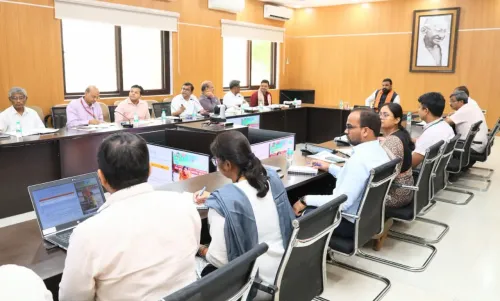
The Chief Minister's Office of Bihar announced on Tuesday, 23 June 2026 that Chief Minister Nitish Kumar has directed officials to work towards enacting the 'Bihar Bhoo-Jal (Prabandhan evam Viniyaman) Adhiniyam-2026' — the Bihar Groundwater (Management and Regulation) Act, 2026 — to strengthen groundwater conservation and regulation across the state.
Addressing officials, CM Nitish Kumar stated that 'protection of water resources and ensuring water availability for future generations is the government's highest priority.' He directed that concrete steps be taken immediately to bring the proposed legislation into effect.
Context
Bihar faces acute water stress driven by two compounding challenges: arsenic contamination in shallow aquifers across several districts in the Gangetic plains, and erratic monsoon patterns that disrupt natural groundwater recharge. The state's agrarian economy — heavily dependent on irrigation — makes groundwater governance a matter of food security as much as environmental policy.
The directive comes amid growing national concern over aquifer depletion. Several Indian states have moved to regulate groundwater extraction after decades of largely unregulated use by agriculture, industry, and urban consumers.
Policy Backdrop
India's National Water Policy, 2012 had explicitly called on states to frame dedicated groundwater legislation to ensure sustainable use and aquifer protection. More than a decade later, compliance has been uneven across states, making Bihar's proposed 2026 Act a significant step in the Gangetic belt.
The proposed law is intended to create a regulatory framework for groundwater management — covering extraction limits, recharge obligations, and oversight mechanisms. The exact provisions of the draft Act have not yet been made public and are currently under preparation by state officials.
Stakeholders and Impact
Farmers represent the largest stakeholder group, as agriculture accounts for the bulk of groundwater withdrawal in Bihar. A new regulatory regime could reshape irrigation practices for millions of cultivators, particularly in districts where the water table has been declining steadily.
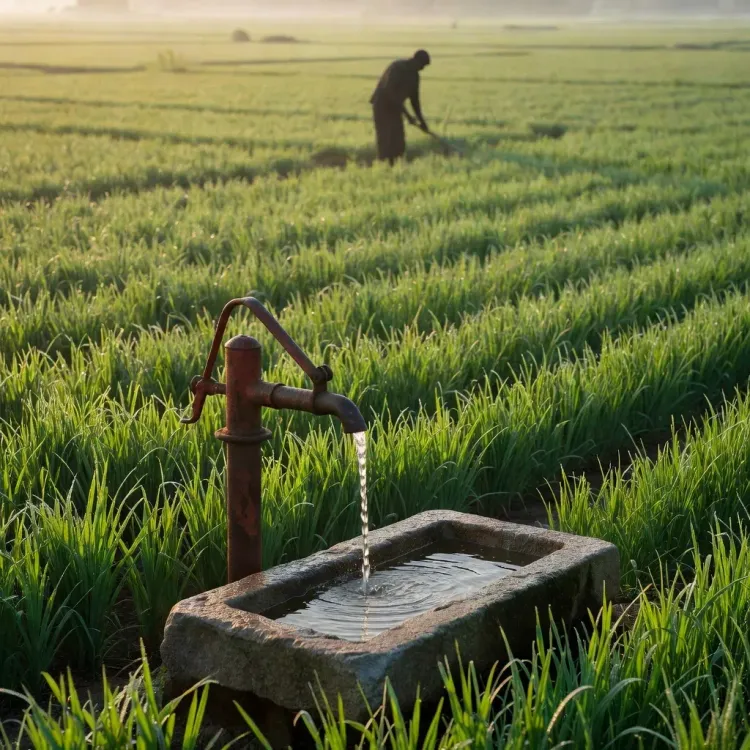
Rural households dependent on hand-pumps and shallow wells for drinking water stand to benefit most directly from aquifer protection measures. Arsenic-affected communities in districts such as Bhojpur, Saran, and Patna have long awaited systematic intervention to safeguard potable water sources.
Urban local bodies and small industries that draw heavily on groundwater will also fall within the Act's regulatory ambit, though the precise scope of coverage will only become clear once a draft is tabled in the Bihar Legislative Assembly.
What's Next
The immediate next step is the preparation and inter-departmental review of the draft legislation by the Bihar government. The bill will subsequently need to be introduced and passed in the Bihar Legislative Assembly before it acquires legal force.
Coordination with central government schemes on integrated water resource management — including the Atal Bhujal Yojana — is expected to shape the Act's implementation framework. The progress of the drafting process and the Assembly's legislative calendar will determine when the law can come into effect.
If enacted, the Bihar Groundwater (Management and Regulation) Act, 2026 would mark one of the most substantive water governance reforms in the state's recent history, setting a precedent for other agriculture-dependent states in the Gangetic plains to follow.
Point of View
Giving it federal legitimacy while keeping legislative credit at the state level. For a predominantly agrarian electorate, a law that promises to protect drinking water and irrigation sources carries tangible electoral resonance, particularly in arsenic-affected constituencies. The real test, however, will be the Act's enforcement architecture: groundwater regulation in India has repeatedly stalled at the gap between legislation and on-ground compliance.
NationPress
23 Jun 2026
Frequently Asked Questions
What is the Bihar Groundwater Management and Regulation Act 2026?
It is a proposed state law directed by CM Nitish Kumar to regulate groundwater extraction, strengthen conservation, and ensure water availability for future generations in Bihar . The draft is currently being prepared and has not yet been tabled in the Legislature.
Why does Bihar need a groundwater law?
Bihar faces arsenic contamination in shallow aquifers across several Gangetic plain districts and declining water tables due to over-extraction and erratic monsoons. A regulatory framework is needed to protect both drinking water sources and irrigation supplies for farmers.
What did Nitish Kumar say about water conservation?
CM Nitish Kumar stated that 'protection of water resources and ensuring water availability for future generations is the government's highest priority,' and directed officials to take action towards enacting the proposed groundwater Act.
Who will be affected by Bihar's new groundwater regulation?
The primary stakeholders are farmers who use groundwater for irrigation, rural households dependent on wells and hand-pumps for drinking water, urban local bodies, and small industries. Arsenic-affected communities stand to benefit most directly from aquifer protection.
When will Bihar's groundwater law come into effect?
No final timeline has been announced. The law must first be drafted, reviewed across departments, and then introduced and passed in the Bihar Legislative Assembly before it can come into force.