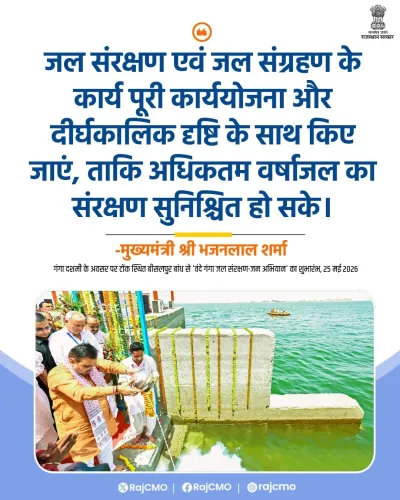
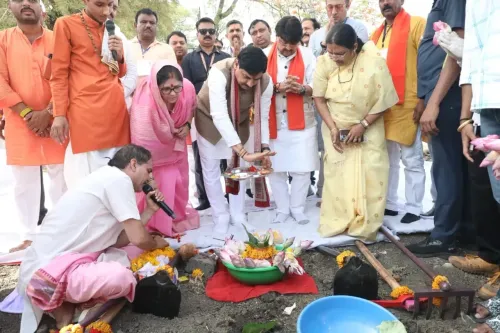
Bihar CMO stresses groundwater recharge and rainwater harvesting
Synopsis
The Chief Minister's Office of Bihar on 23 June 2026 shared a post stressing the need to arrest groundwater decline, promote scientific water use, and scale up rainwater harvesting and recharge activities — key pillars of the state's Jal Jeevan Hariyali Abhiyan launched in 2019.
Key Takeaways
The Chief Minister's Office of Bihar posted on 23 June 2026 underlining the urgency of halting groundwater level decline in the state.
The post called for scientific and prudent use of water resources alongside wide-scale rainwater harvesting and groundwater recharge.
Bihar launched the Jal Jeevan Hariyali Abhiyan in 2019 to address afforestation, pond restoration, and artificial recharge across the state.
The state's approach mirrors the national Jal Shakti Abhiyan framework for community-level water conservation.
Primary beneficiaries are farmers and rural households who depend on stable groundwater for irrigation and drinking water.
The next Central Ground Water Board report on Bihar's aquifer levels will be a key indicator of programme effectiveness.
The Chief Minister's Office of Bihar shared a post on Tuesday, 23 June 2026 highlighting a senior official's call for urgent action on declining groundwater levels, scientific water use, rainwater harvesting, and large-scale groundwater recharge and conservation activities across the state.
Context
The post, in Hindi, states that the individual concerned 'उन्होंने भू-जल स्तर में हो रही गिरावट को रोकने' ('emphasised stopping the ongoing decline in groundwater levels') and pushed for the 'scientific and prudent use of water resources.' The official also stressed wide implementation of rainwater harvesting, groundwater recharge, and broader water conservation activities. The specific individual and event are not identified in the post.
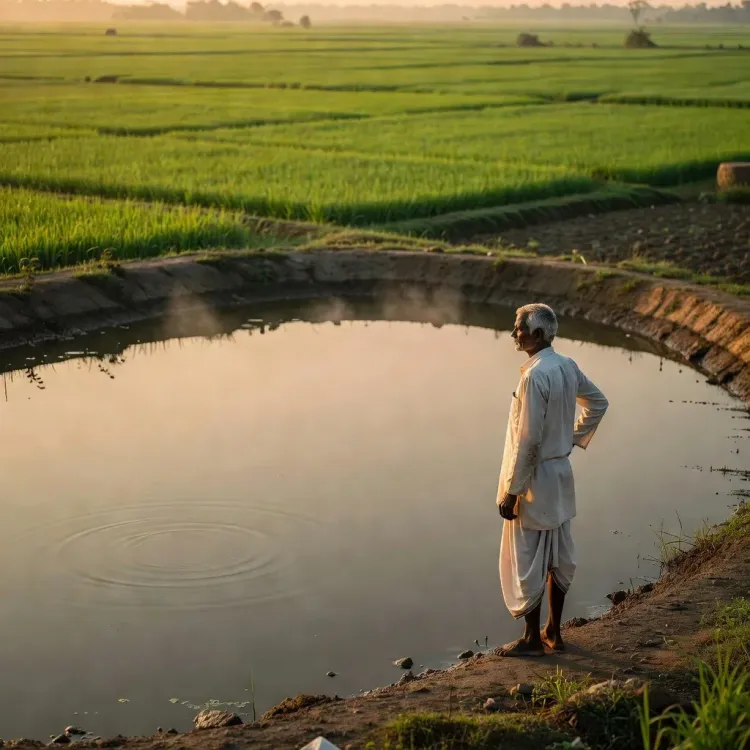
Bihar sits within the Gangetic plains, a region that experiences recurrent drought-flood cycles. Despite seasonal flooding, aquifer depletion has become a persistent challenge, particularly for farmers dependent on irrigation.
Policy Backdrop
Bihar's engagement with water conservation has a defined institutional anchor. In 2019, the state government launched the Jal Jeevan Hariyali Abhiyan, a flagship programme under Chief Minister Nitish Kumar aimed at mass afforestation, pond restoration, rainwater harvesting, and artificial groundwater recharge across the state.
The state's approach aligns with the national Jal Shakti Abhiyan framework, which encourages scientific aquifer mapping and community-level conservation measures. Several Indian states with over-exploited aquifers have scaled up similar programmes, reflecting a shared urgency around water security.
Stakeholders and Impact
Farmers and rural households are the primary stakeholders in Bihar's groundwater conservation efforts. Agricultural irrigation accounts for the bulk of groundwater extraction in the state, making aquifer health directly tied to crop yields and rural livelihoods.
Groundwater recharge structures — including check dams, recharge pits, and renovated ponds — benefit village communities by stabilising the water table, reducing dependence on erratic monsoon patterns, and improving drinking water availability in the lean season.
What's Next
The Central Ground Water Board periodically publishes aquifer-level assessments for Bihar, and its next report will be closely watched to gauge whether existing conservation measures are reversing the decline. Any fresh state budget allocations for recharge infrastructure or an expansion of the Jal Jeevan Hariyali Abhiyan would signal the government's commitment to scaling these efforts.
With groundwater stress intensifying across the Indo-Gangetic belt, Bihar's emphasis on scientific water management and community-level conservation could serve as a reference model — but sustained funding, district-level monitoring, and farmer participation will determine whether the push translates into measurable aquifer recovery.
Point of View
Now in its seventh year, also serves to remind stakeholders of the scheme's continuity. The absence of specific data or targets in the post, however, leaves the communication at the level of intent rather than accountability.
NationPress
21 Sept 2026
Frequently Asked Questions
What did the Bihar CMO post about on 23 June 2026?
The Chief Minister's Office of Bihar posted about the need to stop declining groundwater levels, promote scientific water use, and implement rainwater harvesting and groundwater recharge activities on a large scale.
What is Jal Jeevan Hariyali Abhiyan in Bihar?
Jal Jeevan Hariyali Abhiyan is a Bihar government flagship programme launched in 2019 under Chief Minister Nitish Kumar to promote afforestation, pond restoration, rainwater harvesting, and artificial groundwater recharge across the state.
Why is groundwater declining in Bihar?
Bihar's groundwater decline is driven by intensive agricultural irrigation, erratic monsoon patterns, and insufficient recharge infrastructure in the Gangetic plains, a region that paradoxically faces both seasonal flooding and aquifer stress.
How does Bihar's water conservation effort relate to the national Jal Shakti Abhiyan?
Bihar's state-level conservation measures align with the national Jal Shakti Abhiyan framework, which encourages scientific aquifer mapping and community-level water conservation across Indian states facing over-exploited groundwater resources.
Who benefits from groundwater recharge programmes in Bihar?
Farmers and rural households are the primary beneficiaries, as stable aquifer levels support agricultural irrigation and improve drinking water availability during the dry season.