CM Bihar Vows to Turn Investment Proposals Into Real Jobs
Synopsis
Bihar's Chief Minister has pledged to move investment proposals from paper to ground level, targeting industrial development and local employment generation. The commitment, shared by the Chief Minister's Office on 24 October 2026, reflects the state's long-standing effort to convert investor summits into operational projects and curb out-migration.
Key Takeaways
The Chief Minister's Office of Bihar posted on 24 October 2026 quoting the CM's commitment to ground-level implementation of investment proposals.
The stated goals are industrial development , local employment generation , and rapid expansion of economic activity in Bihar.
Bihar has hosted investor meets and collected investment pledges since the 2010s , but realising those proposals on the ground has been a persistent policy challenge.
Nitish Kumar has made private-sector investment attraction a cornerstone of his long tenure as Chief Minister.
Reducing out-migration of working-age Biharis by creating local jobs is a core social and economic objective behind the policy push.
Progress will be measurable in state economic surveys and budget documents tracking realised investment versus announced proposals.
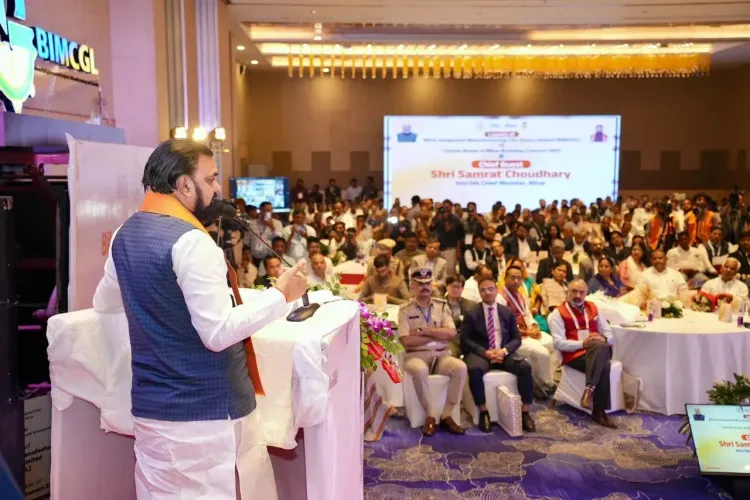
Bihar's Chief Minister has drawn a hard line between promise and performance: investment proposals must translate into factories, jobs, and economic activity on the ground — or they mean nothing. The Chief Minister's Office of Bihar posted on X on Saturday, 24 October 2026, quoting the Chief Minister's direct commitment to ensuring rapid industrial expansion and local employment generation across the state.
The post quotes the Chief Minister as saying: 'निवेश प्रस्तावों को धरातल पर उतारकर बिहार में औद्योगिक विकास, स्थानीय रोजगार सृजन और आर्थिक गतिविधियों का तेजी से विस्तार सुनिश्चित किया जाएगा' — ('Investment proposals will be brought to the ground level to ensure rapid expansion of industrial development, local employment generation, and economic activity in Bihar.')
Bihar's Long Chase to Convert Pledges Into Plants
Bihar has spent more than a decade hosting investor summits and assembling portfolios of investment commitments, yet the gap between announced proposals and operational projects has remained a persistent challenge. The state's economy has historically leaned heavily on agriculture and remittances, with large numbers of working-age residents migrating to other states for livelihoods — a demographic pressure that policymakers have consistently flagged as the problem industrial policy must solve.
Chief Minister Nitish Kumar, who has dominated Bihar's political landscape for much of the past two decades, has made attracting private investment a central plank of his governance agenda. His administration has pushed successive policies aimed at improving the state's ease-of-doing-business ranking, building industrial corridors, and creating single-window clearance systems — all designed to shorten the distance between a signed MoU and a ribbon-cutting ceremony.
Why Ground-Level Realisation Matters More Than Headlines
The distinction the Chief Minister drew — between proposals and actual ground-level implementation — is not rhetorical. State economic surveys and budget documents in Bihar and other aspirational states regularly reveal that realised investment as a share of announced investment hovers well below half. Each percentage point of that gap represents jobs that local workers never get.
For a state where out-migration remains a structural challenge, moving the needle on manufacturing and services employment is not just an economic target — it is a social one. Keeping skilled and semi-skilled workers within Bihar reduces pressure on remittance-dependent households and builds a local consumer base that itself drives further economic activity. The Chief Minister's framing on Saturday signals that the government intends to be judged not by what was pledged in boardrooms, but by what gets built on the ground.
Point of View
And that the political cost of that gap is rising. For Nitish Kumar, the framing serves a dual purpose: it signals administrative seriousness to potential investors while answering domestic critics who point to persistent out-migration as evidence that the industrial agenda has underdelivered. The broader arc here is an aspirational state trying to escape the low-investment trap through sheer administrative will, at a moment when national industrial policy offers corridor investments and PLI-linked opportunities that Bihar can compete for. Whether the rhetoric translates into measurable employment numbers will determine whether this becomes a genuine inflection point or another chapter in the state's long list of promising announcements.
NationPress
24 Oct 2026
Frequently Asked Questions
What did Bihar CM say about investment proposals?
The Chief Minister stated that investment proposals will be brought to ground level to ensure rapid industrial development, local employment generation, and expansion of economic activity across Bihar.
What is Bihar's strategy for industrial development?
Bihar has pursued private-sector investment through investor summits, single-window clearances, and industrial corridor projects since the 2010s, with the current focus on converting announced proposals into operational units.
Why is local employment generation important for Bihar?
Bihar faces large-scale out-migration of working-age residents to other states. Creating local manufacturing and services jobs is a priority to retain the workforce, reduce remittance dependence, and grow the domestic consumer base.
Who is the Chief Minister of Bihar?
Nitish Kumar is the Chief Minister of Bihar, having held the position for much of the past two decades with a focus on governance, infrastructure, and economic development.
How will Bihar's investment realisation be tracked?
Progress can be measured through state economic surveys and annual budget documents, which compare realised investment figures against the proposals announced at investor summits.