Bihar CM reaffirms state's commitment to housing, power, water for the poor
Synopsis
Bihar CM Nitish Kumar reaffirmed on 13 October 2026 that the state is committed to delivering pucca housing, free electricity, ration and drinking water to poor households, echoing the long-running Saat Nishchay and central welfare scheme frameworks.
Key Takeaways
Bihar CM Nitish Kumar declared the government's purpose is to bring 'positive change' in the lives of the poor through basic amenities.
The state has committed to providing pucca (permanent) housing, free electricity, subsidised ration, and drinking water to eligible poor households.
The commitment builds on the Saat Nishchay initiative launched in 2015-16 , which bundled basic amenities into a single accountability framework.
National backing comes from the Pradhan Mantri Awas Yojana (2015) for housing and the National Food Security Act (2013) for subsidised foodgrains.
Bihar state budgets routinely supplement central scheme funds to reach households outside the central beneficiary list.
For Bihar's poorest households, the promise is unambiguous: a solid roof, free electricity, subsidised ration, and clean drinking water — delivered by the state. Bihar Chief Minister Nitish Kumar, through the Chief Minister's Office, reaffirmed on Tuesday, 13 October 2026 that the government's core purpose is to bring positive change to the lives of the poor by ensuring access to basic amenities.
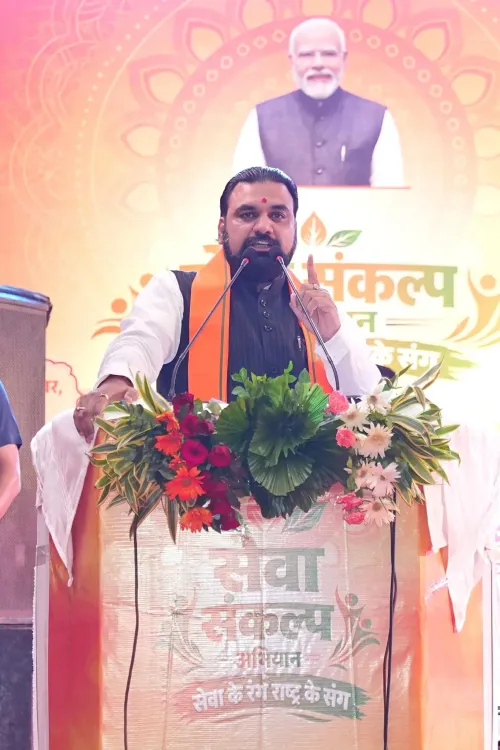
The CM's office posted in Hindi: 'सेवा का उद्देश्य गरीबों के जीवन में सकारात्मक बदलाव लाना और उन्हें मूलभूत सुविधाएं उपलब्ध कराना है' — 'The purpose of service is to bring positive change in the lives of the poor and to make basic amenities available to them.' The statement names four concrete entitlements: pucca (permanent) housing, free electricity, ration, and drinking water.
Bihar's welfare commitments and the schemes behind them
The commitment to permanent housing connects directly to the national Pradhan Mantri Awas Yojana, launched in 2015, which targets pucca houses for eligible rural and urban poor families. Bihar, with historically high poverty levels, has been among the scheme's largest beneficiary states, routinely supplementing central funds with state outlays to reach households that fall through the central eligibility net.
On food security, the National Food Security Act of 2013 underpins the subsidised ration commitment, ensuring access to foodgrains through the public distribution system. The Bihar government has consistently added state-funded layers to widen coverage beyond the central beneficiary list.
Saat Nishchay and the pattern of amenity-first governance
Bihar's Saat Nishchay (Seven Resolutions) initiative — launched around 2015-16 — made basic amenities a signature political and administrative project, bundling electricity connections, roads, toilets, and drinking water into a single accountability framework. The October 2026 statement echoes the same architecture: government as direct provider of tangible goods, not just a policy architect. That consistency, across successive state budgets and official communications, is itself the signal.
For rural families in Bihar, the test is always delivery at the last mile. The state's Rural Development Department periodically publishes progress reports on housing and power schemes — the next update will reveal how far the commitments outlined this week have actually moved.
Promises this explicit, repeated this publicly, create their own accountability clock — and Bihar's poor are watching it.
Point of View
Public restatement of basic-amenity commitments is not incidental — it reflects a governing strategy in which the state positions itself as a direct provider rather than a facilitator, a frame that has defined Nitish Kumar's political identity for over a decade. Framing 'service' as the delivery of pucca homes, electricity, ration, and water keeps welfare at the centre of the electoral compact in one of India's poorest states. However, the gap between commitment and last-mile delivery has historically been Bihar's sharpest vulnerability; periodic progress reports from the Rural Development Department will determine whether the October 2026 reaffirmation is followed by measurable outcomes or remains aspirational messaging.
NationPress
14 Oct 2026
Frequently Asked Questions
What amenities has the Bihar government committed to providing the poor?
The Bihar government has committed to providing pucca (permanent) housing, free electricity, subsidised ration and drinking water to poor households, as reaffirmed by Chief Minister Nitish Kumar's office on 13 October 2026.
What is the Saat Nishchay scheme in Bihar?
Saat Nishchay, or Seven Resolutions, is a Bihar government initiative launched around 2015-16 that bundled delivery of basic amenities — including electricity connections, roads, toilets and drinking water — into a single state accountability framework for poor and rural households.
How does Bihar provide pucca houses to the poor?
Bihar leverages the central Pradhan Mantri Awas Yojana, launched nationally in 2015, and supplements it with state funds to provide permanent housing to eligible rural and urban poor families who may not qualify under central eligibility criteria alone.
Is electricity free for poor households in Bihar?
The Bihar government has repeatedly committed to providing free electricity to poor households as part of its basic-amenity guarantee, though the precise terms and current beneficiary criteria are governed by state scheme notifications.
What is the National Food Security Act and how does it apply in Bihar?
The National Food Security Act of 2013 entitles eligible households to subsidised foodgrains through the public distribution system. Bihar uses this central framework and adds state-funded supplements to expand ration coverage beyond the central beneficiary list.