Bihar CM Samrat Choudhary seeks ₹18,000 crore at NITI Aayog meet, pitches state's growth
Synopsis
Bihar CM Samrat Choudhary used the 11th NITI Aayog Governing Council meeting to table one of the state's most comprehensive development pitches yet — spanning ₹18,000 crore for the Jal Jeevan Mission, bids to host the Hockey World Cup 2030 and National Games 2031, and a semiconductor-to-solar industrial push backed by ₹1 lakh crore in private investment over two years.
Key Takeaways
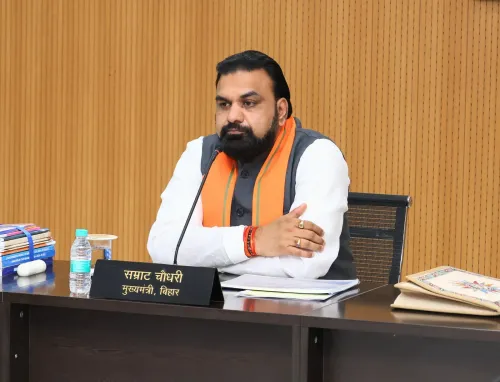
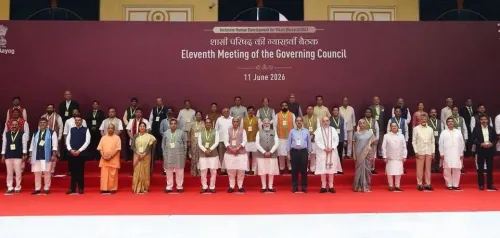
Bihar CM Samrat Choudhary presented the state's development agenda at the 11th NITI Aayog Governing Council meeting on 11 June 2025 , chaired by PM Narendra Modi .
Bihar sought ₹18,000 crore in central assistance under the Jal Jeevan Mission — ₹13,000 crore for past expenditure and ₹5,000 crore for ongoing projects.
The state requested ₹750 crore for a skilling pilot under ISSA and ₹1,500 crore for the Jannayak Karpoori Thakur Skill University .
Bihar has attracted more than ₹1 lakh crore in private investment over the last two years and approved 14,037 acres of new industrial land.
The state ranks first nationally under the Lakhpati Didi Yojana with 48.30 lakh beneficiaries.
Bihar has bid to host the Hockey World Cup 2030 , National Youth Games 2028 , and National Games 2031 , seeking special central support for each.
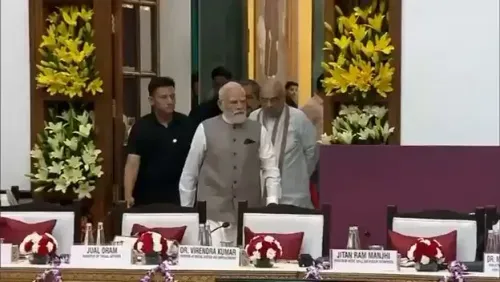
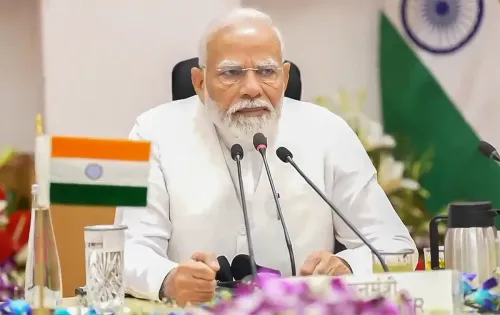
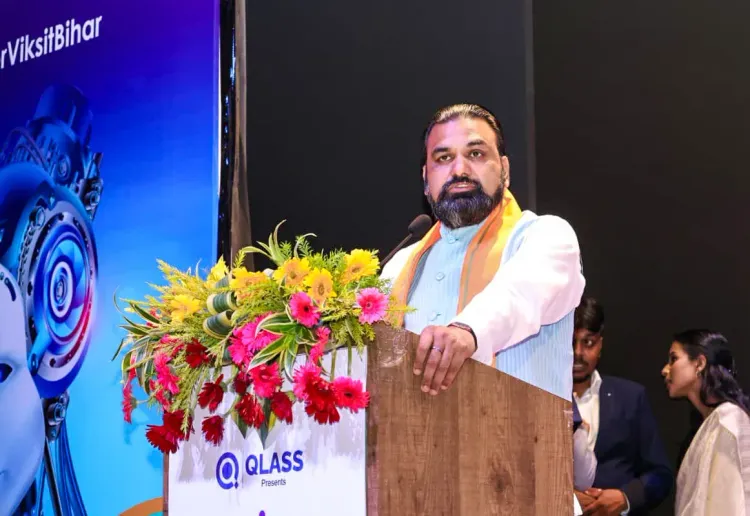
Bihar Chief Minister Samrat Choudhary on Thursday, 11 June presented the state's development agenda and sought substantial financial and institutional support from the Centre at the 11th NITI Aayog Governing Council meeting in New Delhi. The meeting was chaired by Prime Minister Narendra Modi and attended by Chief Ministers and Deputy Chief Ministers from states and Union Territories across the country.
Education and Skill Development Push
Choudhary highlighted Bihar's progress in early childhood care, noting that nutrition gardens (Poshan Vatikas) have been set up in 10,579 of the 11,529 approved Saksham Anganwadis. Around 8,400 Anganwadi centres have been co-located with nearby schools, and 34,682 centres are linked to primary schools within a 500-metre radius. APAAR IDs have been issued to nearly 70 percent of the 40.28 lakh children enrolled in the 3–6 years age group.
On digital infrastructure, the Chief Minister said internet connectivity has been extended to 91 percent of Bihar's 76,202 government schools, with more than 9,000 smart classrooms now operational. 100 percent toilet coverage has been achieved in girls' schools, and out-of-school children in the 15–19 years age group are being re-enrolled through Bihar's own Open School Board.
In skill development, Choudhary stated that 1.18 lakh artisans have been trained under the PM Vishwakarma scheme. The Aryabhatta International Skill Hub is being established in Patna at a cost of ₹640 crore. Bihar requested ₹750 crore from the Centre for a pilot under the Integrated Scheme in Skilling Architecture (ISSA), and sought ₹1,500 crore for the Jannayak Karpoori Thakur Skill University, along with support for a National Skill Training Institute (NSTI) in Bhagalpur.
Higher Education, Sports, and Tourism Bids
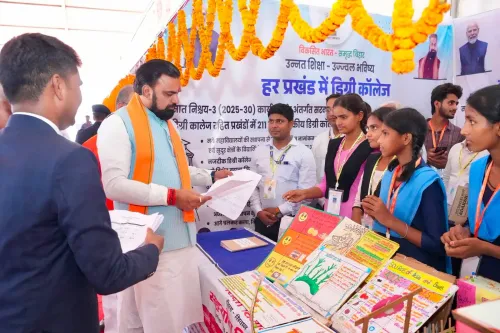
Degree colleges are being established in 211 blocks across Bihar. The state also urged the Centre to support regional branches of the Indian Institute of Science Education and Research (IISER) and the School of Planning and Architecture in the state.
On the sports front, Bihar successfully hosted several national and international events in 2024, including the Asian Women's and Men's Hockey Championship, the Asian Rugby Championship, and the Khelo India Youth Games 2025. The state has now sought special central assistance to host the National Youth Games in 2028, the Hockey World Cup in 2030, and the National Games in 2031.
For tourism, Choudhary said Bihar is developing Gayaji, including Bodhgaya, as an international spiritual and cultural destination under the One State: One Global Destination initiative. Integrated development work is underway for the Vishnupad Corridor, Mahabodhi Corridor, and the Rajgir–Nalanda–Bodhgaya circuit. The state has requested special support for improving international air connectivity to the region.
Agriculture, Energy, and Industrial Growth
Bihar is implementing the Agri Stack initiative to provide unique IDs to farmers, with around 61 percent of PM-KISAN beneficiaries already enrolled. The state requested the establishment of a Central Institute for Subtropical Horticulture in Bihar and sought Centre approval for a National Makhana Board office. It also urged early establishment of the National Institute of Food Technology Entrepreneurship and Management (NIFTEM), for which 100 acres of land has already been transferred.
In the energy sector, Bihar is progressing on a 2,400 MW thermal power project at Pirpainti in Bhagalpur. The Chief Minister noted that the country's largest battery-based solar power plant has been established at Kajra in Lakhisarai, and the state is committed to installing nearly 10 lakh rooftop solar plants beyond its allocated target under the PM Surya Ghar Muft Bijli Yojana.
On industrialisation, Choudhary said approval has been granted for 14,037 acres of new industrial land. Through the Bihar Industrial Investment and Promotion Package 2025, Semiconductor Policy 2026, Bihar Global Capability Center Policy 2026, and the Bihar AI Mission, the state is building a new economy centred on AI, electronics, and advanced manufacturing. In the last two years, Bihar has attracted more than ₹1 lakh crore in private investment across solar, energy, road infrastructure, and industrial sectors. The state has also set a target to develop 14 greenfield satellite townships across more than 3 lakh acres.
₹18,000 Crore Water Mission Demand and Viksit Bharat Commitment
A significant ask at the meeting was Bihar's request for approximately ₹18,000 crore in central assistance related to the Jal Jeevan Mission. The state said it had achieved the national goals of the mission under its Har Ghar Nal Ka Jal programme but could not draw down the allocated central funds for various reasons. Bihar sought ₹13,000 crore for expenditure already incurred and an additional ₹5,000 crore for ongoing projects.
Notably, Bihar ranks first in the country under the Centre's Lakhpati Didi Yojana, with 48.30 lakh Lakhpati Didis, with women from Self-Help Groups playing a central role. Choudhary concluded by assuring Prime Minister Modi that Bihar remains committed to the Viksit Bharat 2047 vision and will continue to advance on the principle of 'Sabka Saath, Sabka Vikas.' With multiple large-scale bids now formally placed before the Centre, the state's ability to convert these requests into disbursements will be the key metric to watch in the months ahead.
Point of View
Giving Choudhary's asks unusual leverage. Yet the sheer breadth of the demands — from Jal Jeevan Mission reimbursements to Hockey World Cup hosting rights — raises a question about prioritisation. The ₹18,000 crore Jal Jeevan claim, where the state says it spent the money but could not draw down central funds, is the most consequential and the most opaque: the reasons for the fund drawdown failure have not been publicly detailed. If that claim is resolved, it would be one of the largest single-state fiscal settlements in recent memory — a detail that mainstream coverage has largely glossed over.
NationPress
24 Sept 2026
Frequently Asked Questions
What did Bihar CM Samrat Choudhary demand at the NITI Aayog meeting?
Bihar CM Samrat Choudhary sought a wide range of financial and institutional support at the 11th NITI Aayog Governing Council meeting on 11 June 2025, including ₹18,000 crore for the Jal Jeevan Mission, ₹750 crore for a skilling pilot, and ₹1,500 crore for a skill university. He also requested central support for IISER branches, a National Makhana Board, and international sports events.
Why is Bihar requesting ₹18,000 crore for the Jal Jeevan Mission?
Bihar says it achieved the national targets of the Jal Jeevan Mission under its Har Ghar Nal Ka Jal programme but was unable to draw down the centrally allocated funds for various reasons. The state is seeking ₹13,000 crore for expenditure already incurred and ₹5,000 crore for ongoing projects under the scheme.
What sports events is Bihar seeking to host with central support?
Bihar has sought special central assistance to host the National Youth Games in 2028, the Hockey World Cup in 2030, and the National Games in 2031. The state successfully hosted the Asian Hockey Championships and Khelo India Youth Games 2025 in 2024.
How much private investment has Bihar attracted in recent years?
According to Chief Minister Samrat Choudhary, Bihar has attracted more than ₹1 lakh crore in private investment over the last two years, spanning solar and energy projects, road infrastructure, and industrial units. The state has also approved 14,037 acres of new industrial land.
What is Bihar's ranking under the Lakhpati Didi Yojana?
Bihar ranks first in the country under the Centre's Lakhpati Didi Yojana, with 48.30 lakh Lakhpati Didis. Women associated with Self-Help Groups are, according to the Chief Minister, playing a central role in the state's economic formalisation drive.