CM Bihar's Office Pushes Household Solar Energy Rollout
Synopsis
Bihar's Chief Minister's Office on World Environment Day 2026 announced rapid progress in installing household solar energy systems across the state, aligning with the central PM Surya Ghar scheme and Bihar's own renewable energy targets under BREDA's oversight.
Key Takeaways
Bihar's CMO announced on 5 June 2026 (World Environment Day) that work is progressing rapidly on installing solar energy systems in every household across the state.
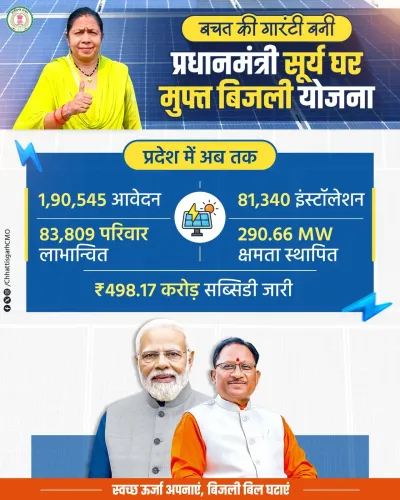
The drive aligns with the PM Surya Ghar Muft Bijli Yojana , a central scheme launched in 2024 targeting rooftop solar for one crore households nationally.
BREDA (Bihar Renewable Energy Development Agency) is the state nodal agency responsible for on-ground implementation.
Bihar's Renewable Energy Policy (2017) laid the groundwork for solar capacity targets and developer incentives in the state.
The initiative supports India's national goal of 500 GW non-fossil fuel capacity by 2030 and mirrors similar programmes in Rajasthan, Gujarat and Maharashtra.
Key metrics to watch include BREDA installation reports, state budget allocations and tender outcomes in the next two quarters.
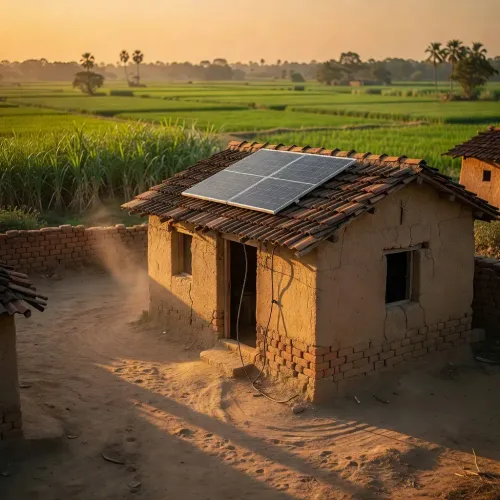
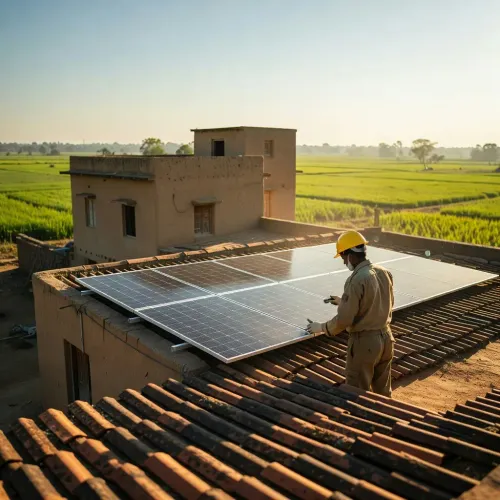
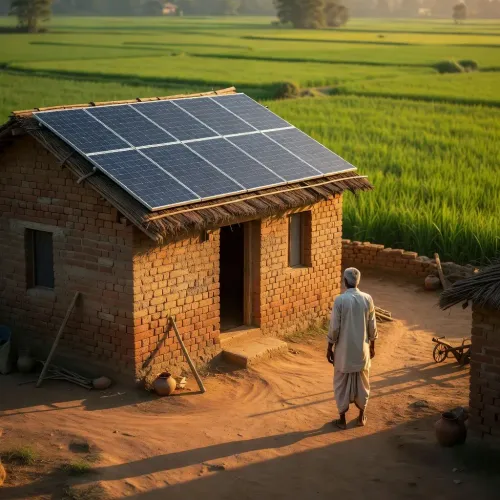
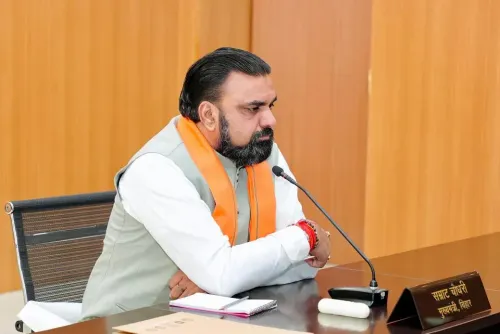
The Chief Minister's Office of Bihar, on Friday, 5 June 2026, signalled a stepped-up push to expand solar-powered electricity generation across the state, with a focus on installing household-level solar energy systems in every home. The announcement, made via the official CMO Bihar account on X, comes on World Environment Day and underlines the state government's intent to accelerate distributed renewable energy adoption.
The post stated, 'ghar-ghar solar yukt urja pranaliyon ki sthapna ki disha mein bhi tezi se karya kiya ja raha hai' — meaning work is being carried out rapidly towards installing solar-equipped energy systems in every household across the state, as part of broader efforts to promote solar-based electricity generation in Bihar.
Context
The CMO's statement is framed as part of an ongoing series of environment-linked announcements, with the phrase 'isi kram mein' ('in this same sequence') indicating it follows earlier environment-day communications. Bihar has long grappled with power deficits and high transmission losses, making household-level solar generation a strategically attractive option for the state government. The timing on World Environment Day lends the announcement additional symbolic weight.
Policy Backdrop
Bihar notified its Renewable Energy Policy in 2017, which set out solar capacity addition targets and incentives for private developers. Since the central government's PM Surya Ghar Muft Bijli Yojana was launched in 2024 — targeting rooftop solar installations across one crore households nationally with systems of 1–3 kW capacity — Bihar has been aligning its state-level execution with the scheme's framework. The Bihar Renewable Energy Development Agency (BREDA) serves as the nodal agency for rolling out such programmes on the ground.
India's broader national target of 500 GW of non-fossil fuel capacity by 2030 has pushed states to accelerate distributed solar deployment. Bihar's household solar drive fits squarely within this national arc, mirroring similar programmes already underway in Rajasthan, Gujarat, and Maharashtra.
Stakeholders and Impact
The primary beneficiaries of the household solar push are Bihar's residential consumers, particularly in rural and semi-urban areas where grid reliability remains inconsistent. For electricity distribution companies (discoms), widespread rooftop solar adoption can ease the subsidy burden by reducing net power purchase requirements. Private renewable energy developers and equipment suppliers also stand to gain as the state scales up tenders and installations.
Chief Minister Nitish Kumar, who has overseen multiple rounds of power sector reform in the state, has consistently positioned energy access as a development priority. A successful household solar rollout would reinforce that record ahead of future electoral cycles.
What's Next
Observers will watch BREDA's monthly installation progress reports and state budget allocations in the coming two quarters for concrete targets and disbursement figures. Tender outcomes for rooftop solar systems will be a key indicator of how quickly the programme can move from announcement to on-ground execution. A measurable uptick in household solar connections across Bihar's districts would validate the CMO's claim of rapid progress.
Point of View
Voter-friendly optics of green energy access at the doorstep. By explicitly linking state action to the central PM Surya Ghar scheme, the CMO is also reinforcing the NDA alliance's shared governance narrative ahead of future electoral cycles. The emphasis on speed ('tezi se karya') without disclosed targets is a familiar pattern in Indian state communications — ambition is asserted, but accountability metrics are left for later. Whether BREDA's execution capacity can match the rhetoric will be the real test over the next two quarters.
NationPress
21 Oct 2026
Frequently Asked Questions
What is the Bihar household solar energy scheme announced in June 2026?
The Chief Minister's Office of Bihar announced on 5 June 2026 that the state is rapidly working towards installing solar-equipped energy systems in every household, aimed at boosting solar-based electricity generation across Bihar.
What is PM Surya Ghar Muft Bijli Yojana and how does it relate to Bihar?
PM Surya Ghar Muft Bijli Yojana is a central government rooftop solar subsidy scheme launched in 2024 targeting one crore households with 1–3 kW systems. Bihar has aligned its state-level solar rollout with this scheme, with BREDA as the nodal implementing agency.
Which agency implements solar energy projects in Bihar?
The Bihar Renewable Energy Development Agency (BREDA) is the state nodal agency responsible for implementing solar, biomass and other renewable energy projects across Bihar.
What is Bihar's renewable energy policy background?
Bihar notified its Renewable Energy Policy in 2017, setting solar capacity addition targets and incentives for private developers. Since then, the state has progressively aligned with central government schemes to scale rooftop and distributed solar.
How does Bihar's solar push fit into India's national renewable energy goals?
India aims to achieve 500 GW of non-fossil fuel capacity by 2030. Bihar's household solar drive contributes to this national target and mirrors similar distributed solar programmes already underway in Rajasthan, Gujarat and Maharashtra.