Bihar CM's Office sets 1-crore jobs, Lakhpati Didi targets
Synopsis
The Chief Minister's Office of Bihar has announced three five-year targets: employment for 1 crore people, entrepreneurship for 1 crore families, and Lakhpati Didi status for 1 crore women — with 50 lakh women already crossing the Rs 1 lakh annual income threshold.
Key Takeaways
Bihar's CM Office announced a five-year target to provide employment and government jobs to 1 crore people .
A second target aims to convert 1 crore families into entrepreneurs through state-backed programmes.
The government has pledged to make 1 crore women 'Lakhpati Didis' — earning at least Rs 1 lakh annually — over the same period.
50 lakh women have already achieved Lakhpati Didi status under the DAY-NRLM framework.
Bihar's JEEViKA mission, launched in 2007, underpins the state's self-help group and rural livelihoods infrastructure driving these targets.
State budget allocations and district-level implementation data will be key indicators of delivery against these pledges.
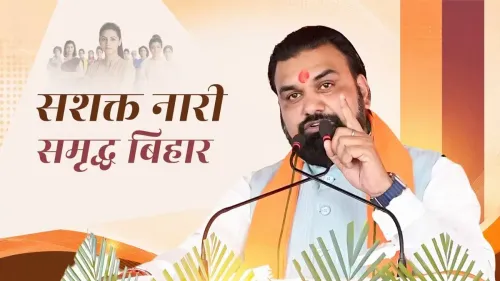
Three pledges, each anchored to a crore — that is the scale of Bihar's social and economic ambition as laid out by the Chief Minister's Office of Bihar on Friday, 20 November 2026. The government has set a target to provide employment and government jobs to 1 crore people, transform 1 crore families into entrepreneurs, and elevate 1 crore women to 'Lakhpati Didi' status over the next five years — with 50 lakh women already having crossed that threshold.
The post, written in Hindi, states: 'Aagami paanch varshon mein 1 crore logon ko rozgar evam sarkari naukri dene ka lakshya hai' — 'The target is to provide employment and government jobs to 1 crore people in the coming five years.' It goes on to declare the resolve to make 1 crore families entrepreneurial and 1 crore women Lakhpati Didis, noting that 50 lakh women have already achieved that status.
What 'Lakhpati Didi' means — and how Bihar got here
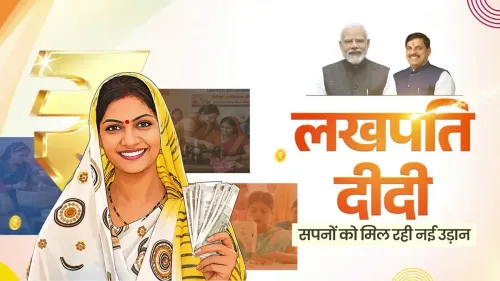
The Lakhpati Didi scheme is a national initiative under the Deendayal Antyodaya Yojana – National Rural Livelihoods Mission (DAY-NRLM) that enables women in self-help groups (SHGs) to earn a minimum of Rs 1 lakh per year through diversified livelihoods — from agri-allied activities to micro-enterprise and skill-linked work. Bihar's own engine for this transformation has been JEEViKA, the state's rural livelihoods mission launched in 2007, which scaled up women's SHGs across districts and became one of the largest such networks in India.
Under successive governments led by Chief Minister Nitish Kumar, Bihar has repeatedly tied SHG expansion to measurable state-level outcomes — job creation, enterprise formation, and women's income growth — as a direct counter to rural out-migration and chronically low female workforce participation. The five-year targets announced now extend that established pattern into the next political and budgetary cycle.
Three crore ambitions: jobs, enterprise, and women's income
The scale of these targets is striking. A pledge to generate 1 crore jobs and government posts in five years demands both a buoyant private sector and significant public recruitment — two levers that rarely move in unison in Bihar's historically agrarian economy. The entrepreneurship target — 1 crore families — implies a fundamental push toward formalization of micro and small enterprises, likely channelled through SHG-linked credit and skilling programmes. And the women's income goal builds directly on the momentum of 50 lakh women already enrolled as Lakhpati Didis, aiming to double that figure while expanding its reach.
What to watch now: state budget allocations in the coming financial year, implementation frameworks for each of the three targets, and district-level rollout data from the JEEViKA and Lakhpati Didi networks — these will determine whether these pledges become programmes or remain aspirations.
Bihar has a long record of setting bold numerical goals for rural welfare. The question the next five years will answer is whether the execution matches the crore-scale ambition.
Point of View
Given the documented JEEViKA infrastructure and the existing 50 lakh base, but the jobs-and-entrepreneurship targets will require structural economic shifts that Bihar has historically struggled to sustain. The announcement also mirrors the Centre's own Lakhpati Didi framing, suggesting Bihar is deliberately aligning state branding with a nationally visible welfare narrative. Whether these targets translate into policy architecture or remain aspirational depends heavily on the next two state budgets.
NationPress
20 Nov 2026
Frequently Asked Questions
What is the Lakhpati Didi scheme in Bihar?
The Lakhpati Didi scheme enables women in self-help groups to earn at least Rs 1 lakh per year through diversified livelihoods including agriculture-linked work, micro-enterprise, and skill training, implemented in Bihar through the JEEViKA rural livelihoods mission.
How many women have become Lakhpati Didi in Bihar so far?
According to the Chief Minister's Office of Bihar, 50 lakh women have already become Lakhpati Didis, with a target to reach 1 crore women over the next five years.
What is Bihar's employment target for the next five years?
The Bihar government has set a target of providing employment and government jobs to 1 crore people over the coming five years, alongside making 1 crore families entrepreneurial.
What is JEEViKA and how does it relate to these targets?
JEEViKA is Bihar's state rural livelihoods mission launched in 2007, which organises women into self-help groups and links them to credit, skilling, and livelihood programmes. It forms the primary delivery infrastructure for the Lakhpati Didi and entrepreneurship targets.
Who announced Bihar's 1 crore jobs and Lakhpati Didi targets?
The Chief Minister's Office of Bihar announced these targets on 20 November 2026 via an official post on X, outlining a five-year roadmap for employment, entrepreneurship, and women's income enhancement.