Bihar crimes: Dilip Jaiswal asks why offenders film and post their own acts
Synopsis
Three videos allegedly showing crimes against women and girls in Bihar went viral — and each one triggered a police crackdown. State minister Dilip Jaiswal's response wasn't to defend the government's record outright, but to ask a sharper question: why are offenders self-incriminating on social media? The answer may say more about impunity than foolishness.
Key Takeaways
Bihar minister Dilip Jaiswal questioned on 24 September 2026 why alleged offenders are recording and uploading videos of their own crimes on social media.
Three separate incidents were reported in Jamui , Samastipur , and Madhepura , all involving young women or girls.
In Samastipur , police detained five suspects after a molestation video circulated online; arrests were also made in the Jamui case.
In each case, the viral spread of the video — not an initial complaint — prompted police action.
The Opposition has raised concerns over Bihar's law-and-order situation, while the government says police acted promptly after the videos emerged.
The incidents have triggered a wider debate on the use of social media to document and circulate footage of crimes.
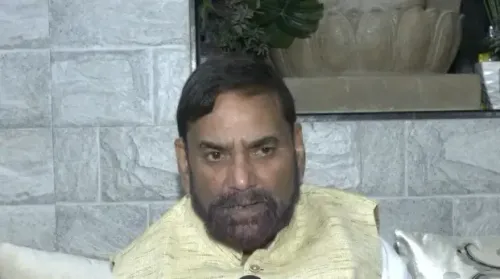
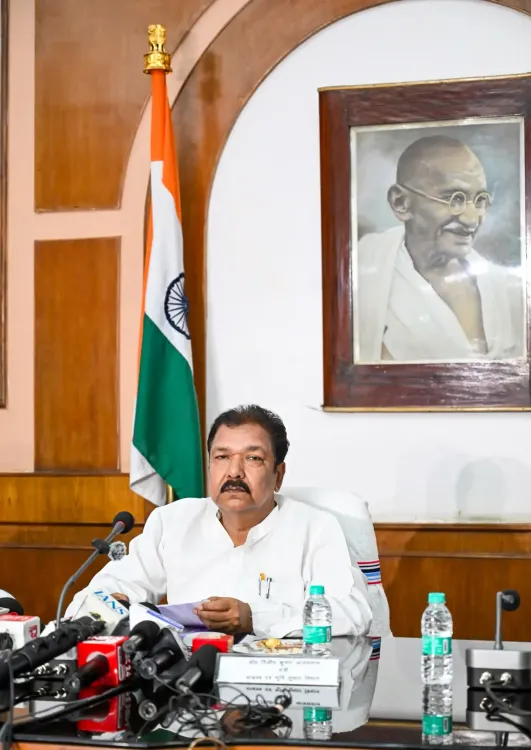
Political tensions have sharpened in Bihar after a string of incidents involving young girls surfaced in Jamui, Samastipur, and Madhepura, with state minister Dilip Jaiswal raising a pointed question on 24 September 2026: why are individuals allegedly committing crimes recording the acts themselves and uploading the footage to social media?
What Jaiswal Said
Jaiswal urged that the incidents not be reduced to political point-scoring, and instead drew attention to what he described as a puzzling behavioural pattern among alleged offenders. 'How can a criminal be so foolish as to record their own crime and upload it on social media like a reel?' he said, adding that those involved are fully aware that such footage can be — and is — used by police to identify and pursue them.
He argued that the very act of self-incrimination through social media uploads warranted serious examination, and called on Opposition parties to engage with that dimension rather than using the incidents solely to target the Bihar government.
The Three Incidents
The minister's remarks were triggered by three separate incidents whose videos spread rapidly across social media platforms, forcing the cases into public view.
In Jamui, a video purportedly showing the molestation of a minor female student prompted a police investigation and led to arrests. In Samastipur, footage allegedly showing the molestation of a young woman on a public road surfaced online; police detained five suspects and launched a probe into the circumstances surrounding the clip. In Madhepura, a video circulated depicting an altercation involving a young man and a female student outside a school, and police took action in connection with that incident as well.
Notably, in each case it was the viral spread of the video — rather than an initial complaint — that brought the matter to the authorities' attention, raising questions about how such incidents might otherwise have gone unaddressed.
The Opposition's Position
The Opposition has continued to raise alarm over the law-and-order situation in Bihar, citing the three incidents as evidence of a deteriorating security environment for women and girls. The state government, for its part, has maintained that police responded promptly once the videos became public and initiated action against those identified in the footage.
A Wider Debate on Crime and Social Media
The incidents have sparked a broader conversation about the growing phenomenon of crimes being documented and circulated on social media — a trend that cuts in two directions. On one hand, such footage has repeatedly proved decisive in driving police action in cases that might otherwise have stalled. On the other hand, the circulation of videos depicting the victimisation of women and minors raises serious concerns about privacy, consent, and the potential for secondary harm to survivors.
Authorities are continuing to investigate the individual cases and verify the full circumstances surrounding each video. The outcome of those investigations is expected to shape the political and policy response in the weeks ahead.
Point of View
It was a viral video — not proactive policing — that set the state machinery in motion. That pattern is not unique to Bihar, but it is telling. If crimes of this nature require social media exposure to get a police response, the problem is not just that offenders are reckless with their phones. The Opposition's political framing is also incomplete — neither side is seriously engaging with why survivors or witnesses may feel that formal complaint mechanisms are less reliable than public shaming online. That trust deficit is the real law-and-order story here.
NationPress
24 Sept 2026
Frequently Asked Questions
What did Bihar minister Dilip Jaiswal say about the viral crime videos?
Jaiswal questioned why individuals allegedly involved in criminal acts are recording the incidents and uploading them to social media, calling the behaviour self-incriminating. He urged the Opposition not to use the incidents purely for political attacks on the Bihar government, and instead reflect on this pattern.
What are the three incidents that sparked the controversy in Bihar?
Three separate incidents involving young women and girls were reported in Jamui, Samastipur, and Madhepura in Bihar. In Jamui, a video purportedly showing the molestation of a minor led to arrests; in Samastipur, five suspects were detained after molestation footage spread online; and in Madhepura, police acted after a video of an altercation involving a female student outside a school circulated widely.
How did police respond to the Bihar molestation cases?
In each case, police initiated action after the videos went viral on social media. Arrests were made in the Jamui case, five suspects were detained in Samastipur, and police also took action in the Madhepura incident. The government has maintained that the response was prompt once the footage came to light.
Why does it matter that social media videos drove the police response?
The fact that viral videos — rather than formal complaints — triggered police action in all three cases raises questions about whether victims feel safe using official channels. Critics argue this reflects a broader trust deficit in the law-and-order machinery, a concern that goes beyond any single government or political party.
What is the Opposition's stance on the Bihar law-and-order situation?
Opposition parties have cited the three incidents as evidence of a deteriorating security environment for women and girls in Bihar, and have continued to raise concerns publicly. The state government has pushed back, arguing that police responded swiftly once the videos emerged.