CM Bihar's Office Bets on Integrated Farming Model
Synopsis
Bihar's Chief Minister's Office declared on 17 June 2026 that the state will give special emphasis to Integrated Farming Systems — combining crops, livestock and fisheries — and will be developed as a national model in this sector, building on the state's successive Agriculture Road Maps since 2008.
Key Takeaways
The Chief Minister's Office of Bihar announced on 17 June 2026 that Integrated Farming Systems will receive special policy emphasis.
Bihar aims to be developed as a model state in the Integrated Farming sector.
The push is framed as a continuation of Bihar's agricultural tradition rooted in successive Bihar Agriculture Road Maps since 2008 .
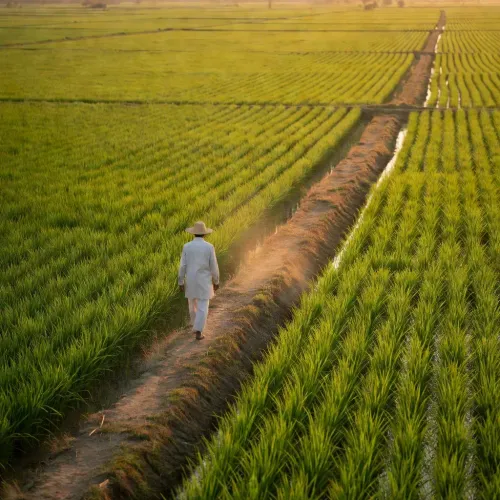
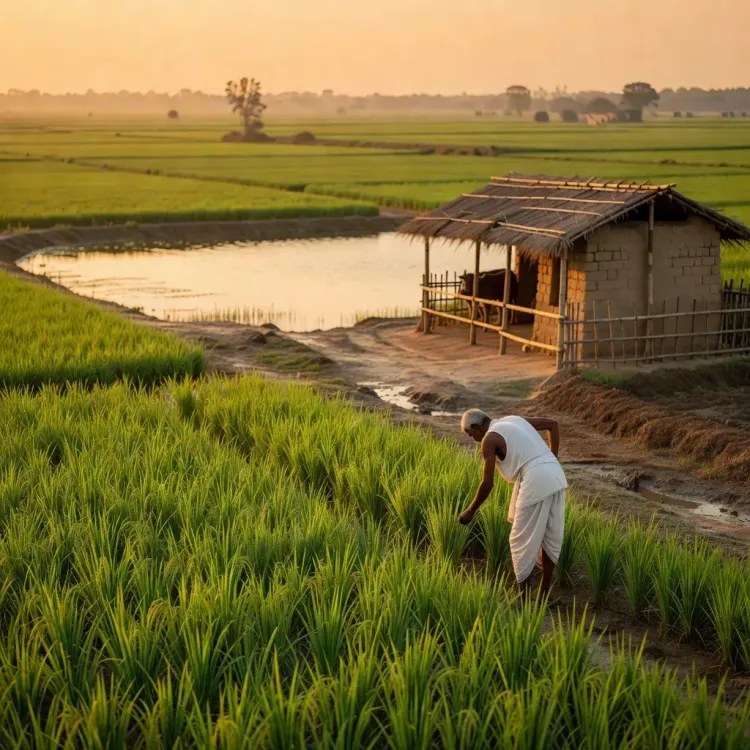
Integrated Farming combines crops, livestock, fisheries and agroforestry to diversify income and reduce risk for smallholder farmers.
Specific budgetary allocations, timelines and implementing agencies have not yet been officially confirmed .
The move aligns with national schemes such as the National Mission for Sustainable Agriculture and mirrors efforts by other eastern Indian states.
The Chief Minister's Office of Bihar announced on Wednesday, 17 June 2026 that the state will place special emphasis on Integrated Farming Systems (IFS) — combining crops, livestock, fisheries and agroforestry — and will be developed as a model state in this sector, carrying forward what it described as a proud agricultural tradition.
Context
The post, shared by @officecmbihar, states in Hindi: 'इसी गौरवशाली परंपरा को आगे बढ़ाते हुए अब एकीकृत कृषि प्रणाली (इंटीग्रेटेड फार्मिंग) पर विशेष बल दिया जाएगा तथा बिहार को इस क्षेत्र में एक मॉडल राज्य के रूप में विकसित किया जाएगा।' — translated: 'Carrying forward this glorious tradition, special emphasis will now be placed on Integrated Farming Systems, and Bihar will be developed as a model state in this sector.' The announcement signals a deliberate policy shift toward multi-enterprise farming as a cornerstone of Bihar's agrarian economy.
Integrated Farming Systems combine crop cultivation with allied activities such as animal husbandry, fisheries and agroforestry on the same landholding, allowing farmers to optimise resource use, spread income risk and improve overall household earnings — particularly significant in a state where landholdings are small and flood risk is high.
Policy Backdrop
Bihar has a documented history of structured agricultural planning. Under Chief Minister Nitish Kumar, the state launched its first Bihar Agriculture Road Map covering 2008-2012, which emphasised crop diversification and integrated practices. Successive roadmaps followed for 2012-2017 and 2017-2022, each building on extension services and farmer outreach.
The latest announcement continues that lineage, framing Integrated Farming not as a new experiment but as an acceleration of an established approach. Nationally, several states have scaled similar systems under the National Mission for Sustainable Agriculture and the Paramparagat Krishi Vikas Yojana, addressing climate vulnerability and stagnant farm incomes — challenges Bihar shares acutely given its flood-prone geography and predominantly smallholder farming base.
Stakeholders and Impact
Small and marginal farmers and rural households dependent on mixed farming stand to be the primary beneficiaries if the model-state ambition translates into on-ground programmes. Integrated systems are widely recognised for stabilising incomes across seasons by diversifying revenue streams beyond a single crop harvest.
Bihar has a large share of its population engaged in agriculture, making any structural shift in farming policy consequential for rural employment and food security across the state's 38 districts. The emphasis on positioning Bihar as a model also suggests aspirations to influence policy replication in other eastern Indian states facing similar agrarian conditions.
What's Next
Detailed operational guidelines, district-level pilot projects and budgetary allocations are expected to emerge in the next state agriculture budget or through a revised Agriculture Road Map document. The specific launch timeline, financial outlay and implementing agency for this integrated farming push are yet to be confirmed through official public records.
Observers will watch whether Bihar follows through with measurable targets — such as the number of farmer households enrolled, acreage under integrated systems, or income benchmarks — that would substantiate its claim to model-state status in this domain.
Point of View
Coming from the Chief Minister's Office directly, signals that integrated farming will be elevated from a component of broader roadmaps to a headline political commitment. For Chief Minister Nitish Kumar, who has staked considerable political identity on agricultural modernisation, positioning Bihar as a national model offers both a governance narrative and a potential template for Union government partnership under existing central schemes. The real test will be whether this intent is backed by measurable targets and ring-fenced budgets in the next agriculture budget cycle.
NationPress
19 Sept 2026
Frequently Asked Questions
What is the Integrated Farming System that Bihar plans to promote?
Integrated Farming System (IFS) is an agricultural approach that combines crop cultivation with allied activities such as animal husbandry, fisheries and agroforestry on the same landholding, helping farmers diversify income, reduce risk and use resources more efficiently.
What did Bihar's Chief Minister's Office announce on 17 June 2026?
The Chief Minister's Office of Bihar announced that special emphasis will be placed on Integrated Farming Systems and that Bihar will be developed as a model state in this sector, continuing the state's longstanding agricultural tradition.
What is the Bihar Agriculture Road Map?
The Bihar Agriculture Road Map is a state policy framework launched in phases since 2008 under Chief Minister Nitish Kumar, aimed at raising agricultural productivity, diversifying cropping patterns and strengthening farmer support services.
How will Bihar's integrated farming push benefit small farmers?
By combining crops, livestock and fisheries on the same farm, small and marginal farmers can earn income from multiple sources across seasons, reducing dependence on a single harvest and improving resilience against floods and market volatility.
When will Bihar release details of its integrated farming scheme?
Specific operational guidelines, pilot projects and budgetary allocations are expected to be announced in the next state agriculture budget or through a revised Agriculture Road Map; exact timelines have not been officially confirmed yet.