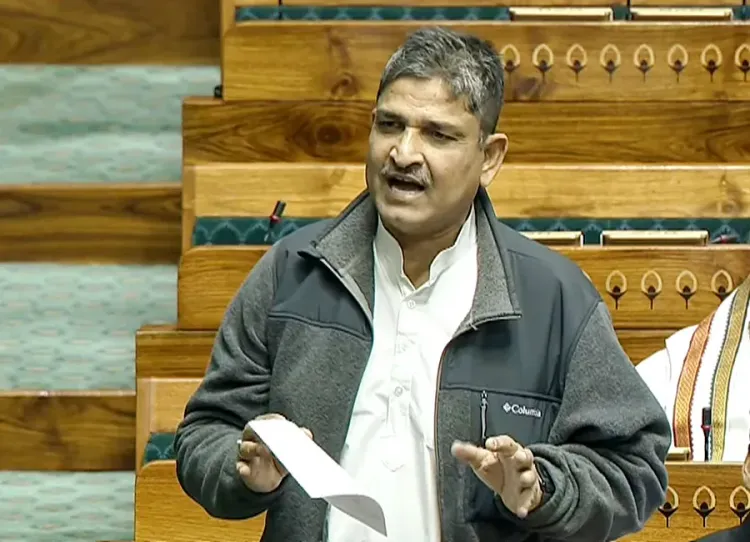
Bihar Congress MP's Urdu-Sanskrit remarks ignite political row
Synopsis
A two-term Congress MP from Bihar's Kishanganj has lit a political fire — not just by demanding Urdu teacher recruitment in state schools, but by claiming Sanskrit came to India from outside. The Urdu grievance is a legitimate governance question; the Sanskrit claim is a cultural grenade in a state where identity politics runs deep.
Key Takeaways
Congress MP Mohammad Jawed from Kishanganj , Bihar, alleged on 16 July that the state government has failed to recruit Urdu teachers in government schools.
Bihar recognises Urdu as its second official language , but Jawed argued this status has not translated into actual recruitment.
Jawed claimed Urdu and Hindi are India's indigenous languages, while asserting Sanskrit originated outside the subcontinent — a claim that contradicts no single scholarly consensus but is politically contentious.
Jawed has won the Kishanganj Lok Sabha seat in both 2019 and 2024 .
The remarks are expected to draw formal reactions from the BJP and JD(U) , particularly over the Sanskrit comments.
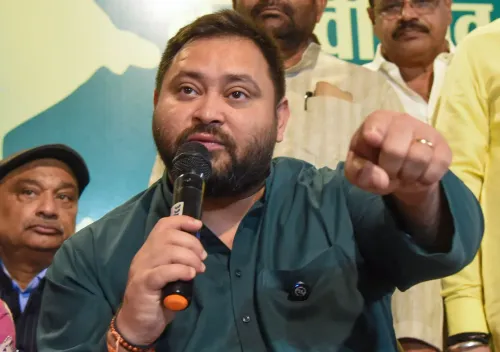
Congress MP Mohammad Jawed from Bihar's Kishanganj constituency has sparked a fresh political controversy after alleging on 16 July that the Bihar state government is systematically neglecting Urdu, despite its constitutionally recognised status as the state's second official language. His remarks — which also touched on the origins of Sanskrit — have drawn sharp reactions from across the political spectrum.
What the MP Said
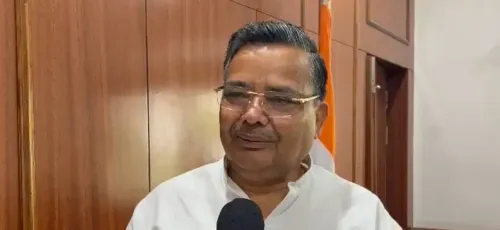
Speaking to reporters in Patna, Jawed alleged that the state government has failed to recruit Urdu teachers in government schools, calling it a direct betrayal of Urdu's official status in Bihar. He warned that the Indian National Congress (INC) would continue to oppose any move that weakens the language's standing.
'We will not allow Urdu to disappear. We will do whatever is necessary to protect it,' Jawed said.
He further argued that Urdu and Hindi are the true indigenous languages of India. In a more contentious claim, he asserted that Urdu originated within India, while contending that Sanskrit arrived from outside the subcontinent — drawing a parallel with English.
The Sanskrit Controversy
Jawed's comments on Sanskrit's origins are likely to prove the more politically explosive element of his statement. The historical and linguistic origins of Sanskrit remain a subject of ongoing scholarly debate, and his remarks reflect a political viewpoint rather than any established academic consensus. Historians and linguists have long engaged with competing theories on the language's evolution, and attributing a definitive external origin is contested territory.
Notably, claims about Sanskrit's origins have previously been used as flashpoints in India's culture and identity politics, making Jawed's framing particularly sensitive ahead of what are expected to be pointed responses from the Bharatiya Janata Party (BJP) and allied outfits.
The Urdu Teacher Recruitment Issue
At the core of Jawed's criticism is a concrete administrative grievance: the alleged absence of Urdu teacher appointments in Bihar's state-run schools. Bihar recognises Urdu as its second official language, a status that carries implications for language instruction in public institutions. Critics of the state government argue that this recognition has remained largely symbolic, with recruitment pipelines for Urdu educators remaining stalled.
This is not the first time the issue has surfaced. Urdu advocacy groups and minority community representatives have periodically raised the teacher vacancy question with successive state administrations, with limited reported progress.
Who Is Mohammad Jawed
Mohammad Jawed is a two-term Congress MP, having won the Kishanganj Lok Sabha seat in both the 2019 and 2024 general elections. Kishanganj, located in Bihar's north-eastern corner, has a significant Muslim-majority population and has historically returned Congress candidates. Jawed's political standing gives his remarks institutional weight beyond individual opinion.
What Happens Next
The statement is expected to draw formal responses from the BJP and its Bihar ally, the Janata Dal (United), particularly over the Sanskrit remarks. Congress is likely to double down on the Urdu teacher recruitment demand as a governance accountability issue. Whether the state government addresses the recruitment gap or the row remains confined to political point-scoring will determine the episode's lasting impact.
Point of View
He has handed political opponents a culture-war distraction that will likely drown out the governance critique. This is a recurring pattern in Indian minority politics: a valid administrative grievance gets attached to a civilisational claim, and the grievance loses. The Bihar government now faces pressure to respond on Sanskrit rather than on teacher vacancies — which may suit it just fine.
NationPress
15 Oct 2026
Frequently Asked Questions
What did Congress MP Mohammad Jawed say about Urdu in Bihar?
Mohammad Jawed alleged that the Bihar state government has neglected Urdu despite its status as the state's second official language, specifically by failing to recruit Urdu teachers in government schools. He said Congress would oppose any move that weakens the language.
What did Jawed say about Sanskrit that caused controversy?
Jawed claimed that Sanskrit came to India from outside the subcontinent, drawing a comparison with English, while asserting that Urdu and Hindi are India's true indigenous languages. The historical origins of Sanskrit remain a subject of scholarly debate, and his remarks represent a political viewpoint rather than established consensus.
Why does Urdu have official status in Bihar?
Bihar recognises Urdu as its second official language, a status that carries obligations for language instruction and official use in public institutions. Advocates argue this recognition has remained largely symbolic due to stalled teacher recruitment.
Who is Mohammad Jawed and why does his statement carry weight?
Mohammad Jawed is a two-term Congress MP who won the Kishanganj Lok Sabha seat in both 2019 and 2024. Kishanganj has a significant Muslim-majority population, and Jawed's repeated electoral victories give his statements institutional significance beyond personal opinion.
What political reactions are expected following Jawed's remarks?
The BJP and its Bihar ally Janata Dal (United) are expected to respond, particularly to the Sanskrit remarks. Congress is likely to press the Urdu teacher recruitment demand as a governance issue, though the Sanskrit controversy may dominate the political discourse.