Bihar CM Office Signs AI MoUs with Sarvam AI and BharatGPT
Synopsis
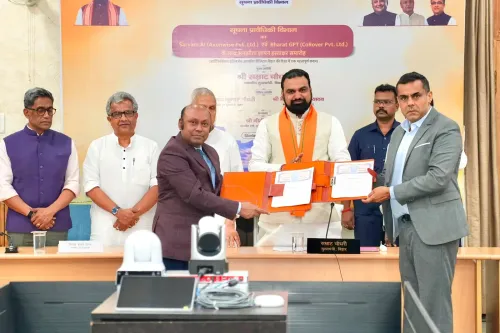
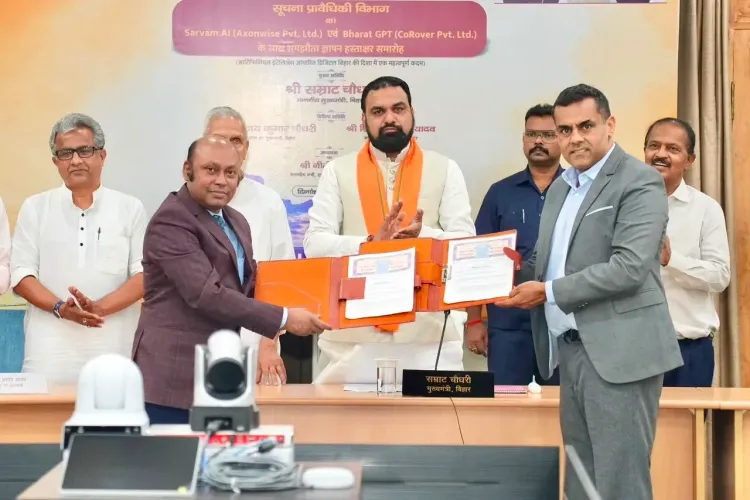
Bihar's Information Technology Department signed MoUs with Sarvam AI and BharatGPT at the Chief Minister's Secretariat in Patna on 17 July 2026, marking a formal step toward integrating homegrown artificial intelligence tools into the state's governance and citizen services.
Key Takeaways
Bihar's Information Technology Department signed MoUs with Sarvam AI (Exonwise Pvt.
Ltd.) and BharatGPT (CoRover Pvt.
Ltd.) on 17 July 2026 .
The signing took place at the Samvad auditorium inside the Chief Minister's Secretariat, Patna .
Sarvam AI focuses on large language models and AI infrastructure for Indian languages; CoRover specialises in conversational AI and chatbots.
The agreements align with India's 2018 National AI Strategy promoting indigenous AI development.
Bihar's population of over 12 crore gives any successful AI deployment significant scale.
Actual deployment timelines and pilot project details are yet to be announced.
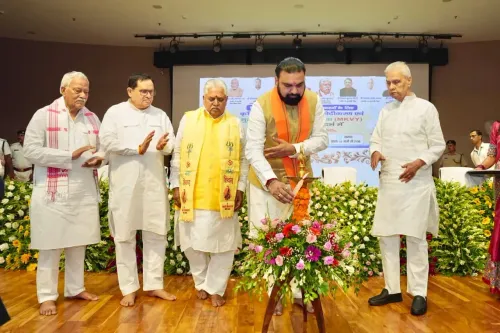
The Chief Minister's Office of Bihar announced on Friday, 17 July 2026 that Memoranda of Understanding were signed between the state's Information Technology Department and two Indian artificial intelligence companies — Sarvam AI (Exonwise Private Limited) and BharatGPT (CoRover Pvt. Ltd.) — at the 'Samvad' auditorium inside the Chief Minister's Secretariat, Patna.
The post from the official handle of the Chief Minister's Office stated: 'Maanniya Mukhyamantri Shri Samrat Choudhary ji ki upasthiti mein aaj Mukhyamantri Sachivalaya sthit Samvad sabhagar mein Soochna Pravidyogiki Vibhag evam Sarvam dot AI (Exonwise Private Limited) tatha Bharat GPT (CoRover Pvt. Ltd.) ke beech MoU par hastakshar kiye gaye.' — ('In the presence of the honourable Chief Minister, MoUs were signed today at the Samvad auditorium in the Chief Minister's Secretariat between the Information Technology Department and Sarvam AI and BharatGPT.')
Context
The signing ceremony took place at the Samvad auditorium, a dedicated conference facility within the Chief Minister's Secretariat in Patna. The event brought together senior officials of Bihar's Information Technology Department and representatives of both technology firms. The MoUs formalise a framework for collaboration between the state government and the two AI companies.
Policy Backdrop
India's national push for sovereign AI capabilities dates to the 2018 National Strategy for Artificial Intelligence, which laid out a vision for indigenous AI development across sectors. Since then, Indian states have increasingly partnered with domestic AI startups to integrate large language models and automation into citizen-facing services and internal administration.
Sarvam AI, operating under Exonwise Private Limited, is an Indian startup building large language models and AI infrastructure with a focus on Indian languages. CoRover Pvt. Ltd., the company behind BharatGPT, specialises in conversational AI and chatbot technology tailored for Indian users and vernacular contexts. Both firms represent a new generation of homegrown AI developers.
Stakeholders and Impact
The immediate stakeholders are Bihar's state administration and the citizens who interact with government services. If deployed, AI tools from these partnerships could streamline service delivery, automate routine queries, and make government interfaces more accessible in Hindi and other local languages spoken across the state.
For the two companies, the Bihar agreement offers a significant public-sector deployment opportunity and a large user base. Bihar, with a population of over 12 crore, represents one of India's most populous states, giving any successful pilot considerable scale and visibility.
What's Next
The MoUs establish intent; the critical next steps will be the rollout of specific pilot projects, identification of government departments where AI tools will be deployed first, and any follow-on tenders or procurement processes that translate these agreements into operational systems. Observers will watch whether these partnerships move swiftly from signing to actual deployment — a gap that has historically slowed similar state-level technology initiatives in India.
Point of View
MoUs in Indian public-sector technology have a mixed record of translating into operational deployments, and the real test will be whether Bihar's administration can move from intent to implementation. This signing also positions Bihar within a competitive inter-state race to demonstrate AI-led governance credentials ahead of future electoral cycles.
NationPress
16 Oct 2026
Frequently Asked Questions
What MoUs did Bihar sign on 17 July 2026?
Bihar's Information Technology Department signed MoUs with Sarvam AI (Exonwise Private Limited) and BharatGPT (CoRover Pvt. Ltd.) on 17 July 2026 at the Chief Minister's Secretariat in Patna, formalising AI collaboration with the state government.
What is Sarvam AI and what does it do?
Sarvam AI, operating under Exonwise Private Limited, is an Indian artificial intelligence startup that develops large language models and AI infrastructure with a focus on Indian languages and local-context applications.
What is BharatGPT by CoRover?
BharatGPT is a conversational AI product developed by CoRover Pvt. Ltd., an Indian company specialising in chatbots and language technology designed for Indian users, including support for vernacular languages.
Where was the Bihar AI MoU signing held?
The MoU signing was held at the 'Samvad' auditorium inside the Chief Minister's Secretariat in Patna, Bihar.
How does this fit into India's AI policy?
The Bihar MoUs align with India's 2018 National Strategy for Artificial Intelligence, which promotes indigenous AI development and encourages states to adopt domestic AI tools for governance and citizen services.