Lok Sabha Speaker Om Birla: Dissent is democracy's strength, not its weakness
Synopsis
Lok Sabha Speaker Om Birla used a Haryana legislators' conclave in Panchkula to make a pointed institutional argument: dissent is not a threat to democracy but its lifeblood. Coming from the chair of the lower house, the call to respect disagreement as a governance tool carries more weight than a standard political speech.
Key Takeaways
Lok Sabha Speaker Om Birla addressed the Janpratinidhi Sammelan in Panchkula on 2 November 2026 .
Birla stated that agreement and disagreement are 'two sides of the same coin' in a healthy democracy.
He called dissent a vital catalyst for fresh perspectives and better governance.
Birla praised Haryana's armed forces youth and sportspersons for their contributions to national security and global prestige.
He highlighted Dr B.R.
Ambedkar's leadership of the Drafting Committee as the foundation of India's pluralist parliamentary democracy.
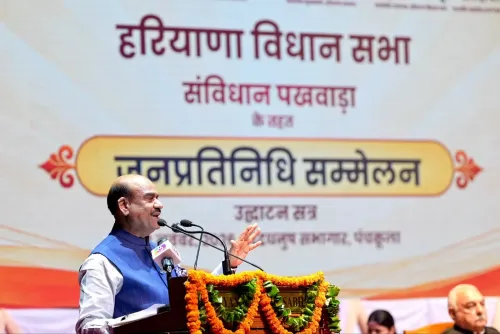
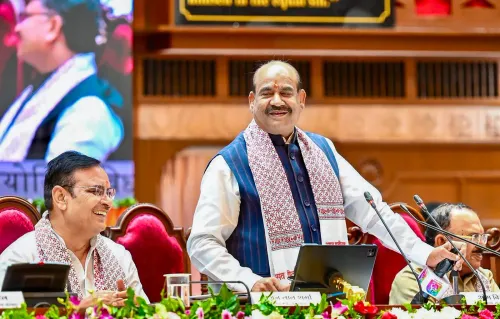
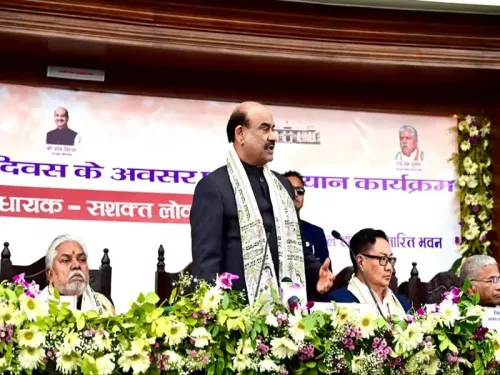
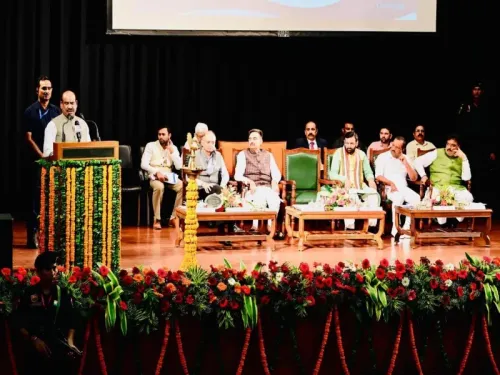
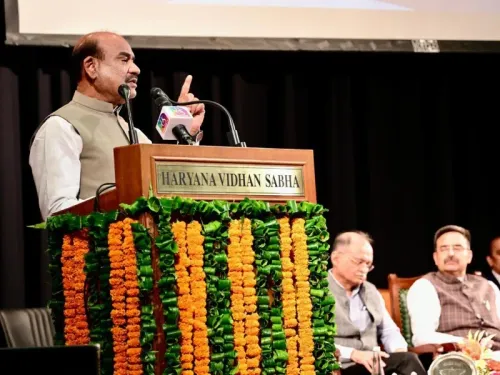
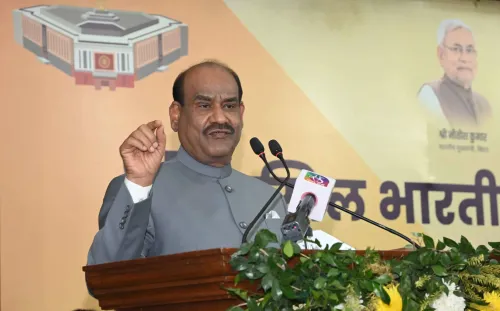
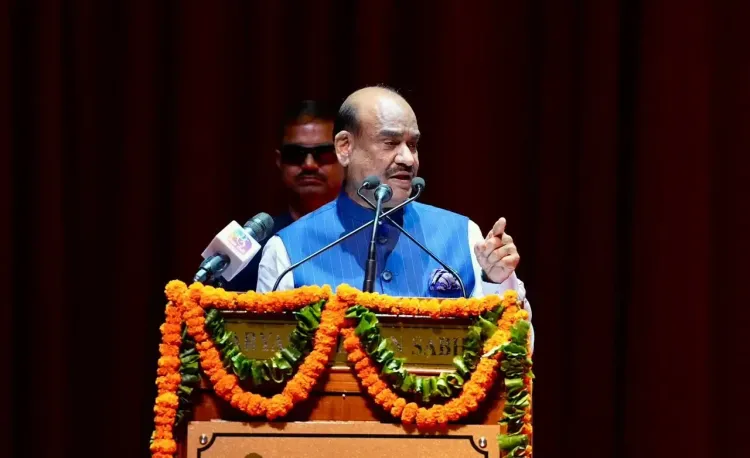
Lok Sabha Speaker Om Birla on Monday, 2 November 2026, called for lawmakers to treat disagreement as an indispensable pillar of democratic governance, saying that agreement and disagreement are two sides of the same coin in a healthy and vibrant democracy. Birla made the remarks at Panchkula while addressing the inaugural session of the 'Janpratinidhi Sammelan', a conclave organised by the Haryana Vidhan Sabha.
Dissent as a Catalyst for Better Governance
Birla stressed that dissent must be welcomed and respected as a vital catalyst for bringing fresh perspectives, addressing administrative blind spots, and promoting better governance. He underscored that irrespective of political, party, or ideological differences, the overarching commitment of every public representative must remain the continued progress of the state and the nation.
'Our Constitution is not merely a framework for running the government; it is the soul of India, reflecting our national consciousness and the aspirations of crores of people,' Birla said, urging legislators to honour the spirit of the document in both letter and practice.
Haryana's Six-Decade Journey Acknowledged
Addressing serving and former members of the Haryana Vidhan Sabha as well as former ministers, Birla reflected on Haryana's six-decade journey of growth, socio-economic resilience, and sectoral leadership. He observed that the state has consistently remained at the forefront of national progress despite numerous historical and administrative challenges.
The Speaker also praised Haryana's youth in the armed forces for their exemplary valour in safeguarding the nation's borders and internal security, and commended the state's sportspersons for consistently enhancing India's stature on the global sporting stage.
India's Constitutional Legacy and Parliamentary Democracy
Birla highlighted the inclusive and deliberative nature of India's constitutional journey, noting that the Constituent Assembly — guided by the Chairman of the Drafting Committee, Babasaheb B.R. Ambedkar — brought together distinguished leaders from different regions, including Haryana and Punjab. Together, they laid the foundations of a cohesive parliamentary democracy amid immense linguistic, cultural, and religious diversity.
He added that the survival and flourishing of India's diverse federal polity stands as a global testament to the resilience of its democracy — a point he framed as an argument for nurturing, not suppressing, internal debate within legislative bodies.
Why the Remarks Matter
The Speaker's address comes at a time when concerns about the quality of legislative debate — including disruptions, walkouts, and limited time for opposition voices — have repeatedly surfaced in parliamentary discourse. By explicitly valorising dissent from the constitutional chair, Birla's remarks carry institutional weight that goes beyond ceremonial rhetoric. Notably, the forum — a gathering of both current and former Haryana legislators — provided a cross-partisan audience that amplified the message's reach across the political spectrum.
Point of View
On its surface, straightforward constitutionalism — but the context sharpens its significance. Parliamentary proceedings in recent sessions have been repeatedly disrupted, and the opposition has frequently argued that debate time is shrinking. Birla's framing of dissent as a 'catalyst' rather than an obstruction is an implicit acknowledgment that legislatures function better when minority voices are heard. Whether the sentiment translates into procedural reform inside the House — more private member bill time, fewer guillotined debates — is the test that will determine whether this speech was principle or performance.
NationPress
2 Nov 2026
Frequently Asked Questions
What did Lok Sabha Speaker Om Birla say about dissent at the Janpratinidhi Sammelan?
Birla said that agreement and disagreement are two sides of the same coin in a healthy democracy, and that dissent must be welcomed and respected as a vital catalyst for fresh perspectives and better governance. He made these remarks at the inaugural session of the Janpratinidhi Sammelan in Panchkula on 2 November 2026.
What is the Janpratinidhi Sammelan organised by the Haryana Vidhan Sabha?
The Janpratinidhi Sammelan is a conclave organised by the Haryana Vidhan Sabha, bringing together serving and former members of the assembly as well as former ministers. The 2026 edition was inaugurated in Panchkula, with Lok Sabha Speaker Om Birla as the keynote speaker.
Why did Om Birla praise Haryana at the event?
Birla acknowledged Haryana's six decades of socio-economic growth, calling the state a consistent frontrunner in national progress despite historical and administrative challenges. He also specifically commended Haryana's armed forces personnel for their valour and its sportspersons for raising India's global profile.
What did Birla say about the Indian Constitution?
Birla described the Constitution as 'the soul of India, reflecting our national consciousness and the aspirations of crores of people.' He also highlighted the role of Dr B.R. Ambedkar and leaders from regions including Haryana and Punjab in building a cohesive parliamentary democracy amid diversity.
Why are Birla's remarks on dissent significant?
They carry institutional weight because they come from the presiding officer of the Lok Sabha, not a party spokesperson. By explicitly calling dissent a governance asset, Birla is reinforcing the constitutional principle that opposition voices are integral to legislative quality — a message directed at all parties across the political spectrum.