CM Rekha Gupta backs BJP chief's jab at dynastic 'yuvarajs'
Synopsis
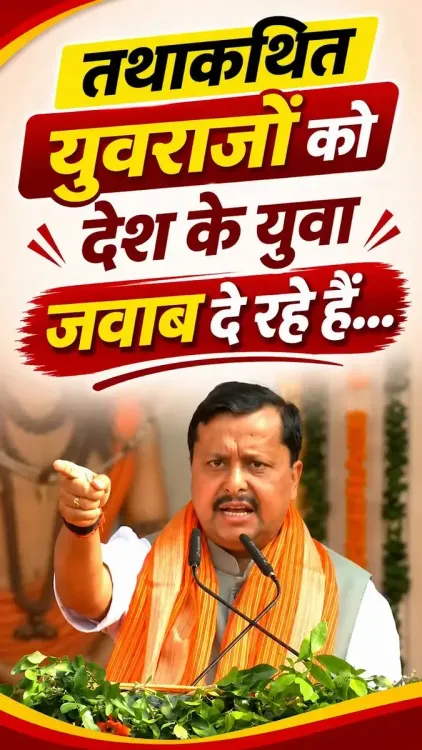
Delhi CM Rekha Gupta amplified a stinging quote from BJP national president Nitin Nabin on November 4, 2026, targeting dynastic 'yuvarajs' in Bihar, Uttar Pradesh and Delhi and crediting the country's youth for repeatedly defeating them at the ballot box.
Key Takeaways
Delhi CM Rekha Gupta shared BJP national president Nitin Nabin's remarks targeting dynastic political heirs on November 4, 2026 .
Nabin's quote singles out so-called yuvarajs operating in Bihar , Uttar Pradesh , and Delhi .
The statement credits India's youth with delivering repeated electoral defeats to dynastic candidates.
BJP has used the parivarvad (dynastic politics) attack line since at least the 2014 general elections.
The post was tagged #SaveDemocracyRemoveAnarchy , sharpening its democratic-contrast framing.
Political observers see the messaging as a signal of intensifying campaign activity ahead of potential state assembly polls in Bihar or Uttar Pradesh .
The language of dynasty versus democracy is back at full volume. Delhi Chief Minister Rekha Gupta on Wednesday, November 4, 2026 shared a sharp quote from BJP national president Nitin Nabin targeting what the party calls dynastic heirs — the so-called yuvarajs (crown princes) — roaming the political circuits of Bihar, Uttar Pradesh, and Delhi.
What Nitin Nabin said — and why Gupta amplified it
The quote shared by CM Gupta is unambiguous: 'I always say this — these so-called yuvarajs, whether they are in Bihar, Uttar Pradesh, or walking the streets of Delhi, the youth of this country is answering them, and every time they have to swallow defeat.' The post was tagged with the hashtag #SaveDemocracyRemoveAnarchy, underlining the electoral framing the party has chosen.
By sharing the BJP national president's words verbatim, Gupta — herself the chief minister of a state where the party's anti-dynastic messaging has historically resonated — signals alignment with the central party line heading into what political observers describe as a charged period for northern Indian state politics.
BJP's parivarvad playbook — a decade in the making
The Bharatiya Janata Party has weaponised the charge of parivarvad (dynastic politics) since at least the 2014 general elections, positioning itself as the party of merit against family-run political outfits. The argument has a simple architecture: opposition leaders inherit their platforms through bloodline, not ballot; voters — especially the young — ultimately reject inherited privilege at the booth.
The reference to multiple states simultaneously is deliberate. Bihar, Uttar Pradesh, and Delhi each host prominent political families whose second- or third-generation heirs have faced setbacks at recent elections — setbacks the BJP is keen to frame as a structural rejection rather than cyclical loss.
Youth as the verdict — BJP's core electoral bet
The rhetorical heart of Nabin's quote is the word yuva — youth. By casting young voters as the agent delivering defeat to dynastic candidates, the BJP frames its own base as a generational corrective. It is a message aimed squarely at first-time and young voters who, according to the party's internal calculus, are more likely to reward demonstrated performance over inherited political surnames.
Whether the opposition responds — and how — will shape whether this exchange stays a social-media salvo or escalates into a full campaign narrative ahead of any upcoming assembly polls in Bihar or Uttar Pradesh.
Point of View
CM Rekha Gupta is performing a disciplined act of message reinforcement — signalling that the anti-parivarvad line is not a local Delhi gambit but a coordinated national narrative. The simultaneous mention of Bihar, UP, and Delhi suggests the BJP is road-testing a cross-state attack frame that can be adapted to whichever assembly elections arrive next. Placing 'youth' at the centre of the argument is particularly calculated: it recasts the BJP as a vehicle for generational change rather than ideological positioning, making it harder for opponents to counter on pure policy grounds. If opposition parties with dynastic leadership profiles do not respond with a credible counter-narrative soon, they risk ceding the 'youth verdict' framing by default.
NationPress
4 Nov 2026
Frequently Asked Questions
What did BJP national president Nitin Nabin say about dynastic politics?
Nitin Nabin said that the so-called 'yuvarajs' — dynastic political heirs active in Bihar, Uttar Pradesh and Delhi — are being repeatedly defeated by India's youth at elections.
Why did Delhi CM Rekha Gupta share Nitin Nabin's quote on X?
CM Rekha Gupta shared the quote to amplify the BJP's national anti-dynastic messaging, aligning her social media presence with the party president's statement under the hashtag #SaveDemocracyRemoveAnarchy.
What does 'parivarvad' mean in Indian politics?
'Parivarvad' means dynastic or family-based politics — the practice of political power passing within a single family. The BJP has used this term as a critique of opposition parties since the 2014 general elections.
Which states are referenced in the BJP's yuvaraj criticism?
BJP national president Nitin Nabin specifically named Bihar, Uttar Pradesh, and Delhi as states where these dynastic heirs, termed 'yuvarajs', are politically active.
What is the significance of the hashtag #SaveDemocracyRemoveAnarchy?
The hashtag frames BJP's attack on dynastic politics as a defence of democratic values, contrasting merit-based leadership with what the party characterises as anarchic, family-controlled political structures.