Was the Beldanga Violence Pre-Planned? BJP Claims Suicide Misrepresented as Murder
Synopsis
The BJP claims the recent violence in Beldanga was orchestrated by misrepresenting a local worker's suicide as murder, inciting unrest. Questions arise about political motives and misinformation fueling the chaos.
Key Takeaways
BJP claims Beldanga violence was orchestrated.
Suicide misrepresented as murder.
Post-mortem confirms suicide, no foul play.
Political motives questioned amid unrest.
Family satisfied with investigation findings.
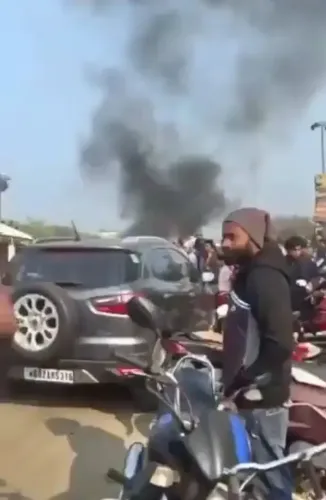
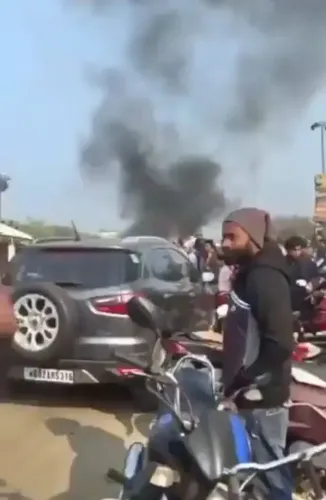
Kolkata, Jan 24 (NationPress) The BJP asserted on Saturday that the recent unrest in Beldanga, a minority-majority region in Murshidabad district of West Bengal, was orchestrated deliberately by misrepresenting the suicide of a local migrant worker from neighboring Jharkhand as a murder case.
Amit Malviya, BJP's IT Cell chief and the party’s central observer for West Bengal, referred to the post-mortem report of Alauddin Sheikh, provided by the Jharkhand Police, to affirm that the cause of death was unequivocally determined to be suicide.
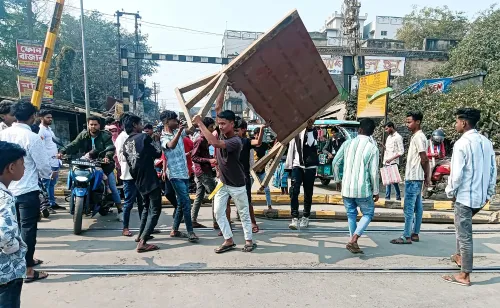
Malviya noted that the violence persisted in Beldanga for two days due to the rapid dissemination of baseless allegations claiming murder, without waiting for factual verification.
“The turmoil ensued following the unnatural death of migrant worker Alauddin Sheikh in Jharkhand. Without awaiting facts, a murder allegation was aggressively propagated, resulting in violence and intimidation,” Malviya stated on his official social media.
By citing the post-mortem findings, Malviya explained that the report clearly indicated the cause of death as ante-mortem hanging and highlighted the absence of any injuries, abrasions, bruises, fractures, or signs of assault.
Furthermore, he mentioned that these findings were officially validated by Palamu district Superintendent of Police Reshma Ramesan and were also covered by local media in Jharkhand.
“Significantly, the family of the deceased expressed satisfaction with the Jharkhand Police investigation after receiving the body. Nevertheless, despite clear medical and investigative evidence, the state allowed a coerced narrative to dominate the streets, effectively holding Beldanga hostage,” Malviya alleged.
The BJP leader further claimed that none of the deceased’s fellow migrant workers in Jharkhand had pointed to any murder conspiracy in their statements recorded by a special team from the Beldanga Police Station, which traveled to Palamu for the investigation.
“Kasim Shaikh, who returned with the body, did not allege any foul play. Ersad Shaikh, the cousin of the deceased, also indicated no signs of murder. The family was kept informed throughout the process, including through video calls. The post-mortem and inquest reports clearly ruled out any assault,” Malviya said.
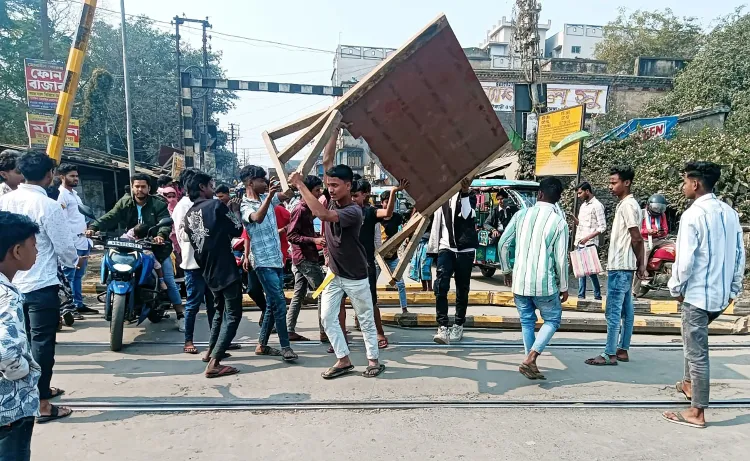
Raising a series of questions, Malviya suggested political motives behind the unrest. “Who orchestrated the rumor that spread faster than verified facts? Who profited from blocking highways and railway lines? Why was mob violence allowed to dictate the narrative prior to the emergence of forensic truth? Why were journalists attacked without consequences, and why did the administration remain absent for hours?” he queried.
“The answers are rooted in sinister vote-bank politics,” Malviya concluded.
Point of View
It is crucial to remain impartial while acknowledging the complexities of this situation. The BJP's allegations regarding the misinformation surrounding the Beldanga violence highlight the need for thorough investigation and public discourse on the implications of such incidents.
NationPress
7 Oct 2026
Frequently Asked Questions
What triggered the violence in Beldanga?
The violence was allegedly triggered by misrepresenting the suicide of a local migrant worker as a murder, leading to unrest in the area.
What does the post-mortem report say?
The post-mortem report concluded that the cause of death was suicide, specifically ante-mortem hanging, with no signs of external injury.
Who is Amit Malviya?
Amit Malviya is the BJP IT Cell chief and the party’s central observer for West Bengal, voicing concerns about the unrest and misinformation.
What are the political implications of this incident?
The BJP suggests that the unrest may be rooted in vote-bank politics, raising questions about the motivations behind the spread of misinformation.
How has the family of the deceased reacted?
The family expressed satisfaction with the Jharkhand Police investigation, indicating that they were kept informed throughout the process.