LPG prices in India among world's lowest despite 46% global surge, says BJP
Synopsis
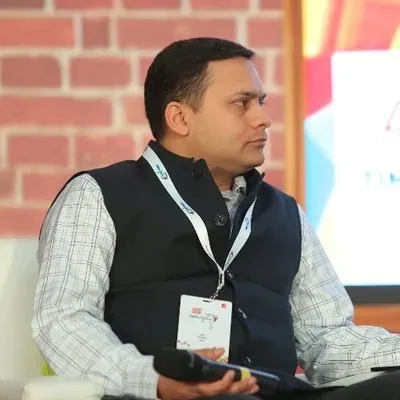
Even as the Opposition targets the BJP over a ₹29 LPG hike — the second in three months — the party's IT cell chief Amit Malviya turned the tables with a global price chart: India's ₹942 cylinder undercuts Pakistan, Nepal, Bangladesh, Sri Lanka, the US, and Canada. The real story, he argues, is a ₹60,000 crore under-recovery quietly absorbed by the state amid a 46% global LPG price surge.
Key Takeaways
LPG cylinder prices were raised by ₹29 on 7 June , the second hike in three months.
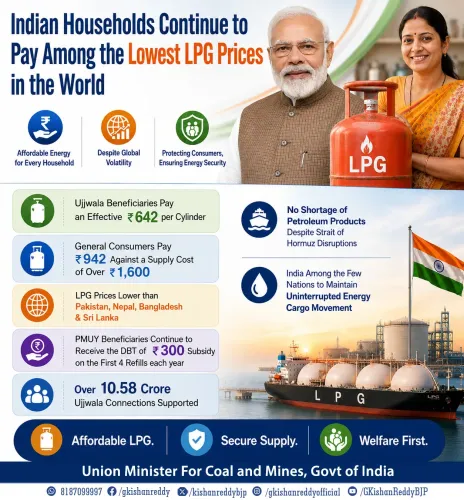
BJP IT cell chief Amit Malviya said Ujjwala Yojana beneficiaries pay an effective ₹642 per cylinder after a ₹300 direct subsidy; general consumers pay ₹942 .
India's rate is lower than Pakistan (₹1,046) , Nepal (₹1,207) , Bangladesh (₹1,225) , Sri Lanka (₹1,241) , US (₹1,755) , and Canada (₹2,411) , according to BJP figures.
Global LPG prices have surged nearly 46 per cent since February due to disruptions in West Asia and the Strait of Hormuz .
The cumulative under-recovery on domestic LPG has reportedly risen to nearly ₹60,000 crore .
More than 10.58 crore families benefit from the Ujjwala scheme's direct bank transfer of ₹300 per cylinder .
The Bharatiya Janata Party (BJP) on Sunday, 7 June hit back at the Opposition for criticising the latest cooking gas price revision, asserting that Indian households still pay among the lowest LPG rates globally. The pushback came after domestic 14.2 kg cylinder prices were raised by ₹29 — the second hike in three months — as state-owned oil marketing companies grapple with elevated global energy costs.
What the BJP Said
BJP IT cell chief Amit Malviya took to X to defend the revision, arguing that the Opposition selectively ignores the broader global context. 'Every time there is a small revision in LPG prices, the Opposition cries foul. What they conveniently ignore is that Indian households continue to get cooking gas at among the lowest prices in the world,' he wrote.
Malviya pointed out that a beneficiary under the Pradhan Mantri Ujjwala Yojana (PMUY) effectively pays ₹642 per cylinder after accounting for the ₹300 direct benefit transfer, while a general consumer pays ₹942 — reportedly nearly ₹700 below the market-linked cost. He said the international cost to supply has now risen to over ₹1,600 per cylinder.
India vs the World: The Price Comparison
The BJP leader presented a cross-country comparison to reinforce his argument. According to his figures, India's general consumer rate of ₹942 is lower than rates in neighbouring countries — Pakistan (₹1,046), Nepal (₹1,207), Bangladesh (₹1,225), and Sri Lanka (₹1,241). Consumers in developed nations pay significantly more: United States (₹1,755), Australia (₹1,765), and Canada (₹2,411).
The Global Energy Shock Behind the Hike
Malviya attributed the price pressure to a 46 per cent surge in global LPG prices since February, driven by disruptions in West Asia and the Strait of Hormuz. Since India imports a substantial share of its LPG, the government and public sector oil companies have, according to him, absorbed a significant portion of the cost rather than passing it on to consumers.
He claimed the cumulative 'under-recovery' on domestic LPG has climbed to nearly ₹60,000 crore. He also noted that more than 10.58 crore Ujjwala beneficiary families continue to receive the ₹300 per cylinder subsidy directly into their bank accounts.
Opposition's Criticism and the Broader Context
The Opposition has criticised the hike as an additional burden on middle-class and lower-income households, particularly given that this marks the second revision in three months. Critics argue that the timing — coinciding with persistent food inflation — compounds the strain on household budgets.
This comes amid a broader pattern of energy pricing debates in India, where the government has periodically revised LPG rates in line with global benchmarks while maintaining targeted subsidies. The BJP's counter-narrative centres on the argument that subsidised pricing has been sustained despite an unprecedented external shock. How effectively this message lands with consumers facing cumulative cost pressures remains to be seen.
Point of View
000 crore under-recovery figure also deserves scrutiny: it is a BJP claim, not an independently audited number, and the methodology behind it has not been made public. What is not in dispute is that global LPG costs have spiked sharply, and that India has not passed the full burden to consumers. The harder question — whether the subsidy architecture is fiscally sustainable through a prolonged energy shock — is the one neither side is answering.
NationPress
22 Oct 2026
Frequently Asked Questions
Why was the LPG price increased in June 2025?
The ₹29 per cylinder hike was the second revision in three months, attributed by the government to a nearly 46 per cent surge in global LPG prices since February due to disruptions in West Asia and the Strait of Hormuz. State-owned oil marketing companies have been under pressure from elevated international energy costs.
What do Ujjwala Yojana beneficiaries pay for LPG after the hike?
According to BJP IT cell chief Amit Malviya, Pradhan Mantri Ujjwala Yojana beneficiaries effectively pay ₹642 per 14.2 kg cylinder after receiving a ₹300 direct bank transfer subsidy. More than 10.58 crore families are covered under this scheme.
How does India's LPG price compare with other countries?
According to BJP figures, India's general consumer rate of ₹942 is below Pakistan (₹1,046), Nepal (₹1,207), Bangladesh (₹1,225), Sri Lanka (₹1,241), the US (₹1,755), Australia (₹1,765), and Canada (₹2,411). These figures have not been independently verified in the source.
What is the under-recovery on domestic LPG?
Amit Malviya claimed the under-recovery — the gap between the subsidised price and the market-linked cost — has risen to nearly ₹60,000 crore, which he said has been absorbed by public sector oil companies and the Centre rather than passed on to consumers.
What is the Opposition's criticism of the LPG price hike?
The Opposition has criticised the revision as an added financial burden on households, particularly given it is the second hike in three months and comes amid persistent food inflation. Critics argue the cumulative impact on lower-income and middle-class families is significant regardless of global benchmarks.