BJP's 'Save Democracy, End Anarchy' marches set for 6 UP regions
Synopsis
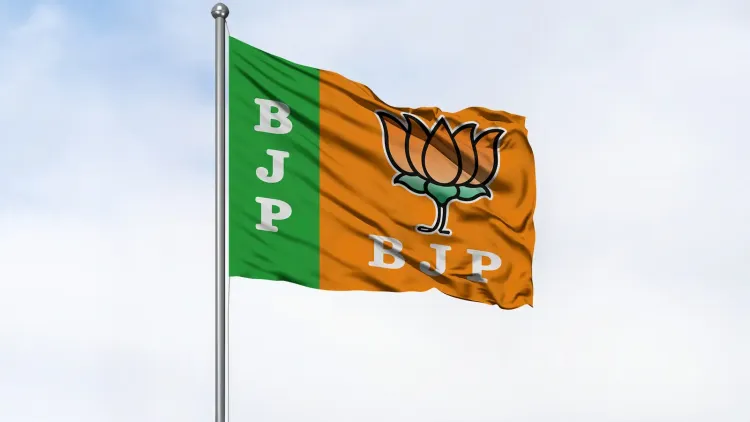
With the INDIA bloc readying a major rally at Delhi's Ramlila Maidan on 1 November, the BJP is taking the fight to Uttar Pradesh's streets — rolling out 'Save Democracy, End Anarchy' foot marches across six key regions between 3 and 5 November. The move signals the ruling party's intent to contest the Opposition's SIR narrative on the ground in India's most electorally significant state.
Key Takeaways
BJP has announced 'Save Democracy, End Anarchy' foot marches across six organisational regions in Uttar Pradesh .
The campaign is a direct counter to the INDIA bloc's rally at Ramlila Maidan, Delhi on 1 November over the SIR exercise .
Marches are scheduled from 3 to 5 November , covering Lucknow, Prayagraj, Gorakhpur, Kanpur, Ghaziabad, and Bareilly .
BJP State General Secretary (Organisation) Dharampal Singh announced the campaign at the state party headquarters on 26 October .
The party claims participation of party cadres, elected representatives, saints, traders, educators, and professionals.
The Bharatiya Janata Party (BJP) in Uttar Pradesh has announced a series of 'padyatras' (foot marches) across six organisational regions of the state, under the banner 'Save Democracy, End Anarchy', as a direct counter to the INDIA bloc's rally at Delhi's Ramlila Maidan scheduled for 1 November. The campaign is designed to challenge the Opposition's ongoing mobilisation around the Special Intensive Revision (SIR) exercise and, according to party leaders, to expose what they describe as a 'mala fide' agenda behind the protests.
What the Campaign Involves
BJP State General Secretary (Organisation) Dharampal Singh unveiled the campaign plan at the state party headquarters in Lucknow on 26 October, also reviewing ground-level preparations. Singh stated that the marches would respond to what the party characterises as 'baseless protests driven by desperation for power.' He argued the campaign will 'expose the Opposition's propaganda, double standards, and motivated agenda for a change in power.'
Singh also alleged a 'foreign handle' angle behind the protests, claiming certain elements were working to destabilise the nation under the cover of peaceful demonstrations — a charge the Opposition has not responded to as of this report.
Schedule Across Six Regions
The foot marches are spread across five days, covering the state's major political and administrative hubs. The Awadh region march will be held in Lucknow on 3 November. On 4 November, simultaneous marches are planned for the Kashi region in Prayagraj, the Gorakhpur region in Gorakhpur, and the Kanpur-Bundelkhand region in Kanpur. The final round, on 5 November, will cover the Western (Paschim) region in Ghaziabad and the Braj region in Bareilly.
Who Is Expected to Participate
The BJP expects large turnout from party office-bearers, elected representatives, members of various wings and cells, and grassroots workers. Singh indicated that saints and seers, traders, educators, advocates, medical professionals, and representatives from social and religious organisations may also join. The party framed the marches as a broad societal mobilisation rather than a purely political exercise.
The Broader Political Context
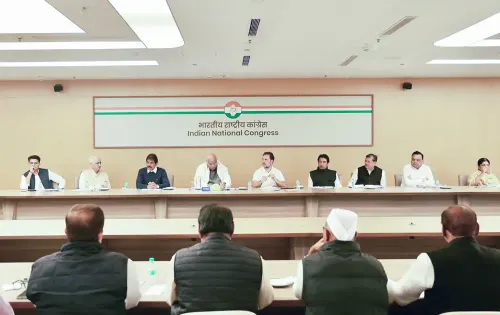
This comes amid heightened tension between the ruling BJP and the INDIA bloc over the Special Intensive Revision (SIR) exercise, which the Opposition has used to galvanise street-level protests nationally. The Congress's Ramlila Maidan rally on 1 November is being seen as a major test of the bloc's mobilisation capacity ahead of upcoming electoral cycles. The BJP's counter-campaign in Uttar Pradesh — the country's most electorally consequential state — signals that the ruling party intends to contest the narrative on the ground rather than cede public space to the Opposition.
Notably, the BJP's choice of six geographically spread locations covering Lucknow, Prayagraj, Gorakhpur, Kanpur, Ghaziabad, and Bareilly reflects an attempt to demonstrate statewide reach. Whether the marches draw the broad cross-section of civil society that Singh projected, or remain largely a party-cadre exercise, will be closely watched as an indicator of the BJP's grassroots mobilisation strength in the state.
Point of View
A tactically sound choice in a state as diverse as UP. However, framing Opposition protests as 'foreign-handled' and 'mala fide' is a familiar high-risk move: it can energise the base but risks alienating neutral voters who may have legitimate questions about the SIR exercise. The real test of this campaign will not be turnout figures on the day, but whether it successfully shifts the public conversation away from the Opposition's core SIR grievance.
NationPress
26 Oct 2026
Frequently Asked Questions
What is the BJP's 'Save Democracy, End Anarchy' campaign in UP?
It is a BJP-led foot march campaign planned across six organisational regions of Uttar Pradesh between 3 and 5 November 2026. The party launched it as a counter to the INDIA bloc's Ramlila Maidan rally in Delhi on 1 November, targeting the Opposition's mobilisation around the Special Intensive Revision (SIR) exercise.
Which cities will the BJP's counter-marches be held in?
The marches will be held in Lucknow (3 November), Prayagraj, Gorakhpur, and Kanpur (4 November), and Ghaziabad and Bareilly (5 November), covering the Awadh, Kashi, Gorakhpur, Kanpur-Bundelkhand, Western, and Braj organisational regions respectively.
What is the INDIA bloc's Ramlila Maidan rally about?
The INDIA bloc has called a rally at Delhi's Ramlila Maidan on 1 November in connection with the Special Intensive Revision (SIR) exercise. The Opposition has been using the SIR issue as a platform for nationwide protests against the ruling BJP.
Who announced the BJP's UP marches and what were the key claims made?
BJP State General Secretary (Organisation) Dharampal Singh announced the marches at the state party headquarters in Lucknow on 26 October. He claimed the campaign would expose the Opposition's 'propaganda and double standards,' and alleged a 'foreign handle' angle behind the protests — a charge the Opposition had not formally responded to at the time of this report.
Who is expected to participate in the BJP's foot marches?
The BJP expects participation from party office-bearers, elected representatives, workers from party wings and cells, and grassroots members. The party has also indicated that saints and seers, traders, educators, advocates, medical professionals, and social and religious organisation representatives may join the marches.