BJP's Sharp Critique of Nehru: Seven Questions on Surrendering India's Sovereignty
Synopsis
In a bold move, the BJP has accused Jawaharlal Nehru of compromising India's sovereignty to foreign powers. Sambit Patra poses seven critical questions regarding Nehru's decisions, invoking a fierce debate on historical accountability and national security.
Key Takeaways
BJP accuses Nehru of compromising India's sovereignty.
Sambit Patra raises seven critical questions.
Historical events cited include the Panchsheel agreement and military missteps.
Debate underscores political tensions in contemporary India.
Calls for accountability in national leadership are emphasized.
New Delhi, Feb 26 (NationPress) In a fierce exchange of accusations regarding Congress' claim of a 'compromised PM', the Bharatiya Janata Party (BJP) escalated its attacks on Thursday, alleging that India's inaugural Prime Minister, Jawaharlal Nehru, compromised the nation's interests, integrity, and sovereignty to foreign entities.
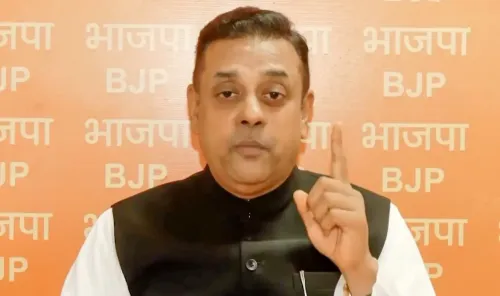
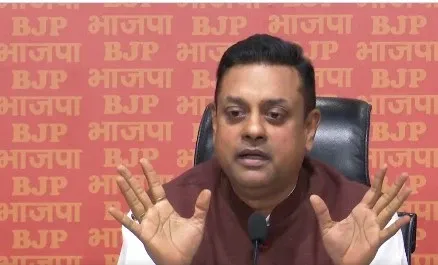
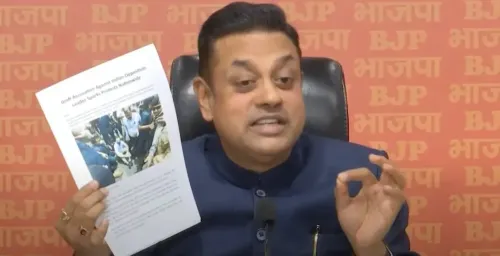
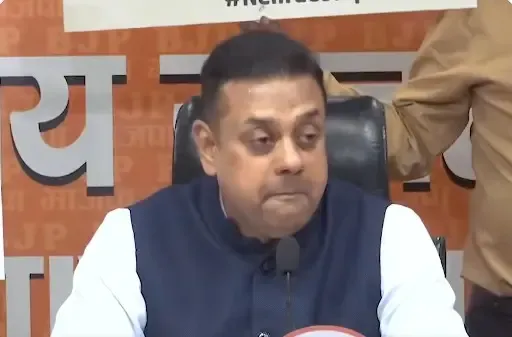
"It's not Chacha Nehru but Chacha compromised," remarked BJP National Spokesperson Sambit Patra, delivering a sharp critique of Congress while raising seven critical questions about why India seemed to have 'surrendered' to foreign powers, including rivals like China and Pakistan.
Speaking at the party headquarters, Patra launched a direct assault on the Congress government during Nehru's tenure, claiming that foreign powers had unrestricted access to the then Secretariat, thereby subjecting the Prime Minister's office to external influences.
Patra characterized Nehru as the compromised Prime Minister, accusing him of surrendering the country and its sovereign interests, thereby justifying the label "Chacha compromised" over "Chacha Nehru". He asserted, "The errors and transgressions were not mere oversights but deliberate actions aimed at undermining India's interests."
He contended that the CIA had significant influence over Nehru's Secretariat. "M.A. Mathaai, a highly respected officer and Nehru's trusted aide, was frequently referred to as an American agent. In the 1960s, KGB agents from Russia also infiltrated Nehru's Secretariat," Patra claimed.
He further alleged, "During those decades, any document sought by foreign powers was readily available to the US and Russia," questioning why India's interests and sovereignty were compromised during Nehru's administration.
"Why was India's security compromised in favor of foreign powers?" he asked, accusing Nehru's government of dismantling India at its discretion and questioning the rationale behind ceding strategic areas to China and Pakistan.
Patra highlighted that during the 1954 Panchsheel agreement, Nehru essentially 'gifted' Tibet to China. He noted that in 1951, China enhanced its infrastructure across the border, and despite warnings from the then IB Chief to bolster India’s infrastructure capabilities, these were consistently ignored.
Additionally, Patra pointed out that in 1962, the chain of Army command was disrupted, with individuals connected to the Nehru family being appointed to pivotal positions, leading to a humiliating defeat for the Indian forces.
Questioning Nehru's intentions further, Patra mentioned that in 1958, an offer from the Sultan of Oman to provide India with the Gwadar port was declined by Nehru's government, a move that could have served as a strategic asset. He also noted that India turned down offers for permanent membership in the UN Security Council from both the US and Russia during 1950 and 1955, attributing these decisions to Nehru's insistence.
"A perplexing question arises: Was Nehru bribed by China and Pakistan?" he queried, while urging Congress to provide credible answers to a series of accusations.
Patra claimed that Nehru also misled Parliament on September 27, 1955, asserting that India was never offered UN Security Council membership.
The seven questions posed by Patra to Congress regarding Nehru included: "Why did he (Nehru) relinquish Tibet to China? Why were the IB's warnings disregarded and labeled as hearsay? Why was the plebiscite issue in Jammu and Kashmir agreed upon without public consultation? Why was land in Bengal handed over to Pakistan? Why was a village in Punjab given to Pakistan? Why was 300 square miles in the Rann of Kutch transferred to Pakistan at whose behest?"
Point of View
It also underscores the importance of contextual understanding in evaluating national leadership.
NationPress
30 Sept 2026
Frequently Asked Questions
What accusations did the BJP make against Nehru?
The BJP accused Nehru of compromising India's interests and sovereignty to foreign powers, labeling him as 'Chacha compromised'.
What are the seven questions posed by Sambit Patra?
Patra's questions focus on Nehru's decisions regarding Tibet, security warnings, land concessions, and offers from foreign nations.
How did Nehru's policies allegedly impact India's sovereignty?
Patra argues that Nehru's policies allowed foreign powers access and influence, undermining India's sovereignty.
What historical context is provided in the BJP's critique?
The critique references events such as the Panchsheel agreement and military decisions leading to strategic losses.
What is the significance of this debate today?
This debate reflects ongoing political rivalries and the need for accountability in historical governance.