BPCL clarifies E20 petrol quality after viral photo sparks concerns in Karnataka
Synopsis
A mid-test photo shared by a BPCL officer during a consumer awareness drive in Karnataka set off social media alarm about E20 petrol quality. BPCL has since confirmed the image showed a normal intermediate stage of the ethanol separation test — and that all 893 samples checked across 27 states met the BIS-prescribed 19–21% ethanol range.
Key Takeaways
BPCL issued a clarification on 13 November 2026 after a social media post about E20 petrol quality went viral in Karnataka .
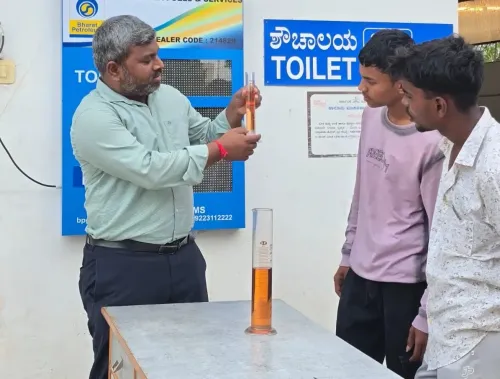
The viral image showed an intermediate stage of the ethanol separation test — mixing 100 ml E20 with 30 ml water — and was removed by the officer who shared it.
The sample involved was confirmed to be within prescribed BIS specifications under IS 17021 .
A nationwide quality check by Oil Marketing Companies covered 893 E20 samples across 27 States and Union Territories ; all were within the 19–21% ethanol range.
Of the 893 samples, 280 were tested by BPCL , all compliant with mandated quality standards.
Bharat Petroleum Corporation Limited (BPCL) on Friday, 13 November 2026, issued a formal clarification addressing circulating social media posts and reports that questioned the ethanol content of E20 petrol sold at its retail outlets, following a consumer awareness demonstration gone partially viral in Karnataka. The oil major assured customers that all E20 fuel supplied through its Energy Stations meets the standards prescribed by the Bureau of Indian Standards (BIS) under specification IS 17021.
What Triggered the Controversy
The issue originated from a photograph shared during one of BPCL's own consumer awareness drives, in which company officers conducted ethanol separation tests at Energy Stations across Karnataka. The image, reportedly captured and shared before the test was complete, showed the mixture in an intermediate — hazy or milky — state, prompting concern among consumers and social media users who interpreted it as evidence of fuel adulteration or non-compliance.
BPCL clarified that the visual effect is a normal, expected part of the test procedure. 'The mixture initially appears hazy or milky, which is normal during the process. It takes time for the ethanol-water and petrol layers to separate completely,' the company said in a statement.
How the Ethanol Separation Test Works
According to BPCL, the standard test involves mixing 100 ml of E20 Ethanol Blended Motor Spirit (EBMS) with 30 ml of water. The water draws out the ethanol from the petrol blend, and over time the mixture separates into two distinct layers — one ethanol-water and one petrol. The process requires time to reach a readable final state, and photographs taken mid-process can be misleading.
In the specific instance under scrutiny, BPCL acknowledged that the photograph was 'inadvertently captured and shared before the separation process was complete.' The officer involved recognised the error and removed the post promptly to prevent misinterpretation. The sample from that test was subsequently confirmed to be within prescribed specifications.
Nationwide Quality Monitoring Data
BPCL also pointed to a broader, ongoing quality monitoring exercise conducted by Oil Marketing Companies (OMCs) in coordination with the Centre for High Technology (CHT). The exercise has so far covered 893 E20 samples drawn from 27 States and Union Territories across India.
According to BPCL, all 893 samples were found within the prescribed ethanol content range of 19–21 per cent. Of these, 280 samples were tested by BPCL itself, all of which reportedly adhered to the mandated quality standards. The data, the company said, reaffirms the integrity of its E20 supply chain.
BPCL's Commitment to Transparency
The clarification is part of BPCL's wider consumer education initiative around E20 petrol, India's higher-ethanol-blend fuel introduced under the government's ethanol blending programme aimed at reducing fossil fuel dependency and cutting import costs. The company stated it remains committed to 'maintaining fuel quality, transparency and consumer confidence.'
This incident highlights a recurring challenge in public communication around technical fuel quality demonstrations: preliminary or partial imagery shared on social media can rapidly generate misinformation before an authoritative explanation is available. As E20 rollout expands nationally, such disputes over fuel quality are likely to recur, making proactive consumer outreach critical for oil companies.
Point of View
But the episode exposes a structural gap in India's ethanol blending rollout: public awareness campaigns that use live demonstrations are only as credible as the communication discipline around them. A single prematurely shared photograph undid the trust-building purpose of an entire outreach exercise. More importantly, with E20 expanding nationally, the absence of a real-time, publicly accessible quality dashboard — rather than periodic OMC-reported aggregates — leaves consumers dependent on official assurances rather than verifiable, independent data. That is a vulnerability the petroleum ministry should address before the E20 rollout scales further.
NationPress
14 Nov 2026
Frequently Asked Questions
What is E20 petrol and why is it being rolled out in India?
E20 petrol is a fuel blend containing 20% ethanol and 80% petrol, introduced under India's national ethanol blending programme to reduce fossil fuel imports and lower carbon emissions. It must conform to Bureau of Indian Standards specification IS 17021.
Why did BPCL issue a clarification about E20 petrol quality?
BPCL issued the clarification after a photograph shared during a consumer awareness demonstration in Karnataka went viral on social media, leading some users to question whether the fuel met ethanol content standards. The image showed an incomplete ethanol separation test, which BPCL explained is a normal intermediate stage and not an indication of non-compliance.
How is the E20 ethanol separation test conducted?
The test involves mixing 100 ml of E20 Ethanol Blended Motor Spirit with 30 ml of water. The water separates the ethanol from the petrol, producing a hazy or milky appearance initially before the layers fully separate. The final reading — not the intermediate stage — determines whether the sample is within the 19–21% ethanol specification.
What do the nationwide E20 quality monitoring results show?
Oil Marketing Companies, in coordination with the Centre for High Technology, tested 893 E20 samples across 27 States and Union Territories and found all within the prescribed 19–21% ethanol range. BPCL tested 280 of those samples, all of which were compliant with BIS norms.
Is the E20 petrol currently being sold safe to use?
According to BPCL and the broader Oil Marketing Companies monitoring exercise, all tested E20 samples — including the specific sample from the Karnataka demonstration — were found within BIS-prescribed specifications. BPCL stated it remains committed to fuel quality and consumer transparency.