Global Peace Index 2026: Brett Savill lectures at Jamia Millia Islamia
Synopsis
An Australian peace economist told a New Delhi audience on 28 August that the world has grown less peaceful in 15 of the last 18 years — and that the gap between AI investment in warfare versus peace is one of the decade's most urgent blind spots. The lecture at Jamia Millia Islamia also challenged how India is ranked in global peace indices, calling for fairer comparisons with large, diverse nations.
Key Takeaways
Brett Savill , COO of the Institute for Economics & Peace , Sydney, lectured at Jamia Millia Islamia on 28 August 2026 .
The Global Peace Index measures peace through 23 indicators ; global peacefulness has declined in 15 of the past 18 years .
Savill argued India should be compared with large, diverse nations like China , the US , and Brazil — not smaller, homogeneous states.
Investment in AI for warfare is increasingly outpacing investment in AI for peace , particularly visible in the Russia-Ukraine conflict .
Academics at the event called for peace frameworks rooted in justice , local intellectual traditions, and a systems-based approach .
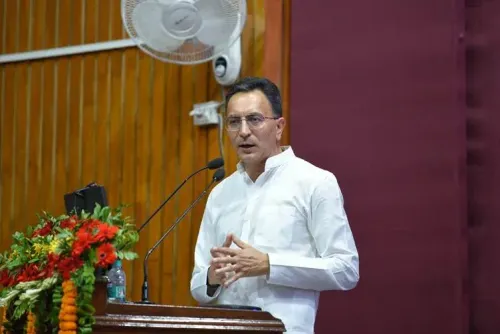
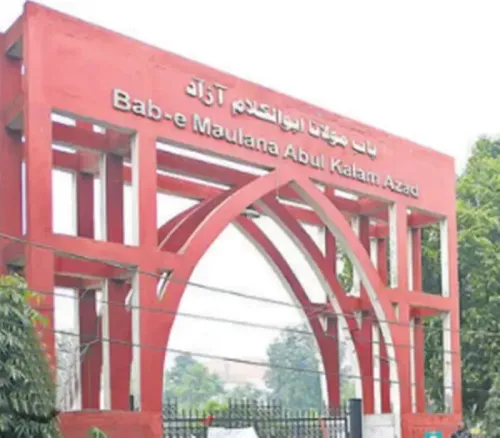
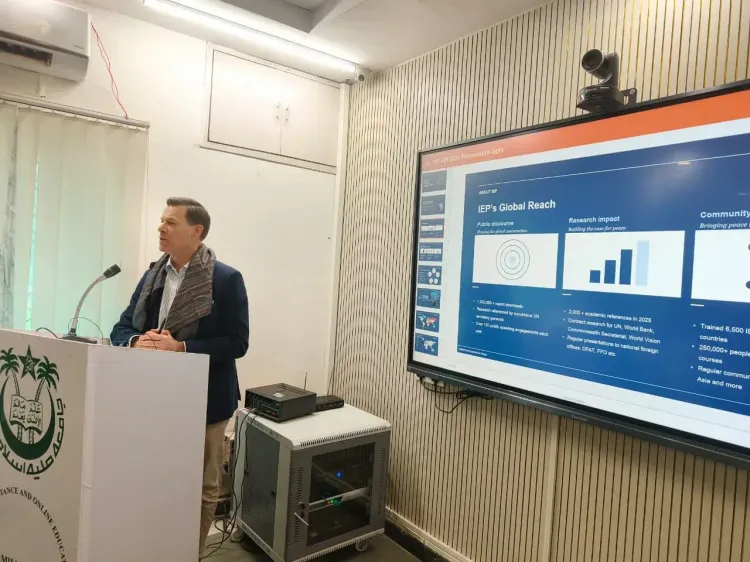
Brett Savill, Chief Operating Officer of the Institute for Economics & Peace (IEP), Sydney, delivered a special lecture on 'Global Peace in 2026: Challenges and Prospects' at Jamia Millia Islamia (JMI), New Delhi, on 28 August. The event was jointly organised by JMI's Centre for Distance and Online Education (CDOE) and the Nelson Mandela Centre for Peace and Conflict Resolution (NMCPCR).
Key Insights from the Global Peace Index
Savill anchored his address around the Global Peace Index (GPI), which evaluates peace across 23 indicators spanning societal safety and security, ongoing conflict, and militarisation. He noted that global peacefulness has declined in 15 of the past 18 years — a trend he described as driven by the growing role of external powers, proxy actors, and increasingly prolonged conflicts.
India's Place in the Global Peace Framework
Turning to India, Savill cautioned against benchmarking the country against smaller, relatively homogeneous nations, arguing that such comparisons fail to account for India's scale, diversity, and geographical complexity. He suggested that comparisons with larger economies — China, the United States, and Brazil — would yield a more accurate and meaningful assessment.
AI, Drone Warfare, and the Peace Deficit
Savill also addressed the rapid expansion of Artificial Intelligence and drone technology in modern warfare, drawing particular attention to their deployment in the Russia-Ukraine conflict. He highlighted a widening imbalance: investment in AI for warfare is outpacing investment in AI for peace — a gap he described as one of the defining challenges of the current decade.
Responses and Academic Debate
Rajiv Nayan of the NMCPCR, responding to the lecture, called for a critical examination of the methodology and indicators underpinning global peace indices. Drawing on Indian intellectual traditions, he argued that peace without justice is neither meaningful nor sustainable. Aslam Khan, Director of CDOE and Professor at NMCPCR, echoed this, urging a broader, systems-based understanding of peace — one that integrates security, development, governance, technology, justice, culture, and human well-being. He also stressed the importance of developing perspectives grounded in local contexts rather than relying solely on global indices.
Organisational Details
The lecture was held at the CDOE Conference Hall under the guidance of Vice-Chancellor Mazhar Asif and Registrar Md Mahtab Alam Rizvi. Abuzar Khairi, Director of NMCPCR, welcomed Savill and the gathering. The session concluded with an interactive question-and-answer exchange involving faculty members, research scholars, and students.
Point of View
Assumptions that may not travel well across vastly different political geographies. Savill's own caveat about India's ranking is notable coming from an IEP insider — it implicitly concedes that the index's comparative framework has design limits. More pointed is the AI observation: as defence budgets globally pivot toward autonomous systems, the institutional infrastructure for AI-driven peacebuilding remains embryonic. That asymmetry is not merely academic — it has direct consequences for conflict duration and civilian harm.
NationPress
13 Oct 2026
Frequently Asked Questions
Who is Brett Savill and why did he visit Jamia Millia Islamia?
Brett Savill is the Chief Operating Officer of the Institute for Economics & Peace (IEP), based in Sydney, Australia. He visited Jamia Millia Islamia on 28 August to deliver a special lecture on 'Global Peace in 2026: Challenges and Prospects', organised jointly by JMI's CDOE and the Nelson Mandela Centre for Peace and Conflict Resolution.
What is the Global Peace Index and what does it measure?
The Global Peace Index (GPI) is an annual assessment that ranks nations by their peacefulness across 23 indicators covering societal safety and security, ongoing conflict, and militarisation. According to Savill, global peacefulness as measured by the GPI has declined in 15 of the past 18 years.
What did Brett Savill say about India's ranking in the Global Peace Index?
Savill argued that comparing India with smaller, relatively homogeneous countries does not adequately reflect India's size, diversity, and geographical complexity. He suggested that benchmarking India against larger nations such as China, the United States, and Brazil would provide a more meaningful and fair perspective.
What concerns did Savill raise about Artificial Intelligence and warfare?
Savill highlighted the growing use of AI and drone technology in modern conflicts, particularly the Russia-Ukraine war, and drew attention to a widening gap: global investment in AI for warfare is significantly outpacing investment in AI for peace. He described this imbalance as one of the defining challenges of the current decade.
What alternative frameworks for understanding peace were proposed at the lecture?
Rajiv Nayan of NMCPCR called for critical scrutiny of the methodology behind global peace indices and argued that peace must be accompanied by justice to be sustainable. Aslam Khan, Director of CDOE, advocated a broader systems-based approach that integrates security, development, governance, technology, justice, culture, and human well-being, alongside perspectives rooted in local intellectual traditions.