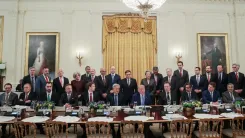
Cabinet approves MSP hike for rabi crops for 2027-28
Synopsis
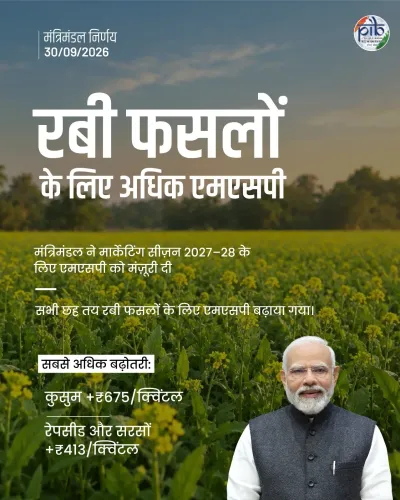
The Union Cabinet chaired by PM Narendra Modi has approved an MSP hike for six major rabi crops — wheat, barley, gram, lentil, mustard and safflower — for the 2027-28 season, continuing the government's annual price-support practice aimed at farmer income security.
Key Takeaways
The Union Cabinet approved MSP increases for rabi crops for 2027-28 on 30 September 2026 .
Crops covered: wheat, barley, gram (chana), lentil (masur), mustard (sarson), and safflower (kusum) .
The decision was announced by Union Education Minister Dharmendra Pradhan on X.
The Cabinet is chaired by Prime Minister Narendra Modi .
Since 2018 , government policy mandates MSP at a minimum of 1.5 times the cost of production for notified crops.
Actual price support reaches farmers through procurement by FCI and state agencies at the revised rates.
Every harvest season, millions of Indian farmers ask one question before they sow: will the price be worth the labour? On Wednesday, 30 September 2026, the Union Cabinet chaired by Prime Minister Narendra Modi gave them a fresh answer — approving a hike in the Minimum Support Price (MSP) for key rabi crops for the 2027-28 season, covering wheat, barley, gram, lentil, mustard, and safflower. Union Education Minister Dharmendra Pradhan announced the decision on X, calling it a significant step toward farmer prosperity and agricultural empowerment.
Six rabi crops, one broad signal to farmers
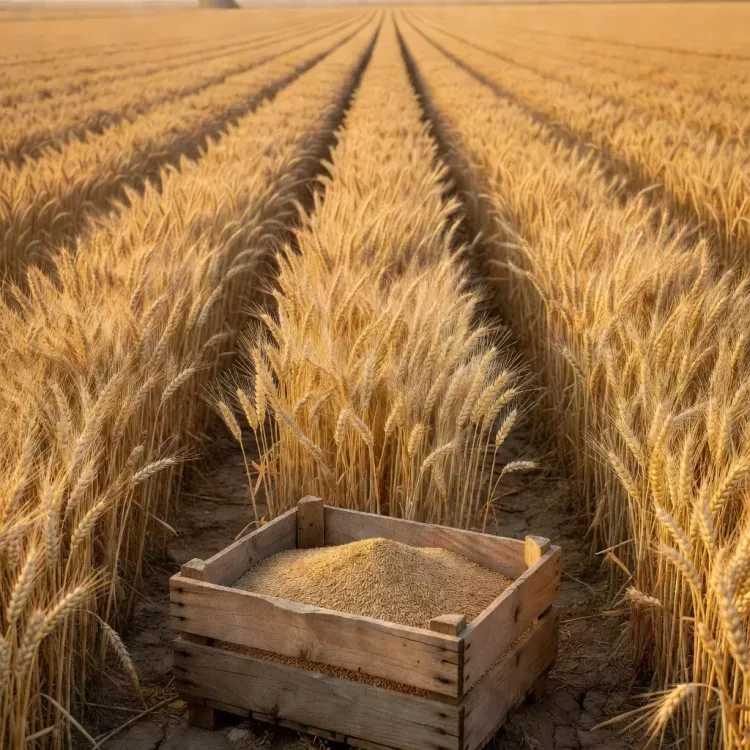
The Cabinet's approval spans the full basket of major rabi crops — wheat (the country's most widely grown winter cereal), barley, gram (chana), lentil (masur), mustard (sarson), and safflower (kusum). Together, these crops sustain farm households across the Indo-Gangetic plains, Madhya Pradesh, Rajasthan, and beyond. The MSP revision is meant to ensure, in Pradhan's framing, 'kisan ke parishram ko uchit mulya ka aadhar' — 'a foundation of fair value for the farmer's labour.'
The 1.5x cost-of-production promise, carried forward
The policy logic behind annual MSP revisions stretches back to a landmark 2018 commitment by the present administration: that support prices would be fixed at a minimum of 1.5 times the cost of production for notified crops. Each subsequent season's revision is, in effect, a test of whether that pledge holds as input costs — fertiliser, fuel, labour — shift. The Food Corporation of India (FCI) and state procurement agencies then operate at the revised rates during the marketing season, translating Cabinet decisions into actual cheques for farmers.
A routine calendar, a perennial political weight
Annual MSP approvals are a fixture of India's agricultural governance calendar — rabi decisions typically come in the autumn before sowing, kharif ones ahead of the monsoon planting season. But 'routine' understates the stakes. India's rabi wheat crop alone feeds the national food security buffer and shapes global grain trade signals. Every hike announcement also carries political resonance: with farm income a persistent electoral touchstone, the Cabinet's approval serves both an economic and a communicative function — telling cultivators the government remains invested in their viability.
The real test, as always, will come at the mandi gate — whether procurement machinery moves fast enough, and reaches widely enough, to convert the approved MSP into money in farmers' hands.
Point of View
Making each revision both a policy instrument and a political marker. For a government that navigated the contentious farm laws episode, steady MSP communication serves a trust-rebuilding function. The real variable to watch is whether FCI procurement expands meaningfully to cover non-wheat, non-rice crops like lentil and mustard, where price-floor benefits historically reach fewer farmers.
NationPress
30 Sept 2026
Frequently Asked Questions
Which rabi crops got an MSP hike for 2027-28?
The Union Cabinet approved MSP increases for six rabi crops for 2027-28: wheat, barley, gram (chana), lentil (masur), mustard (sarson), and safflower (kusum).
What is MSP and how does it help farmers?
Minimum Support Price (MSP) is a government-guaranteed floor price at which state agencies purchase notified crops from farmers, protecting them from market price crashes.
What is the 1.5x cost-of-production rule for MSP?
Since 2018, the government has committed to fixing MSP at a minimum of 1.5 times the cost of production for notified crops, ensuring farmers receive a margin over their input costs.
Who procures crops at the announced MSP?
The Food Corporation of India (FCI) and state government procurement agencies buy notified crops from farmers at or above the declared MSP during the marketing season.
When does rabi sowing season begin in India?
Rabi sowing typically begins after the monsoon retreats, around October-November, which is why MSP approvals for the rabi season are made in the autumn before planting starts.