Cabinet Approves Rabi MSP Hike, Says Mandaviya
Synopsis
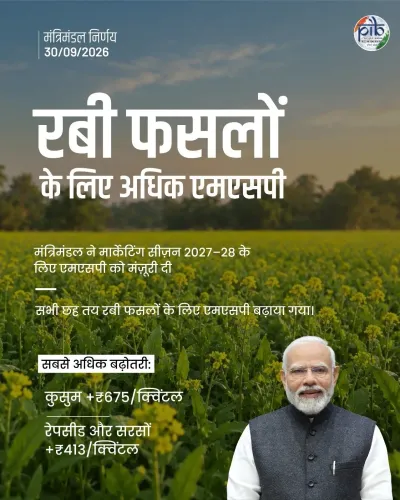
The Union Cabinet under PM Narendra Modi approved higher MSP rates for Rabi crops on 30 September 2026, Union Minister Mansukh Mandaviya announced — guaranteeing farmers a remunerative floor price ahead of the October sowing season.
Key Takeaways
The Union Cabinet approved an MSP hike for Rabi crops on 30 September 2026 , ahead of the October-December sowing window.
Rabi commodities covered include wheat, barley, mustard, and gram.
The MSP is a government-guaranteed floor price designed to protect farmers from market price crashes.
Revisions are coordinated by the Cabinet Committee on Economic Affairs and notified through the Ministry of Agriculture .
Procurement volumes and farmer registration during the 2026-27 Rabi season will determine on-ground impact.
Annual MSP revisions ahead of each sowing season have been a consistent practice since at least 2014 .
Millions of farmers preparing to sow their winter crops just received a firm price guarantee from New Delhi. Union Labour and Sports Minister Mansukh Mandaviya announced on Wednesday, 30 September 2026 that the Union Cabinet, under the leadership of Prime Minister Narendra Modi, has approved a hike in the Minimum Support Price (MSP) for Rabi crops — a decision timed precisely as planting season approaches.
Posting on X, Mandaviya described the decision as a 'big gift for the annadata' — the givers of food — and said it would ensure that farmers receive a 'remunerative price' for their produce while securing their economic well-being. The Cabinet move covers Rabi commodities that include wheat, barley, mustard, and gram, which are sown between October and December and harvested in spring.
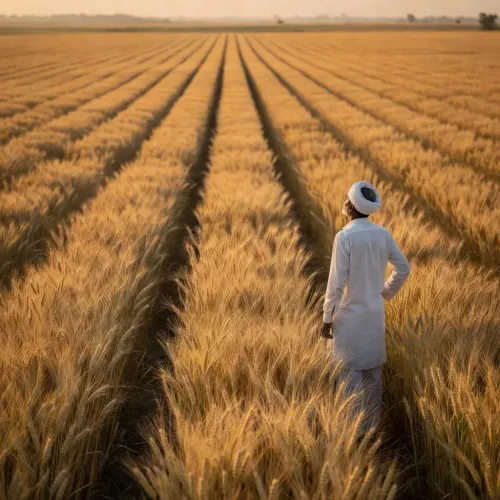
What MSP means for a farmer standing in a field
The Minimum Support Price is the government-guaranteed floor below which the state commits not to let a farmer's sale price fall. When market rates crash — as they routinely do after bumper harvests — MSP is the difference between a debt spiral and a viable season. The Cabinet Committee on Economic Affairs, operating under the Union Cabinet, coordinates these revisions and routes the formal notification through the Ministry of Agriculture.
Successive governments have issued MSP revisions ahead of each sowing season, but the current administration has framed the announcements as part of a broader income-security architecture for cultivators. The September 2026 decision follows a well-established annual cycle — the Cabinet approved comparable Rabi MSP hikes as far back as September 2023 for the 2024-25 marketing season, and the practice has continued without interruption since at least 2014.
Sowing season as the pressure point
Timing matters here. Farmers make planting decisions in October based on what prices they can realistically expect at harvest time. An MSP announcement this week lands squarely in the window when it can actually influence what gets sown — and how much. A higher floor price for wheat or mustard nudges cultivation toward crops the government wants to support and away from the gamble of unregulated market rates.
The key question now is execution. Procurement volumes and farmer registration under the new rates during the 2026-27 Rabi season will determine whether the announced price translates into money in farmers' hands. State governments may also follow up with bonus procurement policies of their own, layering additional support on top of the central floor price.
A price decision made in a Cabinet room in Delhi ripples outward to every wheat field in Punjab, every mustard patch in Rajasthan, every gram-growing smallholder in Madhya Pradesh. Whether the number on paper becomes the number on a mandi receipt — that is the season's real test.
Point of View
Positioning price floors not merely as technocratic interventions but as political commitments to the 'annadata.' The real test will come at procurement: an MSP that farmers cannot actually sell into is a paper promise. Watching state-level procurement follow-through and bonus schemes will reveal whether this cycle's announcement has deeper structural reach than those before it.
NationPress
30 Sept 2026
Frequently Asked Questions
What is MSP and why does it matter to farmers?
MSP, or Minimum Support Price, is a government-guaranteed floor price below which the state commits not to let a farmer's sale price fall. It protects cultivators from sharp market price drops after harvest, ensuring a baseline income even in years of surplus production.
Which crops are covered under the Rabi MSP hike approved in September 2026?
Rabi crops covered by MSP revisions typically include wheat, barley, mustard, gram, and lentils — all winter-season crops sown between October and December. The specific crop-wise rates for the 2026 decision are detailed in the official PIB notification.
When does the Rabi sowing season begin in India?
Rabi sowing begins in October and runs through December across most of India. Farmers use pre-season MSP announcements to decide what to plant, making the timing of the Cabinet decision critical for on-ground impact.
Who decides and announces the MSP in India?
MSP revisions are coordinated by the Cabinet Committee on Economic Affairs (CCEA) under the Union Cabinet. The decisions are formally notified by the Ministry of Agriculture after Cabinet approval.
Has the government raised Rabi MSP every year under PM Modi?
Yes. Annual MSP revisions for both Rabi and Kharif crops have been issued consistently since at least 2014. The September 2026 Cabinet decision continues this practice, with a comparable hike approved for the 2024-25 marketing season in September 2023.