Cabinet Approves Rail Multitracking Across Karnataka, Andhra Pradesh
Synopsis
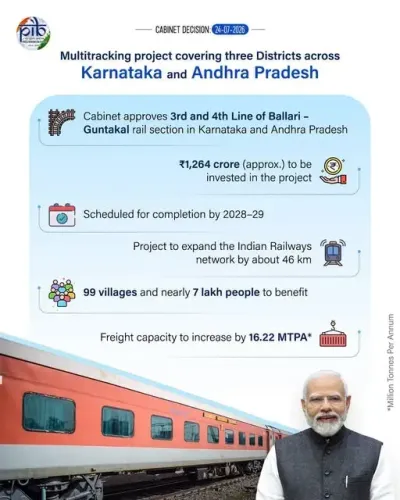
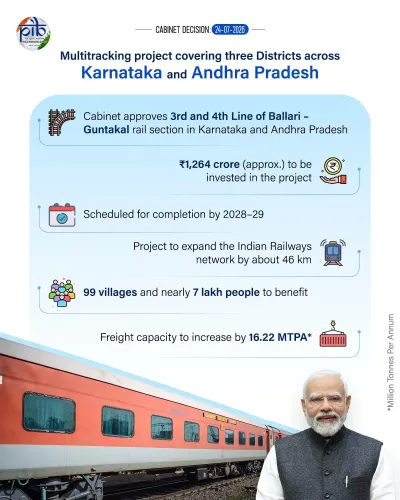
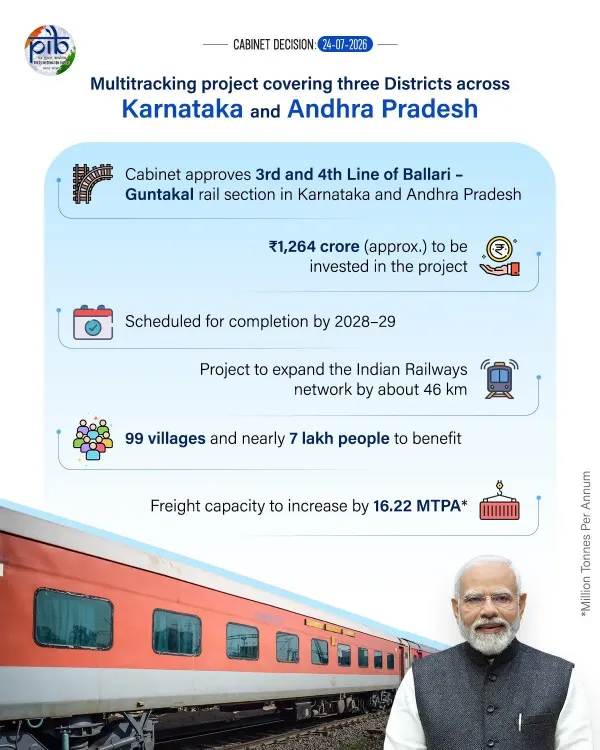
The Union Cabinet chaired by PM Narendra Modi has approved a multitracking railway project spanning three districts across Karnataka and Andhra Pradesh, adding roughly 46 kilometres to the Indian Railways network, Union Minister Dr. Jitendra Singh announced on 24 July 2026.
Key Takeaways
The Union Cabinet approved one multitracking railway project on 24 July 2026 .
The project covers three districts spanning Karnataka and Andhra Pradesh .
It will add approximately 46 kilometres to the existing Indian Railways network.
The announcement was made by Union Minister Dr.
Jitendra Singh on X as part of Cabinet decisions.
The project aims to ease congestion and improve passenger and freight movement between the two southern states.
Next steps include land acquisition, tendering, and funding allocation in the upcoming railway budget.
Union Science and Technology Minister Dr. Jitendra Singh announced on Friday, 24 July 2026 that the Union Cabinet, chaired by Prime Minister Narendra Modi, has approved a multitracking railway project spanning three districts across Karnataka and Andhra Pradesh, adding approximately 46 kilometres to the existing Indian Railways network.
Context
Dr. Singh shared the decision on X, stating that the Cabinet under PM Narendra Modi approved 'one multitracking project covering three Districts across Karnataka and Andhra Pradesh, increasing the existing network of Indian Railways by about 46 Kms.' The announcement is part of a series of #CabinetDecisions communicated through the minister's official handle.
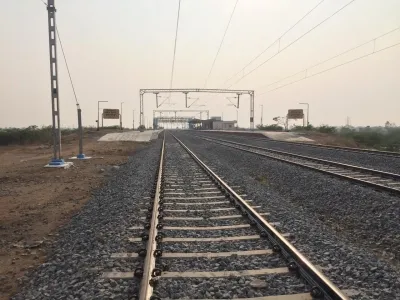
Multitracking refers to the addition of extra rail lines alongside existing tracks on a corridor, a method used to increase the carrying capacity of a route without building an entirely new line. The approval covers a cross-state corridor linking the two southern states, which share a significant volume of passenger and freight traffic.
Policy Backdrop
The decision fits within a long-running policy push to expand and modernise Indian Railways, one of the largest rail networks in the world. Since 2014, the central government has accelerated multitracking and track-doubling projects across high-density corridors, particularly in southern India where demand frequently outpaces line capacity.
The National Infrastructure Pipeline, launched in 2019, allocated dedicated funding for railway capacity augmentation across states, with cross-state corridors in the south identified as priority segments. Projects spanning Karnataka and Andhra Pradesh have been part of successive railway budget allocations aimed at reducing congestion and improving average train speeds.
Stakeholders and Impact
The primary beneficiaries of the project are rail passengers and freight operators moving between the two states. Additional tracks on a congested corridor typically reduce delays, allow more trains to be scheduled, and create headroom for dedicated freight movement — a key government priority to shift cargo off roads.
The three districts straddling the Karnataka–Andhra Pradesh border stand to gain improved regional connectivity, which can support local economies through faster movement of agricultural produce, manufactured goods, and commuters. Land acquisition and tendering processes in the concerned districts will be the immediate next steps for project execution.
What's Next
With Cabinet approval secured, the project moves to the implementation phase, which will involve detailed project reports, land acquisition under the relevant state governments, and the award of civil construction contracts. Progress on these milestones — along with funding allocations in the upcoming railway budget — will determine the project's timeline.
The approval reinforces the central government's stated goal of expanding rail infrastructure in southern India, with multitracking forming a core pillar of its strategy to raise network capacity and freight share over the coming years.
Point of View
Where railway capacity additions serve as visible markers of governance delivery. Multitracking projects are strategically chosen because they yield high capacity gains at lower cost than greenfield lines, making them attractive in both fiscal and political terms. The Karnataka–Andhra Pradesh corridor is economically significant, and approval ahead of a railway budget cycle signals an intent to front-load project pipelines. The announcement also illustrates how Cabinet decisions are increasingly communicated directly by ministers on social media, compressing the gap between policy approval and public messaging.
NationPress
24 Jul 2026
Frequently Asked Questions
What is the multitracking railway project approved by Cabinet for Karnataka and Andhra Pradesh?
The Union Cabinet approved a multitracking project covering three districts across Karnataka and Andhra Pradesh that will add approximately 46 kilometres to the Indian Railways network, as announced on 24 July 2026.
What does multitracking mean in Indian Railways?
Multitracking means adding one or more additional rail lines alongside an existing track on a corridor, which increases the number of trains that can run simultaneously and reduces congestion without building a completely new line.
Which districts in Karnataka and Andhra Pradesh are covered by the new rail project?
The Cabinet approval covers three districts spanning Karnataka and Andhra Pradesh, though the specific district names are yet to be officially detailed in the public domain beyond the ministerial announcement.
How does the 46-km rail addition benefit passengers and freight operators?
Adding 46 kilometres of multitracked line allows more trains to be scheduled on the corridor, reduces delays, and creates capacity for dedicated freight services, benefiting both daily commuters and businesses moving goods between the two states.
What are the next steps after Cabinet approval for the Karnataka–Andhra Pradesh rail project?
Following Cabinet approval, the project will move to detailed project reporting, land acquisition in the concerned districts, and the award of civil construction contracts, with funding expected to be reflected in upcoming railway budget allocations.