Cabinet Clears ₹14,447 Crore Varanasi Elevated Corridor
Synopsis
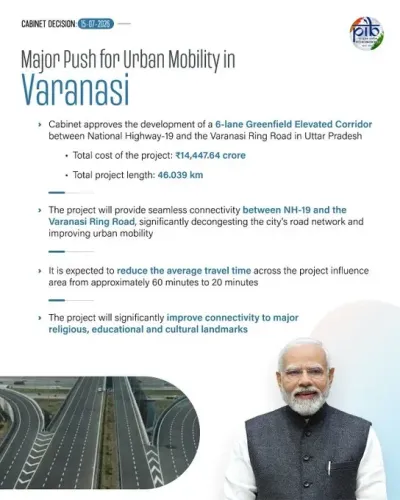
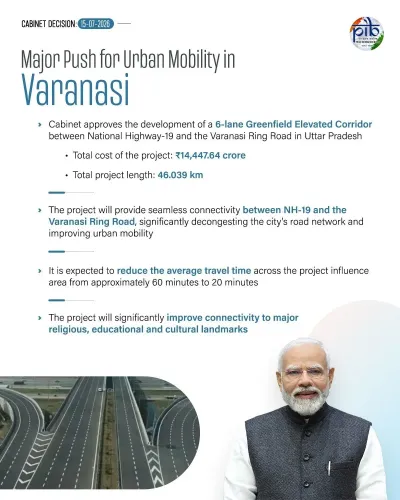
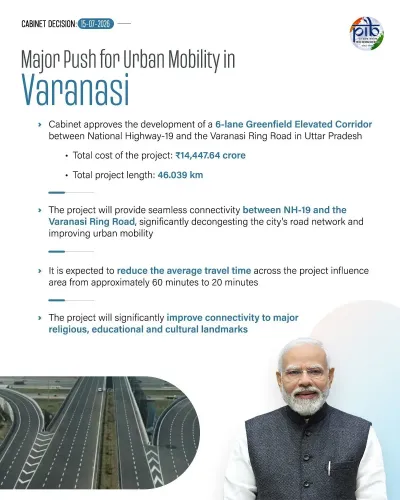
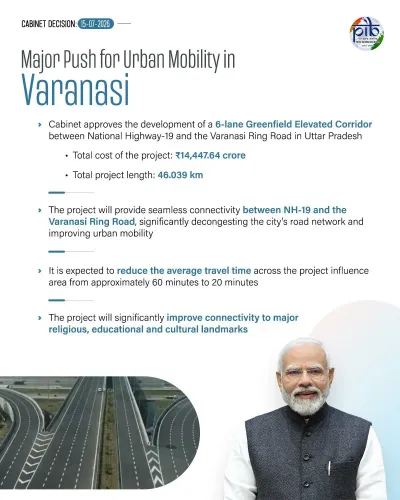
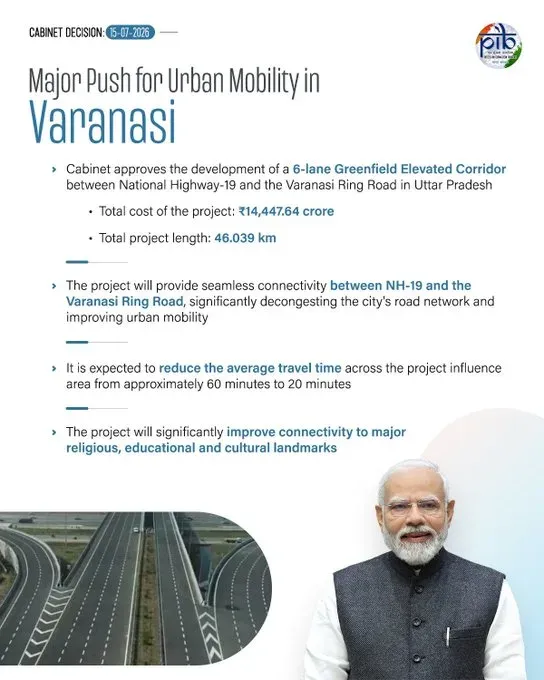
The Union Cabinet chaired by PM Modi has approved a 6-lane Greenfield Elevated Corridor between NH-19 and the Varanasi Ring Road in Uttar Pradesh at a capital cost of ₹14,447.64 crore under the Hybrid Annuity Model, aiming to decongest one of India's busiest pilgrimage cities.
Key Takeaways
The Union Cabinet has approved a 6-lane Greenfield Elevated Corridor in Uttar Pradesh connecting National Highway-19 to the Varanasi Ring Road .
Total capital cost of the project is ₹14,447.64 crore .
The project will be executed under the Hybrid Annuity Model , under which the government funds 40 percent of project cost upfront.
The corridor is designed to improve urban mobility in Varanasi by diverting through-traffic from the city's congested road network.
The approval aligns with the Bharatmala Pariyojana framework, which prioritises greenfield alignments for decongesting major cities.
Key next steps include land acquisition notifications and the appointed-date milestone under the HAM contract.
Union Science and Technology Minister Dr. Jitendra Singh announced on Wednesday, 15 July 2026 that the Union Cabinet, chaired by Prime Minister Narendra Modi, has approved the development of a 6-lane Greenfield Elevated Corridor connecting National Highway-19 to the Varanasi Ring Road in Uttar Pradesh, at a total capital cost of ₹14,447.64 crore under the Hybrid Annuity Model.
Context
The approved corridor is a greenfield elevated alignment designed to improve urban mobility in and around Varanasi, one of India's most densely populated pilgrimage cities. By linking NH-19 — the major east-west highway formerly designated NH-2, running from Delhi to Kolkata — directly to the Varanasi Ring Road, the project aims to divert through-traffic away from the city's congested interior road network.
The Cabinet's decision was shared by Dr. Singh as part of a series of #CabinetDecisions announcements, underscoring the government's practice of communicating major approvals directly via social media.
Policy Backdrop
The project is consistent with the vision of Bharatmala Pariyojana Phase-I, launched in 2015, which identified greenfield elevated corridors and ring roads around major cities as priority segments for decongestion. The National Infrastructure Pipeline, announced in 2019, further earmarked over ₹10 lakh crore for road projects, with the Hybrid Annuity Model emerging as the preferred financing structure for large-scale highway investments.
Under the Hybrid Annuity Model, the government bears 40 percent of the project cost upfront, with the private concessionaire recovering the remaining investment through annuity payments over the concession period. This structure reduces the upfront financial burden on private developers while keeping the government in control of key project milestones.
Greenfield alignments are increasingly preferred over brownfield widening in densely populated urban corridors because they minimise land acquisition disputes and allow engineering flexibility that older road alignments cannot accommodate.
Stakeholders and Impact
Varanasi, which is also the parliamentary constituency of Prime Minister Narendra Modi, has been the focal point of multiple infrastructure investments in recent years, including airport upgrades and urban mobility projects. The new elevated corridor is expected to directly benefit Varanasi commuters by reducing travel time within the city, while NH-19 freight operators stand to gain from a dedicated, signal-free route bypassing urban bottlenecks.
The project is also significant for Uttar Pradesh at large, as smoother freight movement on the Delhi-Kolkata corridor can lower logistics costs and improve supply-chain efficiency for industries across the state.
What's Next
Following Cabinet approval, the project will move to the land acquisition notification stage and the issuance of the appointed date under the Hybrid Annuity Model contract — two milestones that typically determine the pace of physical construction. Observers will watch whether the government follows this approval with similar greenfield corridor proposals for other major Uttar Pradesh cities facing comparable urban mobility challenges.
The ₹14,447.64 crore investment signals continued federal commitment to separating inter-city highway traffic from local urban movement, a policy direction that is likely to shape road infrastructure planning across India's tier-2 and pilgrimage cities in the coming years.
Point of View
447.64 crore elevated corridor in Varanasi is notable both for its scale and its political symbolism — the city is the Prime Minister's own constituency, and successive governments have treated it as a showcase for flagship infrastructure delivery. The choice of the Hybrid Annuity Model reflects the Centre's continued preference for PPP structures that de-risk private investment while retaining government oversight. Announcing this decision through a minister whose portfolio sits outside road transport suggests a broader effort to amplify Cabinet decisions across the government's social media presence. If land acquisition and appointed-date milestones are met on schedule, this project could serve as a template for similar greenfield corridors in other congested pilgrimage and tier-2 cities across Uttar Pradesh.
NationPress
15 Jul 2026
Frequently Asked Questions
What is the Varanasi Greenfield Elevated Corridor project?
It is a proposed 6-lane elevated road corridor connecting National Highway-19 to the Varanasi Ring Road in Uttar Pradesh, approved by the Union Cabinet at a total capital cost of ₹14,447.64 crore .
What is the Hybrid Annuity Model used for this project?
The Hybrid Annuity Model (HAM) is a public-private partnership framework in which the government pays 40 percent of the project cost upfront and the private developer recovers the rest through annuity payments over the concession period.
Why is an elevated corridor being built in Varanasi?
Varanasi faces severe urban congestion due to pilgrimage traffic and freight movement on NH-19 . The elevated greenfield alignment will divert through-traffic above the city, reducing travel time for commuters and logistics operators.
What is National Highway-19 and why does it matter?
National Highway-19 , formerly designated NH-2, is the major east-west highway connecting Delhi to Kolkata and passes through Uttar Pradesh. It is a critical freight and passenger corridor for northern and eastern India.
When was the Varanasi elevated corridor approved?
The Union Cabinet approved the project on 15 July 2026 , with the announcement made by Union Minister Dr. Jitendra Singh on the social media platform X.