CM Dhami Hails ₹23,731 Cr CBG GOBAR-DHAN Cabinet Nod

Synopsis
The Union Cabinet, chaired by PM Modi, approved a ₹23,731 crore CBG GOBAR-DHAN scheme aimed at a tenfold rise in compressed biogas production, better organic waste management, new farmer income, and reduced fossil fuel imports. Uttarakhand CM Pushkar Singh Dhami welcomed the decision as a boost to India's energy security and Atmanirbhar Bharat goals.
Key Takeaways
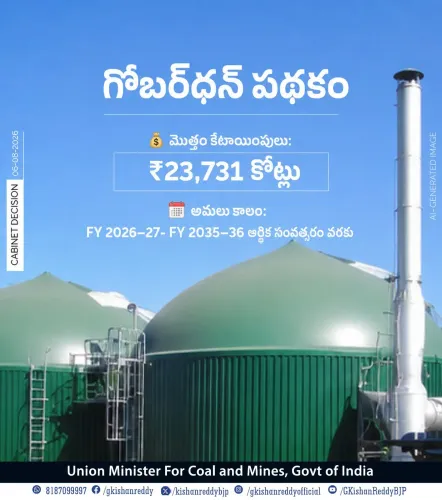
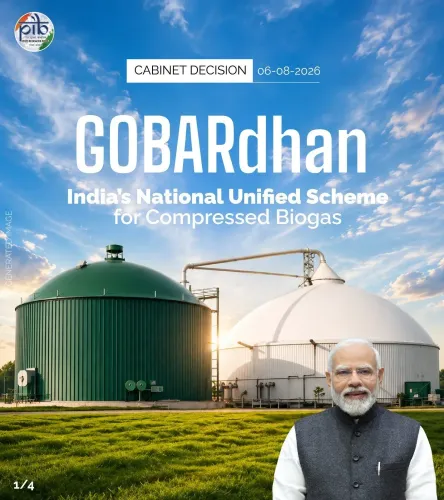
The Union Cabinet approved the CBG GOBAR-DHAN scheme with an outlay of ₹23,731 crore .
The scheme targets a tenfold increase in India's compressed biogas (CBG) production capacity.
GOBAR-DHAN was originally launched in Budget 2018-19 under the Swachh Bharat Mission (Gramin).
Key benefits cited: better organic waste management, new income streams for farmers and rural entrepreneurs , and reduced fossil fuel and import dependence.
Uttarakhand CM Pushkar Singh Dhami welcomed the cabinet decision, linking it to the Atmanirbhar Bharat vision.
State-level rollout of new CBG plants will be the critical next metric to watch.
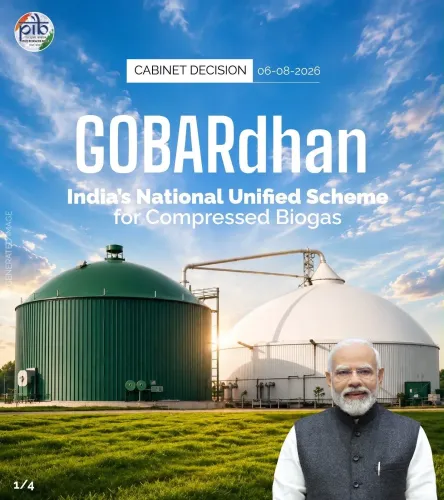
A cabinet meeting chaired by Prime Minister Narendra Modi has cleared a ₹23,731 crore outlay for the Compressed Biogas (CBG) GOBAR-DHAN scheme — a decision that Uttarakhand Chief Minister Pushkar Singh Dhami called a landmark step toward rural energy transformation and farmer income growth, on Thursday, 6 August 2026.
A tenfold production leap — what the cabinet approved
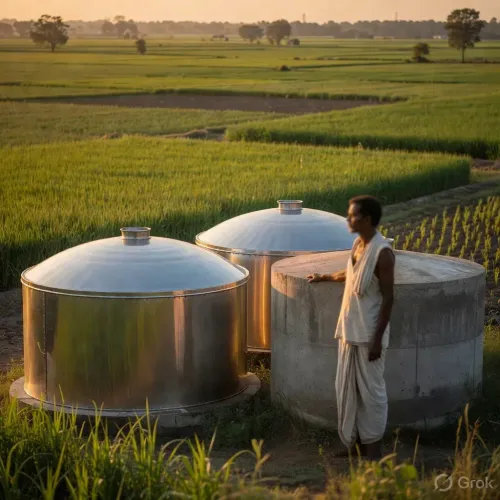
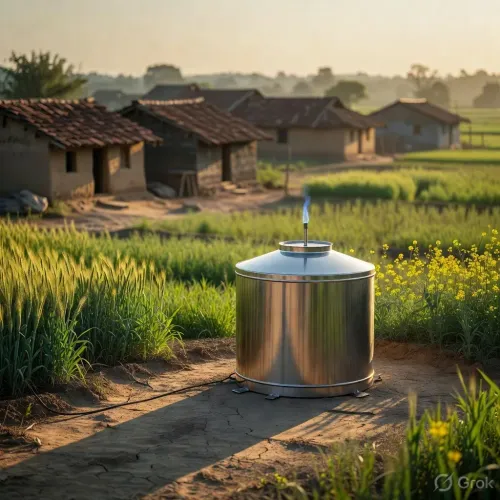
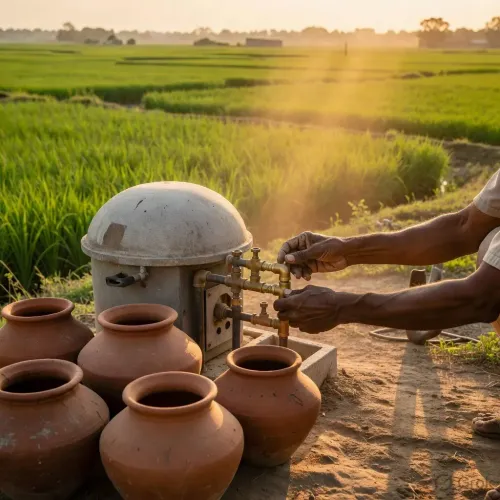
The approved scheme targets a near-tenfold increase in India's CBG production capacity. Compressed biogas is produced by processing cattle dung, crop residue, and other organic waste — turning what was once a disposal problem into pipeline-ready fuel. The ₹23,731 crore outlay is designed to fund new CBG plants, support infrastructure, and create a market framework that connects rural waste generators directly to the energy economy.
CM Dhami, welcoming the decision on X, wrote that the move will play a 'critical role' in jaivik apashisht ke behtar prabandhan — better management of organic waste — while opening new income streams for farmers and accelerating clean energy adoption across the country.
GOBAR-DHAN's roots and what this upgrade means
The GOBAR-DHAN scheme — an acronym for Galvanising Organic Bio-Agro Resources Dhan — was first introduced in Budget 2018-19 under the Swachh Bharat Mission (Gramin). Its original mandate: convert cattle dung and agricultural waste into biogas and bio-fertiliser, cleaning villages while putting money in farmers' pockets. The present cabinet decision is a substantial scale-up of that original vision, embedding it within a formal compressed biogas framework with a dedicated outlay for the first time at this magnitude.
India's parallel policy architecture — the National Bioenergy Programme and the SATAT (Sustainable Alternative Towards Affordable Transportation) initiative — has been steadily building the case for bio-CNG as a domestic substitute for fossil fuel imports. The new CBG-GOBAR-DHAN approval accelerates that trajectory, linking rural waste management directly to national energy security goals.
Farmers, fossil fuels, and the Atmanirbhar equation
CM Dhami underlined three interlocking benefits in his post: new income for farmers, reduced dependence on fossil fuels and energy imports, and a stronger foundation for Atmanirbhar Bharat — self-reliant India. These are not incidental talking points; they map onto the scheme's structural design, where farmers and rural entrepreneurs supply feedstock to CBG plants and earn from both the gas output and the residual bio-fertiliser.
For a state like Uttarakhand, with a large agrarian and livestock-dependent rural economy, the downstream implications of new CBG plant rollouts — jobs, organic fertiliser availability, cleaner cooking fuel — carry direct political and developmental weight.
The real test now shifts to state-level execution: how fast new CBG plants come online, whether feedstock supply chains hold, and whether the tenfold production target translates from cabinet resolution to metered output.
Point of View
The government signals that the green transition is being sold domestically as an economic opportunity, not a sacrifice. CM Dhami's prompt endorsement also reflects how state BJP leaders are positioning central scheme announcements as shared governance wins. The tenfold production target is ambitious; the SATAT initiative's mixed rollout history suggests execution, not intent, will define the scheme's legacy.
NationPress
21 Sept 2026
Frequently Asked Questions
What is the CBG GOBAR-DHAN scheme approved by the Union Cabinet?
The CBG GOBAR-DHAN scheme is a central government programme approved with a ₹23,731 crore outlay to scale up compressed biogas production in India — targeting a tenfold increase — by converting cattle dung, crop residue, and organic waste into clean fuel and bio-fertiliser.
How does GOBAR-DHAN benefit farmers?
Farmers and rural entrepreneurs can supply organic waste as feedstock to CBG plants and earn from both the biogas produced and the residual bio-fertiliser, creating new income streams beyond traditional crop revenue.
What is the history of the GOBAR-DHAN scheme?
GOBAR-DHAN was first announced in Budget 2018-19 under the Swachh Bharat Mission (Gramin) to promote village cleanliness and bio-energy by converting cattle dung and agricultural waste into biogas and wealth for rural households.
Why did CM Pushkar Singh Dhami welcome the CBG cabinet decision?
CM Dhami welcomed the decision because it aligns with goals of farmer income growth, clean energy adoption, reduced fossil fuel dependence, and the Atmanirbhar Bharat vision — all of which have direct relevance for Uttarakhand's agrarian and livestock-dependent rural economy.
How does compressed biogas help India's energy security?
Compressed biogas produced domestically from organic waste can substitute for imported fossil fuels in transport and industrial use, reducing India's dependence on oil imports and strengthening energy self-sufficiency.