Cabinet Clears ₹3,907 Cr Rail Projects for Odisha, Jharkhand
Synopsis
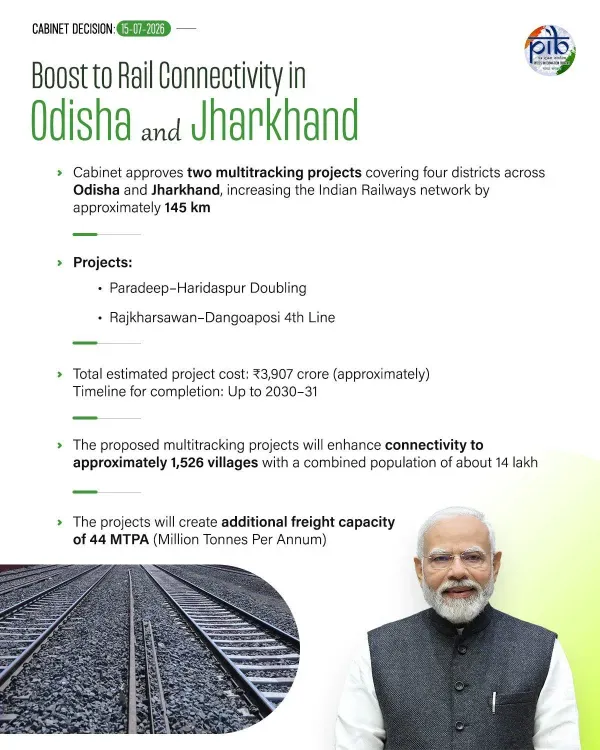
The Union Cabinet approved two railway multi-tracking projects worth ₹3,907 crore in Odisha and Jharkhand on 15 July 2026, expanding the Indian Railways network by 145 km, boosting freight capacity by 44 MTPA, and improving connectivity for 14 lakh people across 1,526 villages.
Key Takeaways
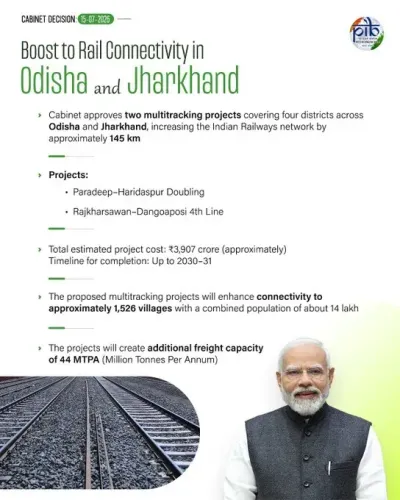
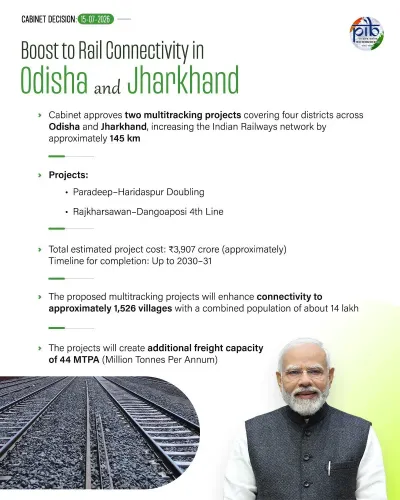
The Union Cabinet approved two railway multi-tracking projects totalling ₹3,907 crore on 15 July 2026 .
The projects cover four districts in Odisha and Jharkhand and will extend the network by approximately 145 km .
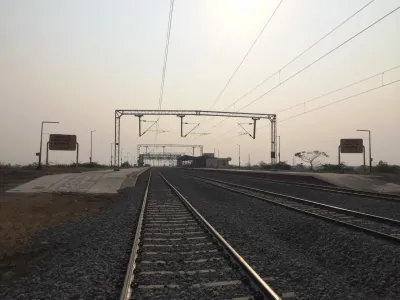
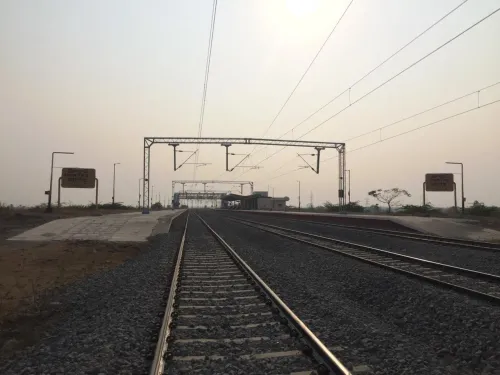
The Paradip–Haridaspur doubling strengthens freight links to Paradip Port , a key bulk cargo hub.
The Rajkharsawan–Dangoaposi fourth rail line adds capacity on a critical corridor in Jharkhand .
Around 1,526 villages and a population of nearly 14 lakh will see improved rail connectivity.
An additional freight capacity of 44 MTPA will be created, supporting mining, logistics, and tourism.
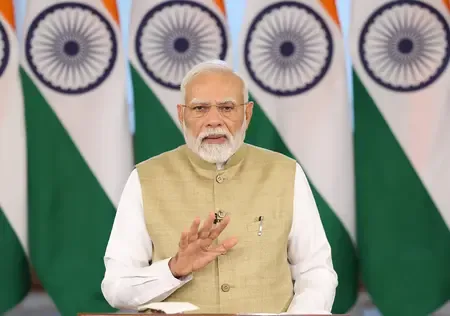
Union Agriculture Minister Shivraj Singh Chouhan on Wednesday, 15 July 2026, announced that the Union Cabinet, under the leadership of Prime Minister Narendra Modi, approved two major railway multi-tracking projects worth ₹3,907 crore covering four districts across Odisha and Jharkhand. The projects will extend the Indian Railways network by approximately 145 kilometres and are expected to benefit around 14 lakh people across 1,526 villages.
Context
Chouhan shared the cabinet decision on X, stating — translated from Hindi — that the two projects, the Paradip–Haridaspur doubling and the Rajkharsawan–Dangoaposi fourth rail line, would improve rail connectivity for approximately 1,526 villages and a population of nearly 14 lakh. He added that an additional freight-handling capacity of 44 MTPA (million tonnes per annum) would be developed as a result. The cabinet decision was framed as part of the broader push for operational efficiency, logistics improvement, and eco-friendly transport.
Policy Backdrop
The two projects fit squarely within the PM Gati Shakti National Master Plan, launched in October 2021, which aims to integrate rail, road, and port infrastructure under a unified planning framework. Indian Railways has pursued multi-tracking works on mineral and port corridors in eastern India across successive governments, with the current administration accelerating cabinet-level approvals to reduce logistics costs and shift freight from road to rail. Odisha is home to Paradip Port, one of India's largest cargo ports, making the Paradip–Haridaspur doubling particularly significant for bulk commodity exports. Jharkhand's mining-heavy economy similarly depends on efficient rail links to ports and industrial markets, and the Rajkharsawan–Dangoaposi fourth rail line directly addresses that corridor's capacity constraints.
Stakeholders and Impact
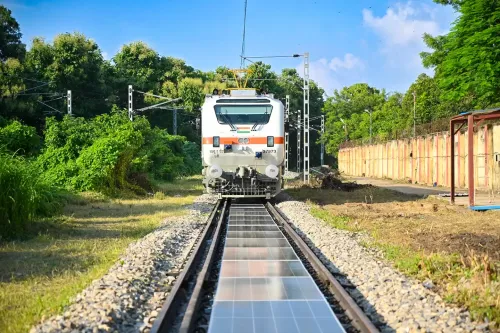
Rural communities in the four affected districts stand to gain direct rail access or improved service frequency, reducing isolation and opening economic opportunities. The mining sector and freight operators in both states are among the primary beneficiaries, as the additional 44 MTPA capacity will ease congestion on some of eastern India's most heavily loaded corridors. Chouhan also highlighted tourism as an expected beneficiary, alongside regional development and the shift to environmentally cleaner rail-based transport over road haulage.
What's Next
The Ministry of Railways is expected to issue tender documents and land acquisition notices for both projects in the coming months, with revised completion timelines to follow. Analysts tracking eastern India's infrastructure build-out will watch for further multi-tracking or freight corridor approvals in subsequent cabinet meetings. Progress on land acquisition — historically the most time-sensitive variable in such projects — will determine how quickly the 145-km network expansion translates into operational capacity on the ground.
Point of View
Multi-modal connectivity rather than standalone rail spending. The 44 MTPA freight capacity addition, if delivered on schedule, would represent a material improvement to India's logistics cost structure on one of its most congested bulk-cargo routes.
NationPress
15 Jul 2026
Frequently Asked Questions
What are the two railway projects approved by the Union Cabinet on 15 July 2026?
The Cabinet approved the Paradip–Haridaspur rail doubling project in Odisha and the Rajkharsawan–Dangoaposi fourth rail line project in Jharkhand, together costing ₹3,907 crore.
How many villages will benefit from the Odisha and Jharkhand rail projects?
Approximately 1,526 villages with a combined population of nearly 14 lakh are expected to receive improved rail connectivity under the two projects.
What is the total length of rail network being added under these projects?
The two projects will expand the Indian Railways network by approximately 145 kilometres across four districts in Odisha and Jharkhand.
How much additional freight capacity will the new rail lines create?
The projects are projected to develop an additional freight-handling capacity of 44 MTPA (million tonnes per annum), benefiting the mining and logistics sectors in eastern India.
How do these projects relate to PM Gati Shakti?
Both projects align with the PM Gati Shakti National Master Plan, launched in October 2021, which coordinates rail, road, and port infrastructure to reduce logistics costs and improve multimodal connectivity.