Cabinet Clears Aqua Line Metro Extension to Greater Noida

Synopsis
The Union Cabinet has approved an 8.449-km extension of the Aqua Line Metro from Noida Sector-51 to Greater Noida Sector-4, with 5 new stations. The move will expand the combined Noida–Greater Noida metro network to 71.878 km, deepening urban transit connectivity in the NCR.
Key Takeaways
The Union Cabinet approved the Aqua Line Metro Corridor extension on November 11, 2026 .
The new corridor spans 8.449 kilometres from Noida Sector-51 to Greater Noida Sector-4 .
5 new metro stations will be constructed along the extended corridor.
After completion, the total metro rail network in Noida and Greater Noida will reach 71.878 kilometres .
The original Aqua Line connecting Noida and Greater Noida became operational in 2019 .
The expansion continues a pattern of successive central Cabinet approvals for NCR satellite-city metro growth.
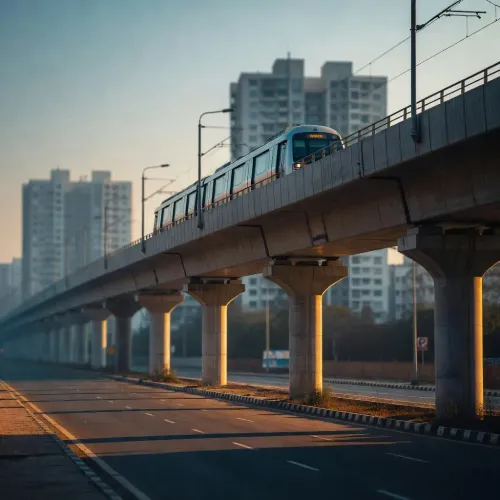
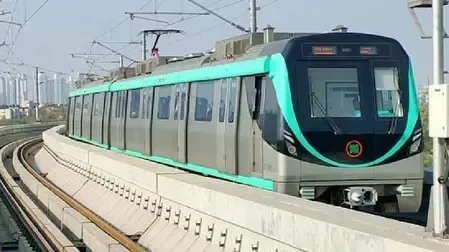
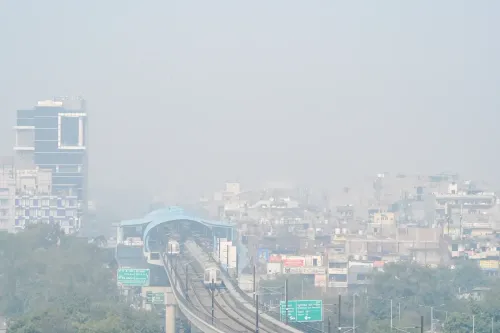
A 8.449-kilometre metro corridor that could reshape daily commutes across one of India's fastest-growing urban belts just cleared its biggest hurdle. The Union Cabinet on Wednesday, November 11, 2026, approved the extension of the Aqua Line Metro Corridor from Noida Sector-51 to Greater Noida Sector-4 — a move that Union Textiles Minister Giriraj Singh flagged as a landmark step for the National Capital Region's urban mobility ambitions.
Sharing the Cabinet decision on X, Minister Singh announced: 'The Union Cabinet has approved the extension of the Aqua Line Metro Corridor from Noida Sector-51 to Greater Noida Sector-4. 5 stations will be built on this 8.449-kilometre corridor. After the completion of this extension, the total metro rail network in Noida and Greater Noida will become 71.878 kilometres.'
From 2019 Launch to a 71-Kilometre Network
The original Noida–Greater Noida Aqua Line was inaugurated in 2019, becoming the first standalone metro corridor to directly connect the two satellite cities in Gautam Buddh Nagar district, Uttar Pradesh. It was built to ease the arterial road congestion that had long plagued commuters travelling between the two planned cities — and it quickly became a backbone of daily urban movement in the NCR's eastern corridor.
The freshly approved extension pushes that backbone further south, threading five new stations into a stretch that serves some of Greater Noida's rapidly developing residential and institutional zones. Once built, the combined network will stretch 71.878 kilometres — a figure that places Noida and Greater Noida firmly among India's more substantial sub-metropolitan rail systems.
The Cabinet Approval Mechanism and What Comes Next
Major metro expansions in India's satellite cities follow a well-worn path: a detailed project report, state government concurrence, then Union Cabinet sanction — which unlocks central funding and formal construction clearance. Wednesday's Cabinet nod marks the completion of that pathway for this corridor.
The practical questions now shift to execution: construction timelines, land acquisition at the five new station sites, and funding tranches from the central and Uttar Pradesh state governments. Longer term, planners and commuters alike will watch whether this corridor eventually integrates with the broader Delhi Metro network — a linkage that would transform the Aqua Line from a city connector into a full NCR transit artery.
For the hundreds of thousands of residents in Noida and Greater Noida who navigate some of India's most congested satellite-city roads every day, the Cabinet's green light is not an abstraction — it is the starting pistol for a project that will define urban mobility in this corridor for decades.
Point of View
Greenlit infrastructure in Uttar Pradesh's Gautam Buddh Nagar carries electoral as well as governance weight, particularly ahead of any state-level cycle. The real policy test, however, will be execution speed: India's metro expansion record is dotted with projects where Cabinet approval and actual commuter benefit are separated by years of construction delay and funding lag.
NationPress
11 Nov 2026
Frequently Asked Questions
What is the Aqua Line Metro extension approved by the Cabinet?
The Union Cabinet approved an 8.449-km extension of the Aqua Line Metro from Noida Sector-51 to Greater Noida Sector-4 , with 5 new stations to be built along the corridor.
What will the total Noida–Greater Noida metro network length be after the extension?
Once the extension is complete, the combined metro network in Noida and Greater Noida will span 71.878 kilometres .
When was the original Aqua Line Metro launched?
The original Noida–Greater Noida Aqua Line was launched in 2019 and was the first dedicated metro corridor linking the two satellite cities.
How many stations will the new Aqua Line Metro extension have?
The approved extension will include 5 new metro stations between Noida Sector-51 and Greater Noida Sector-4.
Which state does the Aqua Line Metro corridor pass through?
The Aqua Line Metro corridor runs through Gautam Buddh Nagar district in Uttar Pradesh , connecting the planned cities of Noida and Greater Noida within the Delhi NCR.