Haryana Chief Minister Unveils Transformative Urban Infrastructure Plans
Synopsis
Haryana's Chief Minister Nayab Singh Saini has revealed a comprehensive plan to enhance urban infrastructure, including the crucial Gurugram-Faridabad-Noida-Greater Noida corridor. This initiative aims to modernize transportation while addressing environmental concerns.
Key Takeaways
Haryana's urban infrastructure is set for major upgrades.
Final alignment approved for the Namo Bharat corridor.
Integrated transport system to enhance connectivity.
Focus on environmental sustainability through noise barriers.
Government aims to address future mobility needs.
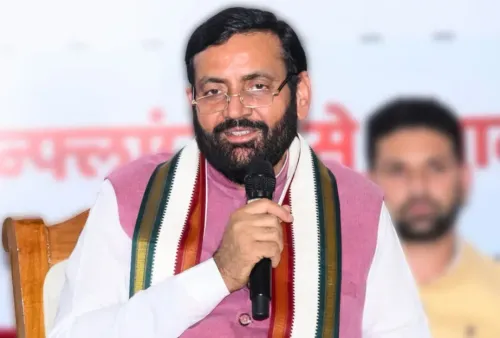
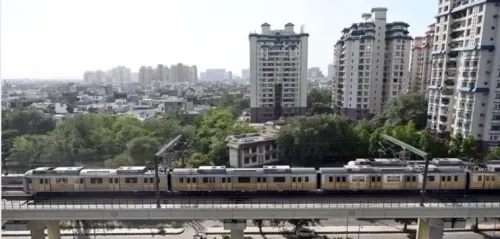
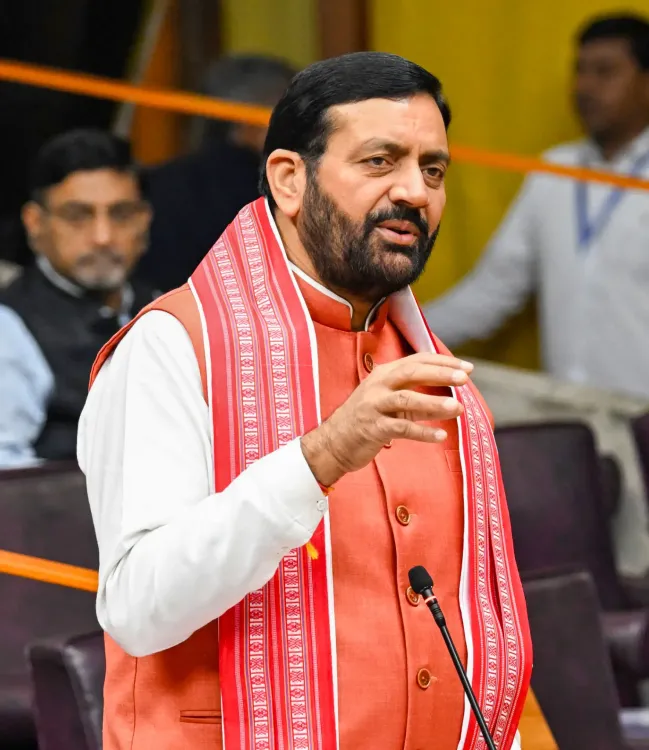
Chandigarh, Feb 25 (NationPress) Haryana's Chief Minister Nayab Singh Saini made a significant announcement in the Assembly on Wednesday, unveiling a series of pivotal initiatives designed to enhance urban infrastructure and elevate the living standards of residents. This includes the endorsement of the final layout for the Gurugram-Faridabad-Noida-Greater Noida Namo Bharat RRTS-cum-Metro corridor.
The Chief Minister emphasized the government's dedication to ensuring safe, modern, and efficient public transportation options. He characterized this initiative as a crucial advancement in reinforcing Haryana's urban mobility framework.
During the assembly meeting on February 24, the government finalized the corridor's alignment. The detailed project report (DPR) is in the concluding stages, with directives provided to the National Capital Region Transport Corporation (NCRTC), the government agency tasked with implementing the project.
This project is in alignment with Prime Minister Narendra Modi's vision as part of the Namo Bharat initiative, aiming to link key economic zones via fast, secure, and modern transportation systems.
Further elaborating, the Chief Minister noted that the proposed corridor will stretch approximately 64 km, with around 52 km located within Haryana.
This initiative is designed as an integrated regional mobility solution, connecting major economic hubs like Gurugram, Faridabad, and Noida across the National Capital Region (NCR).
It is anticipated that the corridor will deliver high-speed access to millions of commuters, alleviate traffic congestion, and promote environmental sustainability.
Within the Gurugram section, an integrated RRTS and Metro corridor of roughly 14.5 km has been approved, linking IFFCO Chowk to Gwal Pahari.
Key stations along this route will include Sector 29, Millennium City Centre, Sector 52, Wazirabad, Sector 57, and Sector 58/61.
This segment will integrate with the Delhi Metro Yellow Line, the Gurugram Metro Corridor, and the Rapid Metro network, facilitating seamless multi-modal transport.
In a similar vein, an integrated corridor spanning approximately 16 km has been sanctioned in the Faridabad area, connecting Sainik Colony to Badshahpur.
This route will traverse critical locations including the NIT region, Bata Chowk, and Sectors 12 to 15, enhancing connectivity with the Delhi Metro Violet Line, thereby bolstering regional access and aiding both industrial and residential development.
The Chief Minister highlighted that the project is crafted with a focus on both infrastructure enhancement and environmental sustainability.
To mitigate sound pollution and improve living conditions in urban neighborhoods, noise barriers will be installed along viaduct sections.
The corridor is projected to open new investment opportunities, generate employment, and foster balanced urban development across Haryana.
In light of rising population pressures and increasing traffic in cities like Gurugram and Faridabad, this project is being meticulously planned to address future mobility needs.
The state government is collaborating closely with the Central government to ensure the project's swift execution.
Reassuring assembly members, the Chief Minister stated that the DPR will be finalized promptly to expedite implementation and guarantee that citizens benefit from advanced public transport infrastructure.
He described this initiative as a pivotal movement towards fortifying Haryana's long-term urban connectivity framework.
In another announcement, the Chief Minister tackled a longstanding land ownership issue in Chhachhrauli.
He noted that land under Khasra numbers 125, 134, and 152 has been government-owned since 1887 but has historically been recorded as 'Gair Mumkin Aabadi', where residents have built homes over several decades.
Property registrations continued until 2020, prompting residents to approach the government for resolution.
In response to these concerns, the government has chosen to confer ownership rights to qualifying families residing on the land.
After verifying on-ground possession through official records and surveys, ownership rights will be bestowed upon long-established residents.
Point of View
Showcasing a proactive approach to urban planning.
NationPress
1 Oct 2026
Frequently Asked Questions
What is the Namo Bharat RRTS-cum-Metro corridor?
It is a proposed integrated transport corridor connecting major economic hubs in Haryana, aimed at enhancing urban mobility and reducing traffic congestion.
How long will the corridor be?
The corridor will span approximately 64 km, with around 52 km within Haryana.
What are the key benefits of the project?
The project aims to provide high-speed connectivity, alleviate traffic issues, promote environmental sustainability, and foster economic growth.
When is the project expected to be implemented?
The state government is working closely with the Central government to ensure timely execution, with the detailed project report expected to be finalized soon.
What other initiatives were announced?
The Chief Minister also addressed land ownership issues in Chhachhrauli, granting ownership rights to eligible residents.