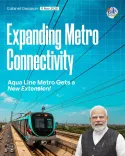
Cabinet Clears Aqua Line Metro Extension to Greater Noida for Rs 2,390 Cr
Synopsis
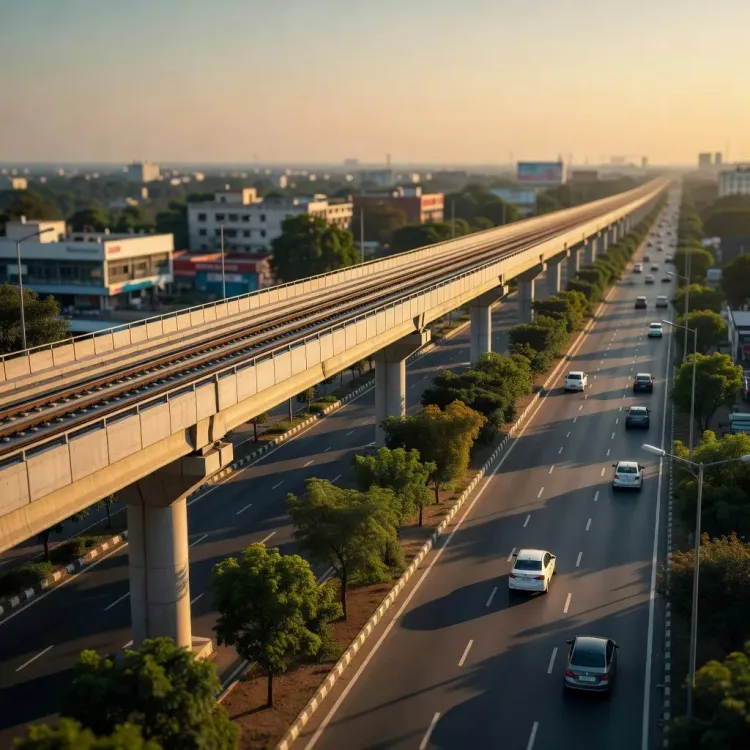
The Union Cabinet approved extending the Aqua Line Metro from Noida Sector-51 to Greater Noida Sector-04 — 8.449 km, 5 stations, Rs 2,390 crore — to ease congestion at Parthala Chowk, Gaur Chowk and Ek Murti Circle in the NCR.
Key Takeaways
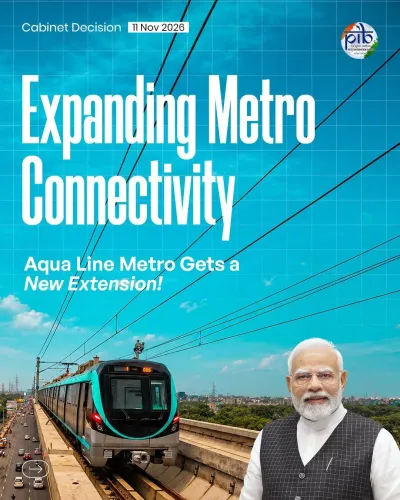
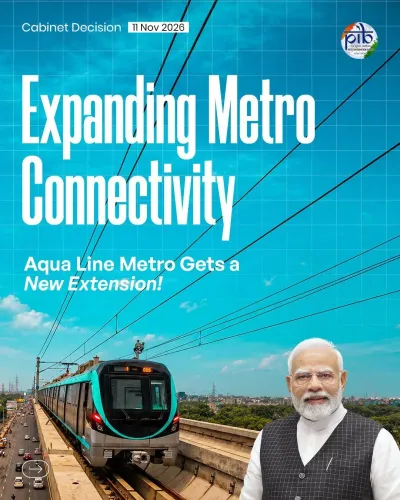
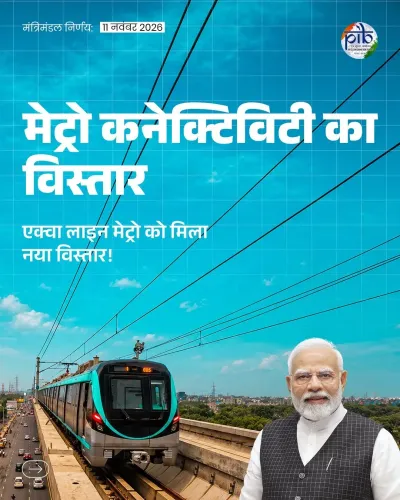
Union Cabinet chaired by PM Narendra Modi approved the Aqua Line Metro extension on November 11, 2026 .
The corridor spans 8.449 km from Noida Sector-51 to Greater Noida Sector-04 with 5 new stations .
Estimated project cost is Rs 2,390 crore .
The extension targets traffic relief at Parthala Chowk , Gaur Chowk , and Ek Murti Circle .
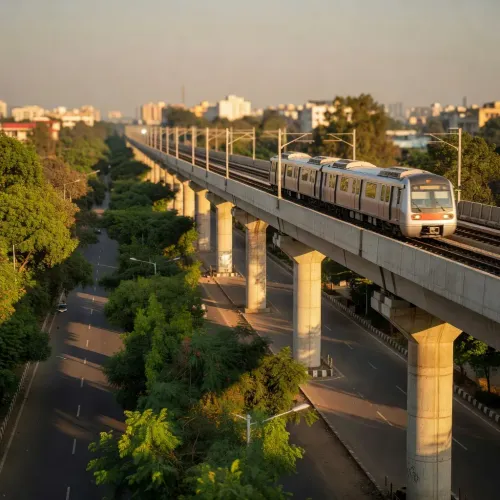
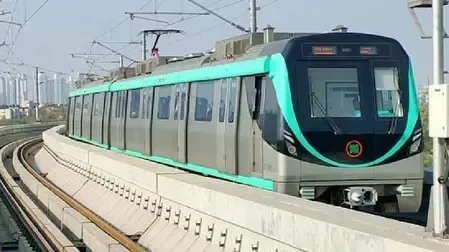
The Aqua Line has been operational since 2019 ; this approval deepens its reach into Greater Noida.
Implementation milestones including land acquisition and tendering now become the critical path for the project.
Three notorious traffic bottlenecks — Parthala Chowk, Gaur Chowk, and Ek Murti Circle — have long made the Noida–Greater Noida stretch a commuter's daily ordeal. The Union Cabinet, chaired by Prime Minister Narendra Modi, moved to change that on Wednesday, November 11, 2026, approving an extension of the Aqua Line Metro Rail Corridor from Noida Sector-51 to Greater Noida Sector-04, covering 8.449 km with 5 new stations at an estimated cost of Rs 2,390 crore. Union Environment Minister Bhupender Yadav announced the decision on X.
What the 8.449-km stretch covers — and why it matters
The extended corridor will stitch together two of the NCR's fastest-growing urban zones. The Aqua Line, which has been operational since 2019, already runs between Noida City Centre and Greater Noida's Depot Station. This new segment pushes the network deeper into Greater Noida Sector-04, directly addressing the last-mile gap that forces tens of thousands of daily commuters onto already-saturated road arteries.
The three intersections cited — Parthala Chowk, Gaur Chowk, and Ek Murti Circle — sit squarely along or adjacent to this corridor, and are well-known congestion flashpoints between the two cities. A rail alternative at these nodes could meaningfully shift modal choice for residents of the densely populated housing clusters that have multiplied in Greater Noida over the past decade.
Rs 2,390 crore and the NCR metro expansion pattern
The Rs 2,390 crore price tag places this among the mid-tier metro extension approvals that the central government has been pushing through in the Delhi-NCR region as part of a sustained urban mobility push. Successive cabinet decisions have greenlit expansions of existing lines rather than building entirely new networks — a strategy that keeps costs manageable while extracting maximum ridership from proven corridors.
Noida and Greater Noida sit in Gautam Buddh Nagar, Uttar Pradesh, and their combined population of IT workers, industrial employees, and suburban families represents a transit market that road infrastructure alone cannot serve. Metro connectivity here also feeds back into the broader Delhi Metro interchange system, multiplying the utility of every new station added.
Implementation: what comes next for the 5 new stations
With Cabinet approval secured, attention now shifts to land acquisition, detailed project reports, and tendering. Metro extensions in the NCR have historically faced delays at the land-acquisition stage, particularly in rapidly developing areas where residential and commercial construction has outpaced infrastructure planning. The pace at which the Noida Metro Rail Corporation can clear those hurdles will determine when commuters actually board trains at the five new stations.
The government will also need to ensure integration with upcoming NCR transport plans — including potential links to expressway transit nodes — to future-proof the investment. At Rs 2,390 crore and 8.449 km, the numbers are set. The clock starts now.
Point of View
Maximising ridership on proven corridors while keeping fiscal exposure bounded. For the BJP government, metro approvals in Uttar Pradesh ahead of any electoral cycle carry a dual dividend — tangible urban infrastructure and a visible signal to NCR's aspirational middle class. The choice to highlight three specific congestion points (Parthala Chowk, Gaur Chowk, Ek Murti Circle) is deliberate messaging: this is not abstract policy, it is a named daily frustration being addressed. The real test, as with every NCR metro extension, is execution speed — Cabinet approval is the easy part.
NationPress
11 Nov 2026
Frequently Asked Questions
What is the Aqua Line Metro extension approved by the Cabinet?
The Union Cabinet approved extending the Aqua Line Metro Rail Corridor from Noida Sector-51 to Greater Noida Sector-04, adding 8.449 km and 5 new stations at an estimated cost of Rs 2,390 crore.
How long is the new Aqua Line Metro extension?
The extension covers a route length of 8.449 km with 5 stations.
What is the cost of the Noida–Greater Noida metro extension?
The estimated cost of the project is Rs 2,390 crore, as approved by the Union Cabinet.
Which traffic bottlenecks will the Aqua Line extension help ease?
The extension is expected to reduce congestion at Parthala Chowk, Gaur Chowk, and Ek Murti Circle — key intersections between Noida and Greater Noida.
When did the original Noida Metro Aqua Line start operating?
The Aqua Line between Noida and Greater Noida began operations in 2019 and has since served as a key transit link in the NCR.