Cabinet Clears NBS Fertiliser Subsidy Rates for Rabi 2026–27
Synopsis
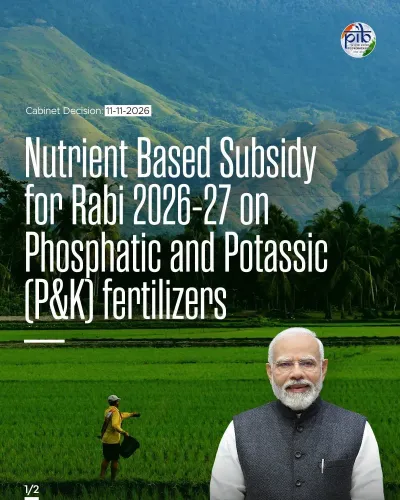
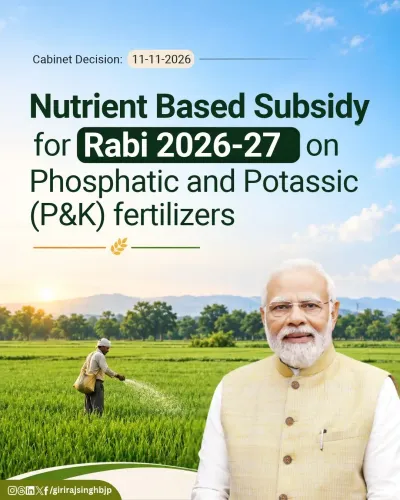
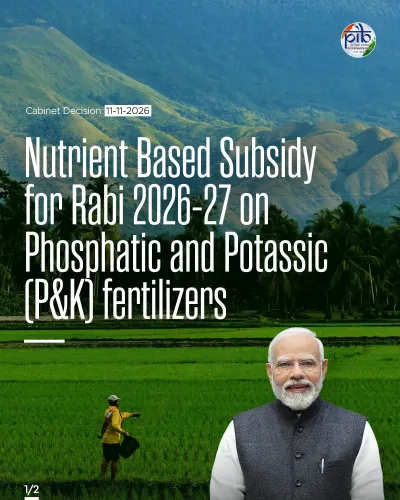
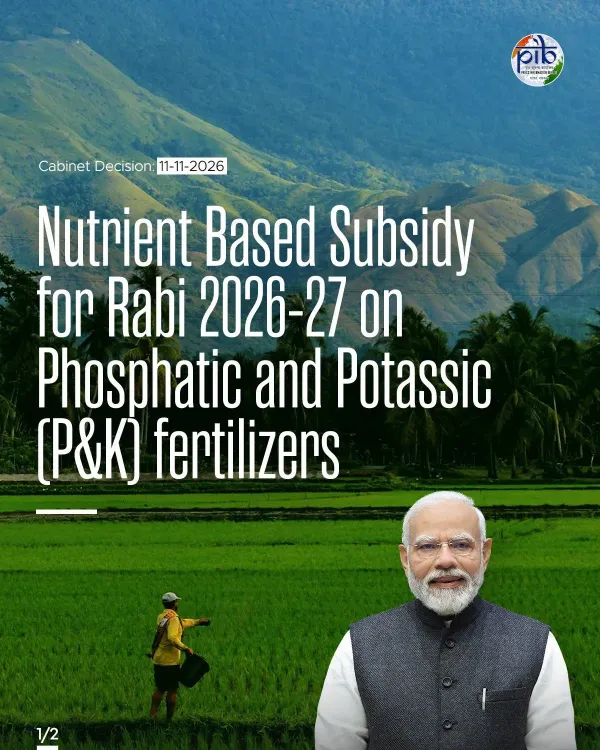
The Union Cabinet, under PM Narendra Modi, has approved Nutrient Based Subsidy rates for phosphatic and potassic fertilisers — including DAP and NPKS grades — for the Rabi 2026–27 season from October 2026 to March 2027, ensuring affordable inputs for Indian farmers.
Key Takeaways
The Cabinet has approved Nutrient Based Subsidy (NBS) rates for phosphatic and potassic fertilisers for Rabi 2026–27 .
The subsidy covers DAP and NPKS grades , effective from 1 October 2026 to 31 March 2027 .
The NBS policy, launched in April 2010 , provides per-nutrient subsidies to insulate farmers from global price volatility.
Since 2014 , the Cabinet has cleared NBS rates every Kharif and Rabi season under PM Modi.
India imports significant volumes of phosphate and potash, making timely subsidy notification critical to supply-chain stability.
Actual retail prices and mid-season revisions — if global prices spike — remain key variables to watch through March 2027 .
India's farmers heading into the Rabi 2026–27 season will find subsidised phosphatic and potassic fertilisers at their doorstep — the Cabinet has approved fresh Nutrient Based Subsidy (NBS) rates covering DAP and NPKS grades from 1 October 2026 to 31 March 2027, Union Minister Dr. Jitendra Singh announced on Wednesday, 11 November 2026.
What the Cabinet cleared — and who it covers
The decision, taken under the leadership of Prime Minister Narendra Modi, extends the government's established practice of fixing NBS rates ahead of each agricultural season. The subsidy applies to phosphatic (P) and potassic (K) fertilisers — the two nutrient categories outside urea that are priced under the NBS framework. DAP (Di-ammonium Phosphate), the most widely used planting fertiliser across Indian fields, and a range of NPKS complex grades are both covered under the approval.
Dr. Singh, who also holds charge of Science and Technology and Earth Sciences ministries and serves in the Prime Minister's Office, posted the announcement on X, calling it 'a continued commitment to supporting farmers and strengthening agricultural productivity.'
The NBS framework: sixteen years of price insulation
The Nutrient Based Subsidy policy was introduced in April 2010, replacing an older product-specific subsidy regime. Under NBS, the government fixes a per-nutrient subsidy — expressed in rupees per kilogram of nitrogen, phosphorus, potassium, or sulphur — and manufacturers price their products accordingly, with the difference between market cost and the subsidised retail price covered by the Centre.
The architecture is designed to do two things simultaneously: shield farmers from volatile international prices for phosphate and potash — both of which India imports heavily — and incentivise balanced, efficient nutrient use rather than over-dependence on any single input. Since 2014, the Cabinet has cleared NBS rates every Kharif and Rabi season, making it one of the most consistent planks of the government's farm-support agenda.
Why Rabi timing matters
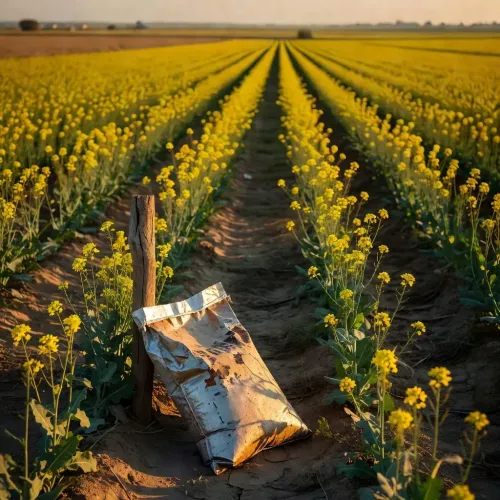
The Rabi season — wheat, mustard, chickpea, and other winter-sown crops — is sown from October onwards across north and central India. Getting fertilisers into mandis and cooperative outlets before sowing peaks is a logistical and policy race. A delay in rate notification can freeze procurement by manufacturers and cause supply gaps at the retail level, hitting farmers at precisely the moment they need inputs. The Cabinet's pre-season clearance is intended to prevent exactly that chain reaction.
India runs one of the largest fertiliser subsidy programmes in the world, with the annual outlay spanning hundreds of thousands of crore rupees. The NBS window for P&K fertilisers, alongside the separate urea subsidy, anchors the country's food-security infrastructure — connecting global commodity markets to the smallest farm in Uttar Pradesh, Madhya Pradesh, or Punjab.
Rabi 2026–27: what to watch as the season unfolds
The actual test of Wednesday's Cabinet decision will play out in retail fertiliser prices at the district level and in whether supplies reach farmers without disruption through the March 2027 cutoff. Any fresh spike in global phosphate or potash prices — a recurring risk given geopolitical supply pressures — could prompt a mid-season review of rates, a step the government has taken in past cycles. Fertiliser manufacturers, meanwhile, will align production and import schedules to the newly approved subsidy structure.
For now, the Cabinet's pre-season move gives both farmers and the supply chain the price certainty they need to plan. The harvest that follows will be the real scorecard.
Point of View
Which anchors wheat production in electorally significant states like Uttar Pradesh and Punjab. The decision also reflects a structural dependency: because India imports the bulk of its phosphate and potash requirements, the NBS framework functions as a fiscal buffer against global commodity shocks, transferring international price risk from the farmer to the exchequer. What the announcement does not resolve is the longer-term question of subsidy rationalisation — whether rates adequately balance fiscal sustainability with genuine farmer affordability. As global fertiliser markets remain sensitive to geopolitical supply disruptions, the government's ability to hold the Rabi 2026–27 rates firm through March will itself be a test of budget resilience.
NationPress
11 Nov 2026
Frequently Asked Questions
What is the Nutrient Based Subsidy (NBS) scheme in India?
The Nutrient Based Subsidy (NBS) scheme, introduced in April 2010, provides a fixed subsidy per kilogram of key nutrients — phosphorus, potassium, nitrogen, and sulphur — in non-urea fertilisers, allowing manufacturers to set competitive retail prices while the Centre covers the gap.
Which fertilisers are covered under the Rabi 2026–27 NBS approval?
The Cabinet approval covers phosphatic and potassic fertilisers, specifically DAP (Di-ammonium Phosphate) and various NPKS complex grades, for use during the Rabi 2026–27 season from 1 October 2026 to 31 March 2027.
Why does the Cabinet approve NBS rates every season?
Global phosphate and potash prices fluctuate significantly. Seasonal Cabinet approvals of NBS rates allow the government to calibrate subsidy levels to current market conditions, ensuring farmers receive affordable fertilisers without the Centre over-committing subsidy expenditure.
What is the Rabi agricultural season in India?
The Rabi season refers to the winter crop cycle sown from October onwards and harvested by March–April. Key Rabi crops include wheat, mustard, and chickpea, grown primarily across north and central India.
Will fertiliser prices change for farmers in Rabi 2026–27?
The Cabinet's NBS approval is intended to maintain affordable retail prices for DAP and NPKS fertilisers through March 2027. Retail prices at the farm level depend on the specific subsidy rates approved and prevailing market costs, with the government absorbing any excess through the subsidy mechanism.