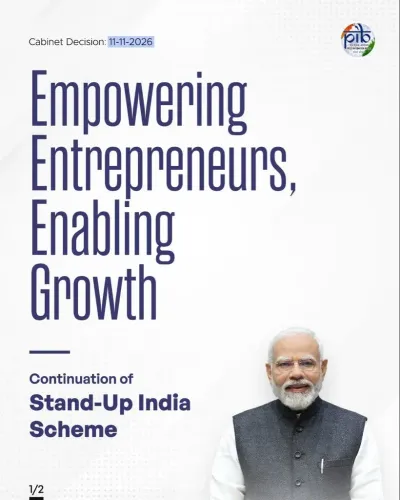
Cabinet extends Stand-Up India Scheme to 2031, targets 2.5 lakh new beneficiaries

Synopsis
The Union Cabinet has extended the Stand-Up India Scheme to 31 March 2031, targeting 2.5 lakh new SC/ST and women entrepreneurs. The scheme, launched in 2016, provides bank loans of Rs 10 lakh to Rs 1 crore for first-time entrepreneurs from marginalised groups.
Key Takeaways
The Union Cabinet has approved the continuation of the Stand-Up India Scheme until 31 March 2031 .
The extended scheme targets 2.5 lakh additional entrepreneurs from SC/ST communities and women over the next five years.
The scheme, originally launched on 5 April 2016 , provides loans between Rs 10 lakh and Rs 1 crore for greenfield enterprises.
Jitendra Singh announced the Cabinet decision on 11 November 2026 .
The extension forms part of a broader ecosystem alongside Mudra Yojana and Startup India aimed at expanding formal credit access.
Actual disbursements and loan sanctions against the 2.5 lakh beneficiary target will be the key metrics to watch through 2031.
A decade after it first opened bank doors for India's most excluded entrepreneurs, Stand-Up India is getting a fresh five-year mandate — and a sharper ambition. The Union Cabinet has approved the continuation of the Stand-Up India Scheme until 31 March 2031, setting a target of reaching 2.5 lakh additional entrepreneurs over the next five years, Union Minister Dr. Jitendra Singh announced on Wednesday, 11 November 2026.
What Stand-Up India does — and who it is built for
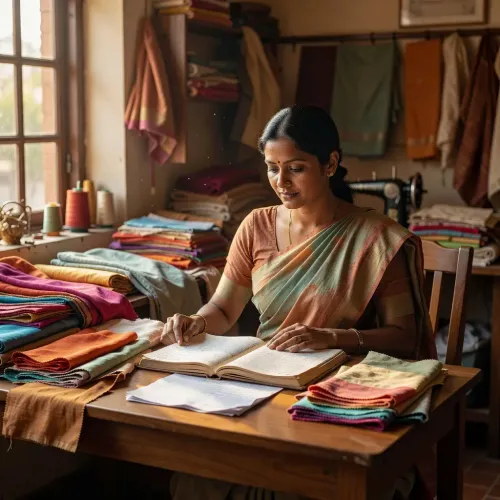
Launched on 5 April 2016 by the Ministry of Finance, Stand-Up India was designed to do one specific thing: get formal bank credit into the hands of first-time entrepreneurs from Scheduled Castes (SC), Scheduled Tribes (ST), and women — groups historically locked out of institutional lending. The scheme offers loans between Rs 10 lakh and Rs 1 crore for greenfield enterprises in manufacturing, services, or trading. One SC or ST borrower and at least one woman borrower per bank branch is the floor-level commitment built into the design.
The model is deliberate. It does not scatter subsidies broadly — it channels structured credit to entrepreneurs who are setting up a venture for the first time, precisely where the gap between aspiration and capital is widest.
Why the 2031 extension matters for grassroots enterprise
Periodic extensions of Stand-Up India are themselves a policy signal: the government is treating the programme not as a time-limited intervention but as a structural feature of India's financial inclusion architecture. The scheme sits alongside Mudra Yojana and Startup India in a layered ecosystem that attempts to cover the full spectrum — from micro-borrowers to growth-stage startups.
The 2.5 lakh additional beneficiary target for the 2026-2031 phase gives the extension a measurable spine. Progress on loan sanctions and actual disbursements under the new phase will be the numbers to watch as the scheme moves into execution.
Dr. Singh framed the Cabinet decision as 'a significant step towards empowering aspiring entrepreneurs and strengthening grassroots enterprise' under the leadership of Prime Minister Narendra Modi. The announcement was part of a broader set of #CabinetDecisions shared on Wednesday evening.
A decade of targeted credit — and what comes next
The extension arrives at a moment when India's formal credit ecosystem is deeper and more digital than it was in 2016 — yet the fundamental challenge of first-generation entrepreneurship among marginalised communities remains a live policy problem. Stand-Up India's continued mandate suggests the government sees the original diagnosis as still correct: without a dedicated push, SC, ST, and women entrepreneurs remain underserved by mainstream lending.
Whether the scheme hits 2.5 lakh new beneficiaries by March 2031 will depend on bank-level implementation, outreach infrastructure, and credit recovery discipline — the same variables that have always governed its on-the-ground impact. The Cabinet's vote of confidence in the model is clear. The execution scorecard starts now.
Point of View
The extension positions Stand-Up India as the foundational tier of a three-layer enterprise support stack.
NationPress
11 Nov 2026
Frequently Asked Questions
What is the Stand-Up India Scheme?
Stand-Up India is a government scheme launched on 5 April 2016 that provides bank loans between Rs 10 lakh and Rs 1 crore to SC/ST and women entrepreneurs for setting up greenfield enterprises in manufacturing, services, or trading.
How long has the Stand-Up India Scheme been extended?
The Union Cabinet has extended the Stand-Up India Scheme until 31 March 2031, giving it a fresh five-year mandate beyond its previous cycle.
What is the new beneficiary target under the extended Stand-Up India Scheme?
The extended scheme sets a target of providing financial assistance to 2.5 lakh additional entrepreneurs over the next five years, up to March 2031.
Who is eligible for Stand-Up India loans?
The scheme is designed for first-time entrepreneurs from Scheduled Castes (SC), Scheduled Tribes (ST), and women. At least one SC/ST borrower and one woman borrower per bank branch are the scheme's floor-level commitments.
How does Stand-Up India differ from Mudra Yojana?
While Mudra Yojana covers a broader range of micro and small businesses across all categories, Stand-Up India specifically targets SC, ST, and women entrepreneurs setting up greenfield enterprises with higher loan limits of up to Rs 1 crore.