Cabinet Clears BHAVYA Rasayan Scheme, Karnataka-AP Rail Project
Synopsis
The Union Cabinet has approved the BHAVYA Rasayan scheme to build three world-class chemical parks and a multitracking railway project connecting 99 villages across Karnataka and Andhra Pradesh, advancing India's manufacturing and connectivity goals.
Key Takeaways
The Union Cabinet approved two major initiatives on 24 July 2026 under PM Narendra Modi .
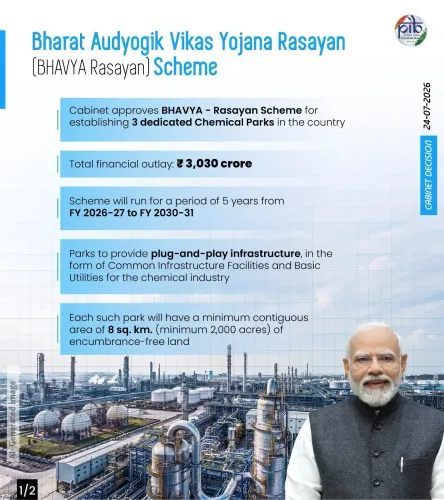
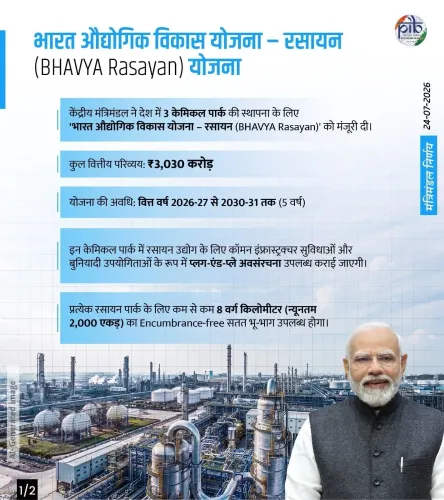
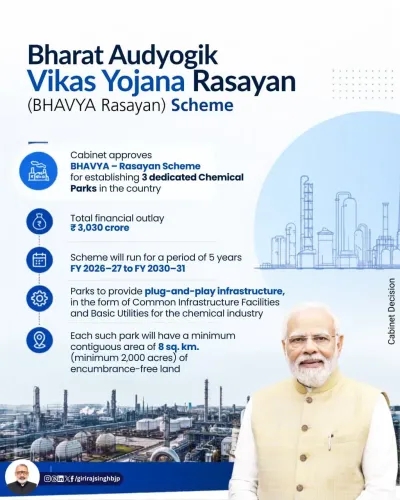
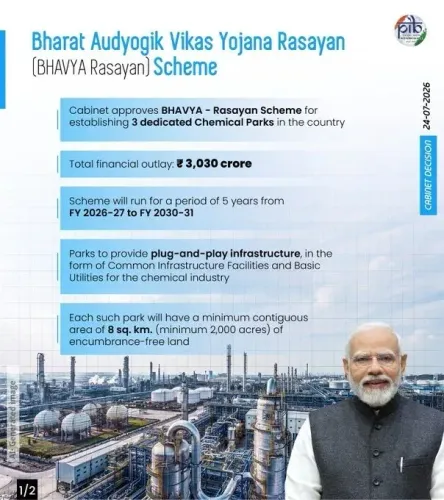
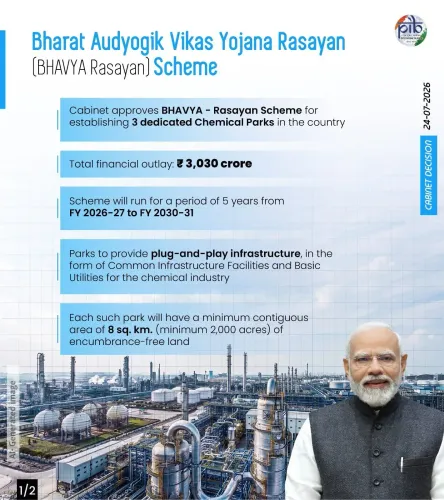
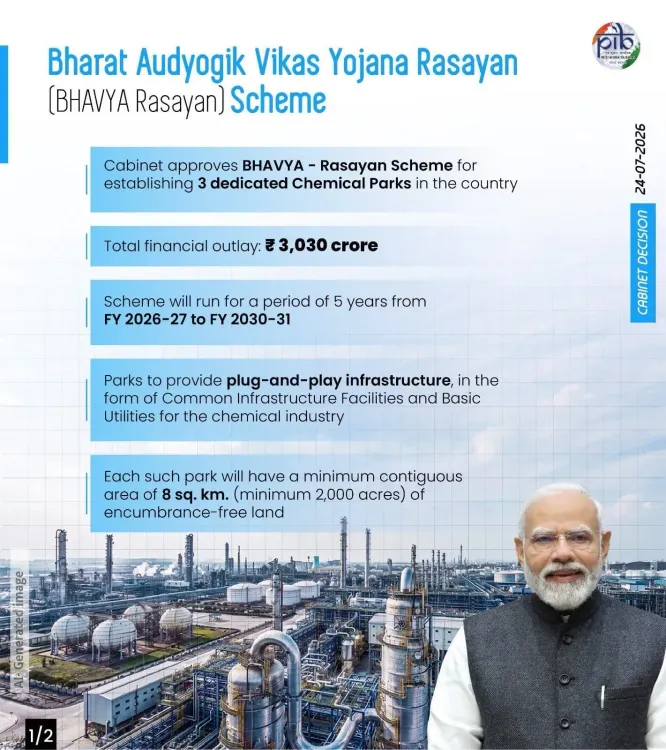
The BHAVYA Rasayan scheme will establish three world-class chemical parks to boost exports and manufacturing competitiveness.
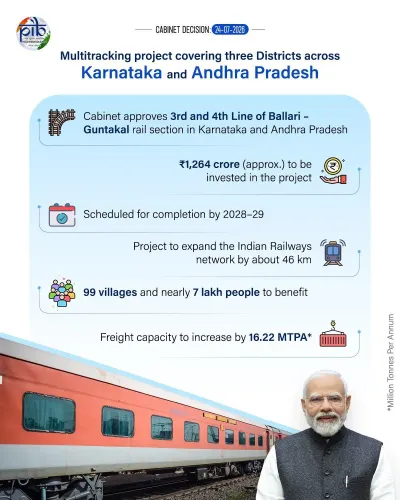
A new multitracking railway project will improve connectivity across 99 villages in Karnataka and Andhra Pradesh .
The approvals align with the Atmanirbhar Bharat mission and the National Infrastructure Pipeline framework.
Chemical manufacturers, freight operators, and rural communities along the rail corridor are the primary beneficiaries.
Land acquisition, environmental clearances, and detailed project reports remain key milestones before implementation begins.
Union Environment Minister Bhupender Yadav on Friday, 24 July 2026 announced that the Union Cabinet, under Prime Minister Narendra Modi, has approved two landmark initiatives aimed at boosting India's manufacturing base and regional connectivity — the BHAVYA Rasayan chemical parks scheme and a multitracking railway project spanning Karnataka and Andhra Pradesh.
Context
Yadav described both approvals as part of India's journey towards a 'more connected, self-reliant and globally competitive future.' The BHAVYA Rasayan scheme will fund the establishment of three world-class chemical parks designed to strengthen India's manufacturing ecosystem, enhance global competitiveness, and boost exports. The multitracking railway project, also cleared by the Cabinet, is projected to improve connectivity across 99 villages in Karnataka and Andhra Pradesh, enabling faster movement of both people and goods.
Policy Backdrop
India's push for dedicated chemical manufacturing clusters has a policy lineage stretching back to the 2007 Petroleum, Chemicals and Petrochemicals Investment Regions framework, which sought to create integrated infrastructure zones for the sector. The National Infrastructure Pipeline, approved in 2019, separately earmarked funds for rail capacity augmentation and industrial parks across southern states, laying the groundwork for the kind of twin-track approvals announced on Friday.
Successive central governments have paired industrial cluster development with rail connectivity upgrades as a strategy to cut logistics costs and raise manufacturing's share in GDP. The emphasis on chemical sector self-reliance aligns with the broader Atmanirbhar Bharat mission championed by the Modi government since 2020.
Stakeholders and Impact
Chemical manufacturers stand to gain from the BHAVYA Rasayan parks through access to world-class shared infrastructure, potentially reducing capital costs and improving export competitiveness. Freight operators and logistics firms are expected to benefit from the enhanced rail capacity in the Karnataka–Andhra Pradesh corridor, which connects industrial zones with major ports in both states.
At the grassroots level, residents of the 99 villages along the multitracking corridor are expected to see improved access to markets, employment centres, and public services. Southern states have seen repeated rail multitracking approvals in recent years as the Centre works to integrate ports, industrial zones, and hinterlands into a seamless logistics network.
What's Next
Implementation will hinge on detailed project reports, land acquisition timelines, and environmental clearances for the three chemical parks under BHAVYA Rasayan. For the railway project, inclusion in revised National Infrastructure Pipeline outlays and formal project sanctioning by Indian Railways will be closely watched by industry and state governments in Karnataka and Andhra Pradesh.
Together, the two approvals signal the Centre's intent to keep industrial and infrastructure investment flowing into southern India, with the chemical sector and rail connectivity emerging as twin pillars of the region's growth strategy heading into the second half of the decade.
Point of View
Now rebranded under the Atmanirbhar Bharat umbrella. The Karnataka–Andhra Pradesh multitracking nod is politically significant too, signalling continued central investment in two southern states where the BJP is seeking to consolidate its presence. Whether the projects move swiftly from Cabinet approval to ground-breaking will test the government's execution record on infrastructure pledges.
NationPress
24 Jul 2026
Frequently Asked Questions
What is the BHAVYA Rasayan scheme?
The BHAVYA Rasayan scheme is a Union Cabinet-approved initiative to establish three world-class chemical parks in India, aimed at strengthening the country's manufacturing ecosystem, boosting exports, and enhancing global competitiveness in the chemicals sector.
Which states does the new railway multitracking project cover?
The newly approved multitracking railway project spans Karnataka and Andhra Pradesh, and is expected to improve connectivity across 99 villages in the two southern states.
When did the Union Cabinet approve these projects?
The Union Cabinet approved both the BHAVYA Rasayan chemical parks scheme and the Karnataka–Andhra Pradesh multitracking railway project on 24 July 2026.
How many villages will benefit from the Karnataka–Andhra Pradesh rail project?
According to the Cabinet announcement, 99 villages across Karnataka and Andhra Pradesh will see improved connectivity through the new multitracking railway project.
What is India's policy history on chemical manufacturing clusters?
India's dedicated chemical manufacturing cluster policy dates to 2007, when the Petroleum, Chemicals and Petrochemicals Investment Regions framework was launched to create integrated infrastructure zones for the sector. The BHAVYA Rasayan scheme builds on this lineage under the Atmanirbhar Bharat mission.