Goyal flags three Cabinet decisions: MSP, Delhi traffic, green grid

Synopsis
The Cabinet approved higher Rabi crop MSPs for 2027-28, a ₹1,789.52-crore Intelligent Traffic Management System across 42 Delhi corridors, and Green Energy Corridor Phase-III with battery storage — all highlighted by Union Minister Piyush Goyal on 30 September 2026.
Key Takeaways
MSP for Rabi crops revised upward for Marketing Season 2027-28 , extending the government's annual pre-sowing price support framework.
Delhi ITMS approved with an outlay of ₹1,789.52 crore , covering 42 traffic corridors in three phases over 24 months .
Green Energy Corridor Phase-III integrates Battery Energy Storage Systems into intra-state transmission infrastructure — a technological step beyond earlier phases.
Phase-III supports India's target of 900 GW of installed non-fossil fuel capacity by 2035 .
All three approvals were announced by Union Minister Piyush Goyal on 30 September 2026 , citing PM Narendra Modi 's leadership.
Three Cabinet decisions — higher crop price guarantees for farmers, a nearly ₹1,790-crore intelligent traffic overhaul for Delhi, and a new phase of India's green energy transmission programme — were highlighted by Union Commerce and Industry Minister Piyush Goyal in a post on Wednesday, 30 September 2026, signalling what the government describes as development momentum on multiple fronts simultaneously.
MSP for Rabi 2027-28: a floor price raised before the sowing begins
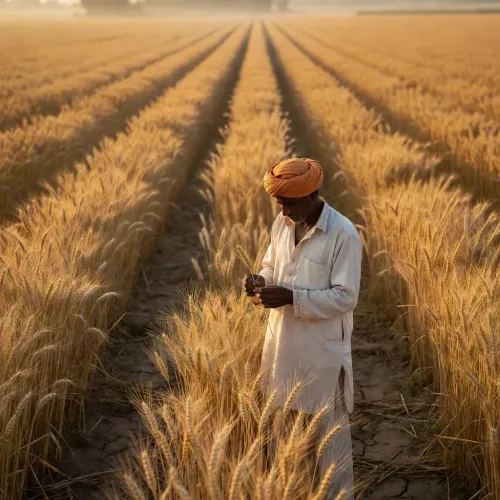
The Cabinet has approved higher Minimum Support Prices (MSPs) for Rabi crops for Marketing Season 2027-28. The MSP mechanism — a longstanding government guarantee that buys farmers a notified floor price for key crops — is revised annually ahead of each sowing season, giving cultivators a clearer calculus before seeds go into the ground.
Under Prime Minister Narendra Modi, the government has maintained a consistent record of pre-season MSP revisions, framing them as a central pillar of agricultural income support. The Rabi season, covering winter crops like wheat, mustard, and pulses, feeds directly into food inflation numbers and rural purchasing power — making each revision politically and economically consequential.
Delhi's ₹1,789.52-crore traffic intelligence network
The Cabinet cleared an Intelligent Traffic Management System (ITMS) for Delhi with a total outlay of ₹1,789.52 crore, covering 42 identified traffic corridors across the capital. The project will be executed in three phases over 24 months, deploying sensor networks, adaptive signal control, and data analytics to reduce congestion on the city's most choked arteries.
Delhi has consistently ranked among the world's most congested cities, with traffic gridlock compounding air quality crises. A technology-driven intervention at this scale — spread across dozens of corridors — is designed to do what physical road expansion cannot: squeeze more throughput from the existing network without adding a single lane of asphalt.
Green Energy Corridor Phase-III: storage meets the grid
The third approval is arguably the most structurally significant. The Green Energy Corridor Phase-III scheme has been sanctioned to build intra-state transmission systems integrated with Battery Energy Storage Systems (BESS) — a technological upgrade on the earlier two phases, which focused mainly on inter-state evacuation highways for renewable power.
Phases I and II, approved in the mid-2010s, laid the foundational grid highways connecting wind-rich and solar-rich states to load centres. Phase-III now embeds storage directly into the intra-state grid, addressing the mismatch between when renewable energy is generated and when it is actually needed. The scheme supports India's stated target of 900 GW of installed non-fossil fuel capacity by 2035.
For renewable energy developers, grid reliability and evacuation certainty are often cited as bigger constraints than project financing. A battery-backed intra-state corridor changes that equation at the state level — where the last mile of the renewable energy journey actually happens.
Three sectors, one Cabinet meeting
Taken together, the three decisions sketch a familiar signature of this government's Cabinet cycle: an agricultural price support measure anchored in the farm economy, an urban smart-infrastructure spend in a high-visibility city, and a long-horizon energy transition investment. The breadth is deliberate — rural, urban, and climate policy ticked in a single sitting.
Whether implementation matches ambition will play out over the next 24 months on Delhi's roads and in the transmission substations of states scaling up their renewable capacity. For now, the approvals set the legislative and financial foundation. The real story begins in the field.
Point of View
An urban, and an energy decision in a single Cabinet round is consistent with the Modi government's political optics strategy — broadening the constituency of each announcement cycle beyond any one sector. The MSP revision maintains a pre-sowing ritual that is as much about rural sentiment as it is about price economics. The Delhi ITMS, costed precisely at ₹1,789.52 crore across 42 corridors, signals that the government is willing to deploy serious capital on smart-city infrastructure in the national capital ahead of what are likely to be visible electoral cycles. Most consequentially, Phase-III of the Green Energy Corridor — by embedding battery storage at the intra-state level — marks a maturation of India's grid modernisation strategy from 'build the highway' to 'make the highway reliable', which is the actual bottleneck for the 900 GW target.
NationPress
30 Sept 2026
Frequently Asked Questions
What is the MSP for Rabi crops 2027-28?
The Cabinet approved an increase in Minimum Support Prices for Rabi crops for Marketing Season 2027-28, though the specific revised rates for individual crops were not detailed in the government's announcement highlighted by Minister Piyush Goyal on 30 September 2026.
What is the Intelligent Traffic Management System approved for Delhi?
The Cabinet approved an Intelligent Traffic Management System for Delhi with an outlay of ₹1,789.52 crore, covering 42 identified traffic corridors to be developed in three phases over 24 months using sensor networks and adaptive signal technology.
What is Green Energy Corridor Phase-III?
Green Energy Corridor Phase-III is a central government scheme to develop intra-state power transmission systems integrated with Battery Energy Storage Systems, building on Phases I and II which focused on inter-state renewable energy evacuation corridors approved in the mid-2010s.
What is India's non-fossil fuel energy target by 2035?
India has set a target of 900 GW of installed non-fossil fuel capacity by 2035, which the Green Energy Corridor Phase-III scheme is designed to support by strengthening grid infrastructure for renewable energy integration.
Which three decisions did the Cabinet take on 30 September 2026?
The Cabinet approved higher MSPs for Rabi crops for 2027-28, an Intelligent Traffic Management System for Delhi worth ₹1,789.52 crore across 42 corridors, and the Green Energy Corridor Phase-III scheme with battery storage — all announced by Union Minister Piyush Goyal.